Pasqua Teresa, Rocca Carmine, Giglio Anita, Angelone Tommaso
Department of Health Science, University Magna Graecia of Catanzaro, 88100 Catanzaro, Italy.
Laboratory of Cellular and Molecular Cardiovascular Pathophysiology, Department of Biology, E. and E.S. (Di.B.E.S.T.), University of Calabria, 87036 Rende (CS), Italy.
J Clin Med. 2021 Feb 12;10(4):721. doi: 10.3390/jcm10040721.
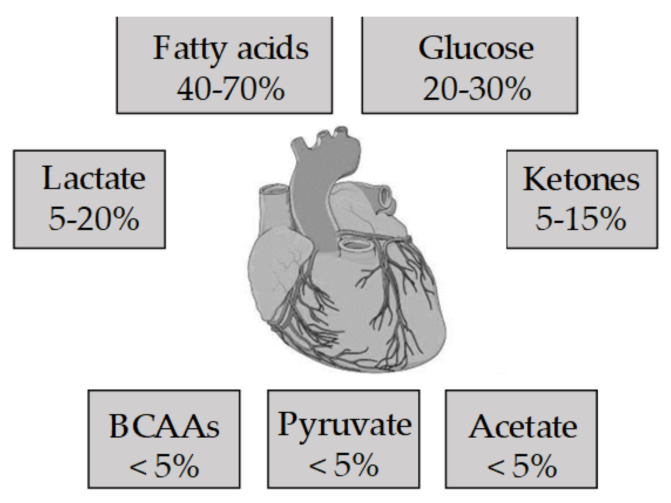
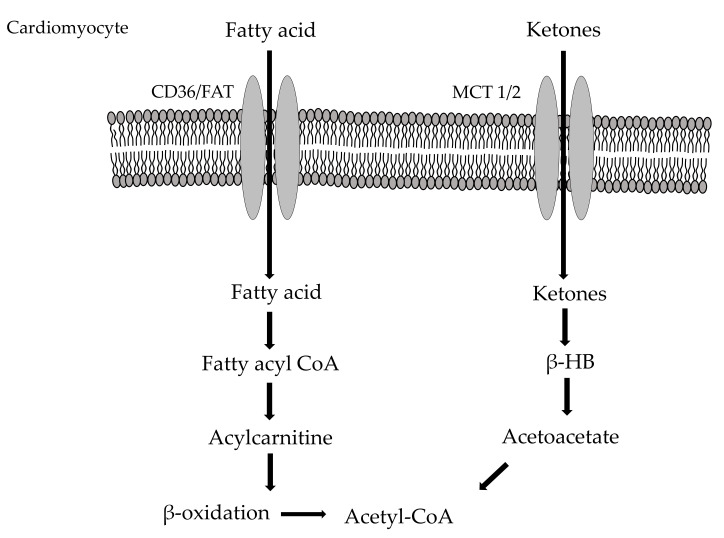
Cardiac metabolism represents a crucial and essential connecting bridge between the healthy and diseased heart. The cardiac muscle, which may be considered an omnivore organ with regard to the energy substrate utilization, under physiological conditions mainly draws energy by fatty acids oxidation. Within cardiomyocytes and their mitochondria, through well-concerted enzymatic reactions, substrates converge on the production of ATP, the basic chemical energy that cardiac muscle converts into mechanical energy, i.e., contraction. When a perturbation of homeostasis occurs, such as an ischemic event, the heart is forced to switch its fatty acid-based metabolism to the carbohydrate utilization as a protective mechanism that allows the maintenance of its key role within the whole organism. Consequently, the flexibility of the cardiac metabolic networks deeply influences the ability of the heart to respond, by adapting to pathophysiological changes. The aim of the present review is to summarize the main metabolic changes detectable in the heart under acute and chronic cardiac pathologies, analyzing possible therapeutic targets to be used. On this basis, cardiometabolism can be described as a crucial mechanism in keeping the physiological structure and function of the heart; furthermore, it can be considered a promising goal for future pharmacological agents able to appropriately modulate the rate-limiting steps of heart metabolic pathways.
心脏代谢是健康心脏与患病心脏之间至关重要且必不可少的连接桥梁。心肌在能量底物利用方面可被视为一种杂食性器官,在生理条件下主要通过脂肪酸氧化获取能量。在心肌细胞及其线粒体内,通过协调良好的酶促反应,底物汇聚于三磷酸腺苷(ATP)的生成,ATP是心肌将其转化为机械能(即收缩)的基本化学能量。当内环境稳态受到干扰时,如发生缺血事件,心脏会被迫将基于脂肪酸的代谢转换为碳水化合物利用,作为一种保护机制,以维持其在整个机体中的关键作用。因此,心脏代谢网络的灵活性深刻影响心脏通过适应病理生理变化做出反应的能力。本综述的目的是总结在急性和慢性心脏疾病状态下心脏中可检测到的主要代谢变化,分析可能的治疗靶点。在此基础上,心脏代谢可被描述为维持心脏生理结构和功能的关键机制;此外,它可被视为未来能够适当调节心脏代谢途径限速步骤的药物的一个有前景的目标。