Peng Tzu-Yu, Shimoe Saiji, Fuh Lih-Jyh, Lin Chung-Kwei, Lin Dan-Jae, Kaku Masato
School of Dentistry, College of Dentistry, China Medical University, No.91, Taichung 404, Taiwan.
Research Center of Digital Oral Science and Technology, College of Oral Medicine, Taipei Medical University, No.250, Wu-Hsing Street, Taipei 110, Taiwan.
Polymers (Basel). 2021 Feb 12;13(4):543. doi: 10.3390/polym13040543.
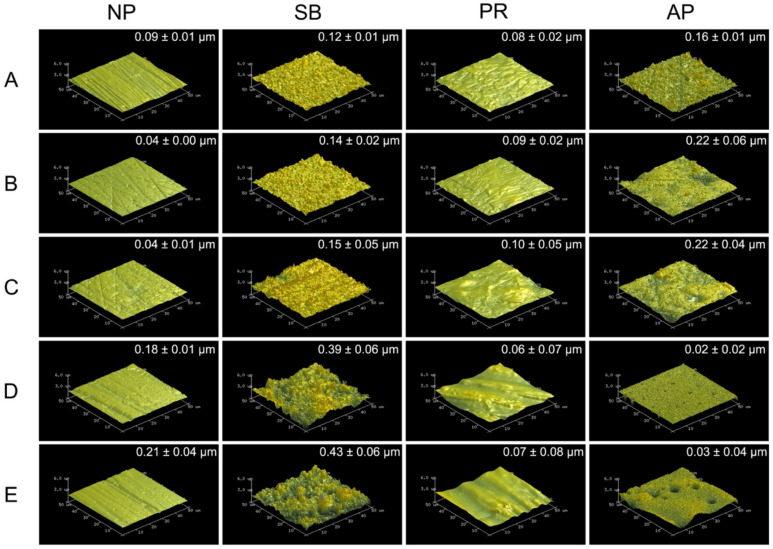
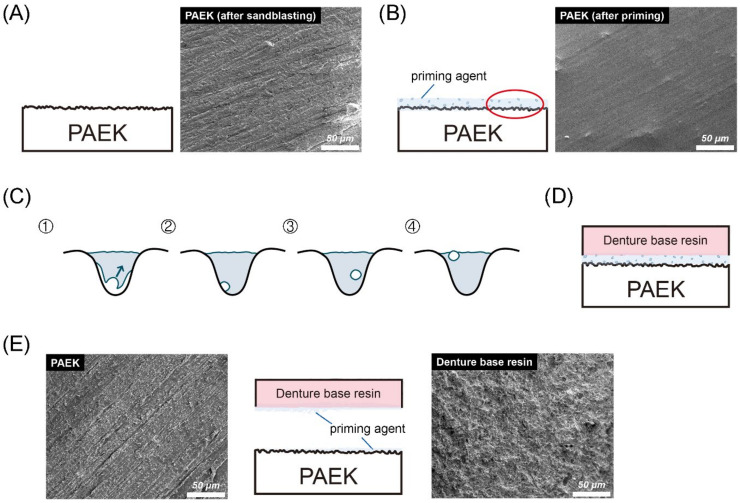
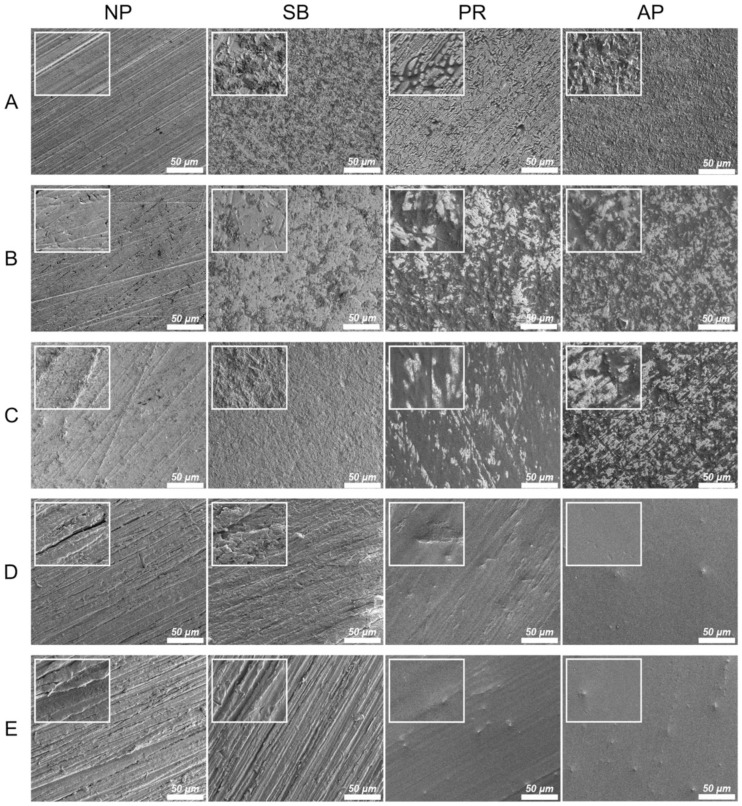
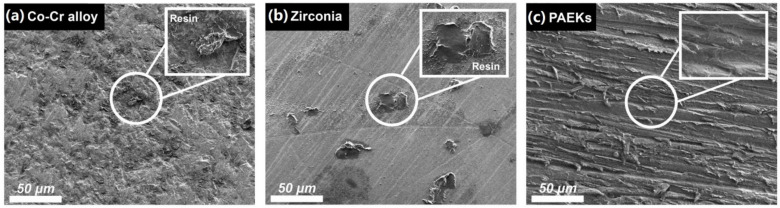
Poly(aryl-ether-ketone) materials (PAEKs) are gaining interest in everyday dental practices because of their natural properties. This study aims to analyze the bonding performance of PAEKs to a denture acrylic. Testing materials were pretreated by grinding, sandblasting, and priming prior to polymerization with the denture acrylic. The surface morphologies were observed using a scanning electron microscope and the surface roughness was measured using atomic force microscopy. The shear bond strength (SBS) values were determined after 0 and 2500 thermal cycles. The obtained data were analyzed using a paired samples t-test and Tukey's honestly significant difference (HSD) test (α = 0.05). The surface characteristics of testing materials after different surface pretreatments showed obvious differences. PAEKs showed lower surface roughness values (0.02-0.03 MPa) than Co-Cr (0.16 MPa) and zirconia (0.22 MPa) after priming and sandblasting treatments ( < 0.05). The SBS values of PAEKs (7.60-8.38 MPa) met the clinical requirements suggested by ISO 10477 (5 MPa). Moreover, PAEKs showed significantly lower SBS reductions ( < 0.05) after thermal cycling fatigue testing compared to Co-Cr and zirconia. Bonding performance is essential for denture materials, and our results demonstrated that PAEKs possess good resistance to thermal cycling fatigue, which is an advantage in clinical applications. The results imply that PAEKs are potential alternative materials for the removable of prosthetic frameworks.
聚芳醚酮材料(PAEKs)因其天然特性而在日常牙科实践中受到关注。本研究旨在分析PAEKs与义齿丙烯酸树脂的粘结性能。测试材料在与义齿丙烯酸树脂聚合之前,先进行研磨、喷砂和涂底漆预处理。使用扫描电子显微镜观察表面形态,并使用原子力显微镜测量表面粗糙度。在0次和2500次热循环后测定剪切粘结强度(SBS)值。使用配对样本t检验和Tukey's真实显著差异(HSD)检验(α = 0.05)对获得的数据进行分析。不同表面预处理后测试材料的表面特性显示出明显差异。在底漆和喷砂处理后,PAEKs的表面粗糙度值(0.02 - 0.03 MPa)低于钴铬合金(0.16 MPa)和氧化锆(0.22 MPa)(P < 0.05)。PAEKs的SBS值(7.60 - 8.38 MPa)符合ISO 10477建议的临床要求(5 MPa)。此外,与钴铬合金和氧化锆相比,PAEKs在热循环疲劳测试后的SBS降低显著更低(P < 0.05)。粘结性能对义齿材料至关重要,我们的结果表明PAEKs具有良好的抗热循环疲劳性能,这在临床应用中是一个优势。结果表明PAEKs是可摘义齿支架的潜在替代材料。