Shimoe Saiji, Peng Tzu-Yu, Wakabayashi Yuki, Takenaka Hiroto, Iwaguro Shogo, Kaku Masato
Department of Anatomy and Functional Restorations, Integrated Health Sciences, Hiroshima University Graduate School of Biomedical and Health Sciences, Hiroshima 734-8553, Japan.
Department of Dental Medical Laboratory, Hokkaido University Hospital, Sapporo Hokkaido 060-8648, Japan.
Polymers (Basel). 2020 Apr 4;12(4):817. doi: 10.3390/polym12040817.
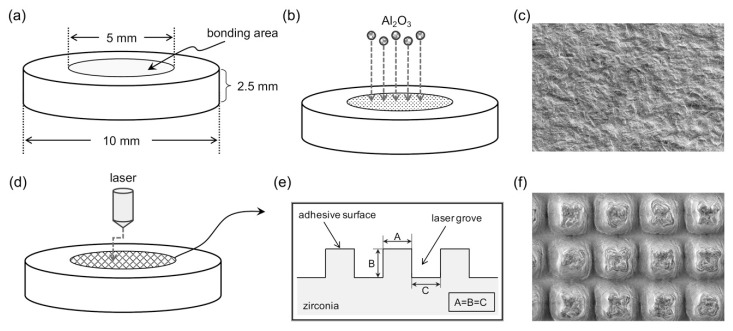
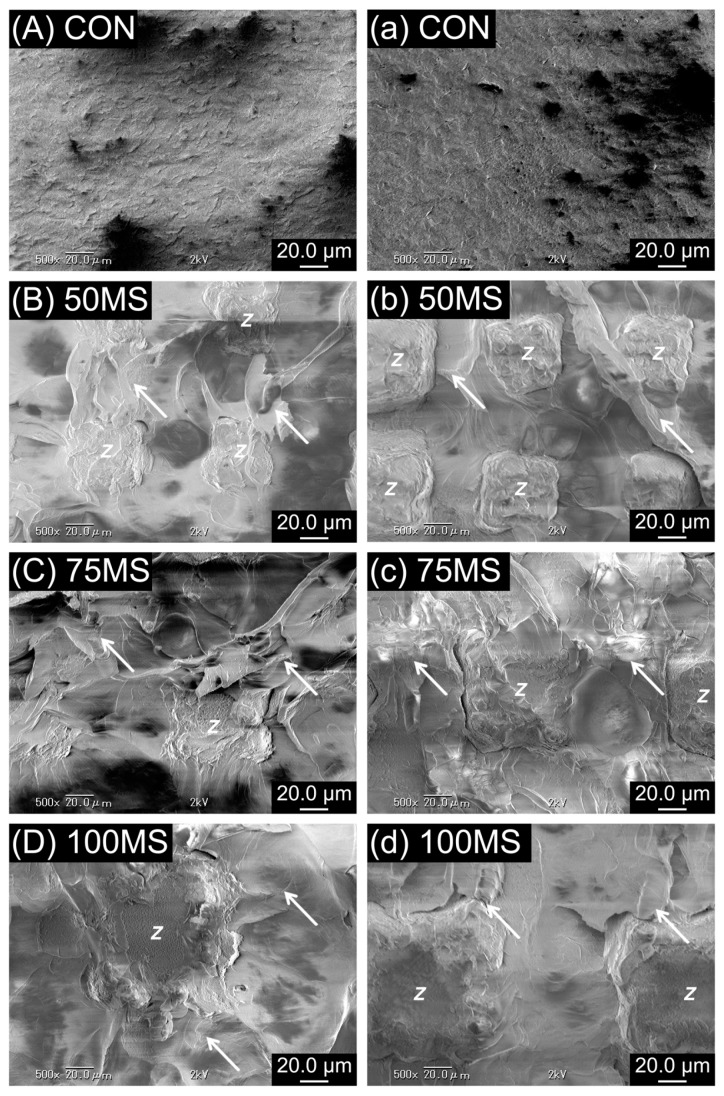
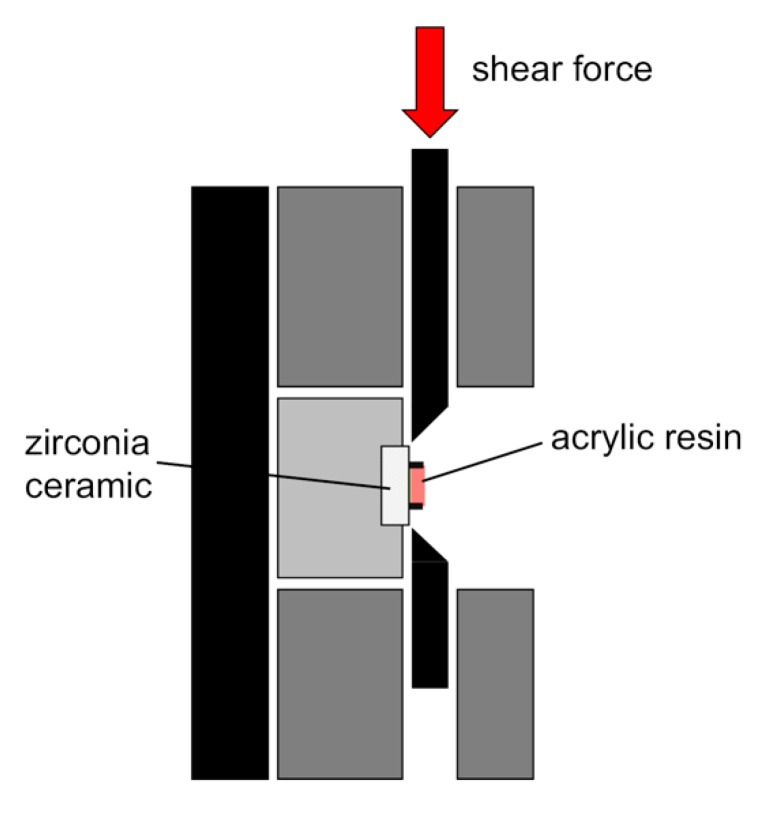
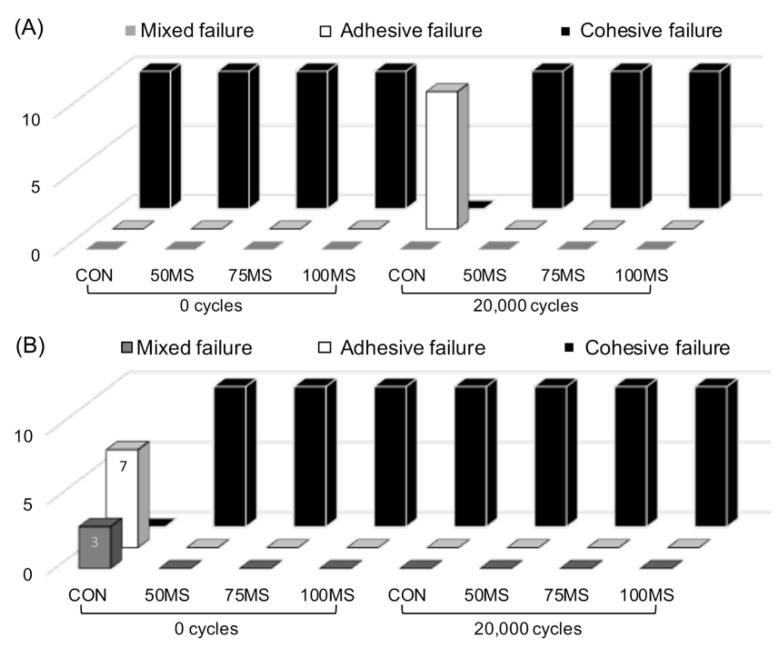
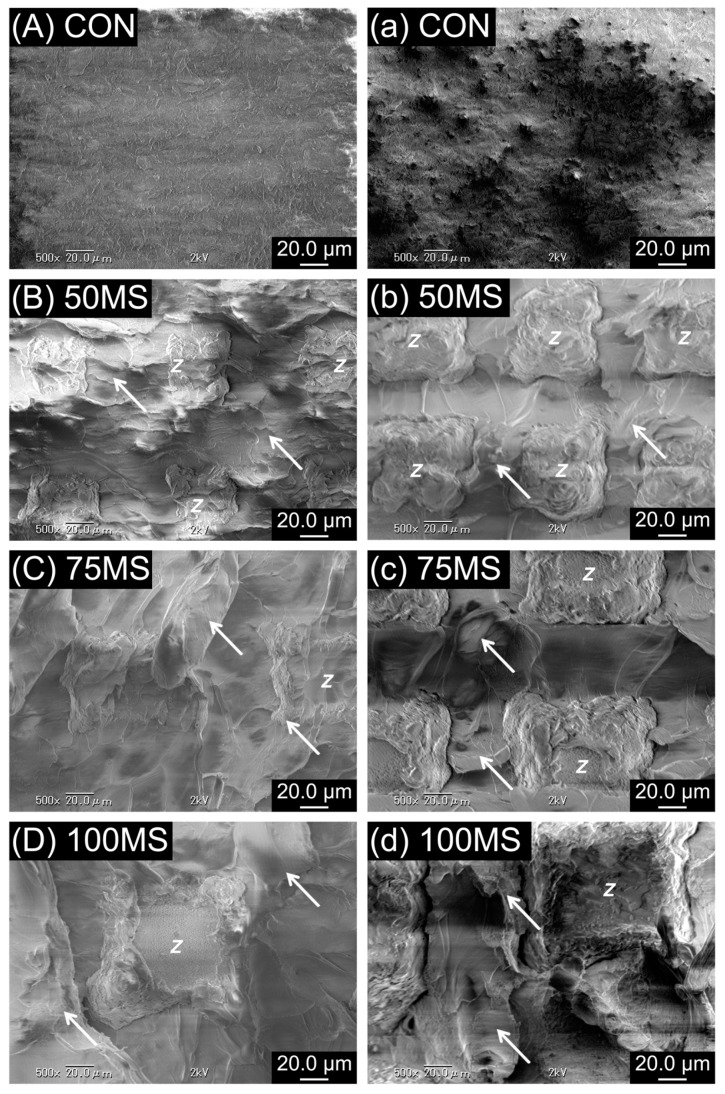
Heightened aesthetic considerations in modern dentistry have generated increased interest in metal-free "zirconia-supported dentures." The lifespan of the denture is largely determined by the strength of adhesion between zirconia and the acrylic resin. Thus, the effect on shear bond strength (SBS) was investigated by using an acrylic resin on two types of zirconia ceramics with differently sized microslits. Micromechanical reticular retention was created on the zirconia surface as the novel treatment (microslits (MS)), and air-abrasion was used as the control (CON). All samples were primed prior to acrylic resin polymerization. After the resin was cured, the SBS was tested. The obtained data were analyzed by using multivariate analysis of variance(α = 0.05). After the SBS test, the interface failure modes were observed by scanning electron microscopy. The MS exhibited significantly higher bond strength after thermal cycles ( < 0.05) than the CON. Nevertheless, statistically comparisons resulted in no significant effect of the differently sized microslits on SBS ( > 0.05). Additionally, MS (before thermal cycles: 34.8 ± 3.6 to 35.7 ± 4.0 MPa; after thermal cycles: 26.9 ± 3.1 to 32.6 ± 3.3 MPa) demonstrated greater SBS and bonding durability than that of CON (before thermal cycles: 17.3 ± 4.7 to 17.9 ± 5.8 MPa; after thermal cycles: 1.0 ± 0.3 to 1.7 ± 1.1 MPa), confirming that the micromechanical retention with laser-milled microslits was effective at enhancing the bonding strength and durability of the acrylic resin and zirconia. Polycrystalline zirconia-based ceramics are a newly accessible material for improving removable prosthodontic treatment, as the bond strength with acrylic resin can be greatly enhanced by laser milling.
现代牙科中日益增强的美学考量引发了人们对无金属“氧化锆支持义齿”的更多关注。义齿的使用寿命很大程度上取决于氧化锆与丙烯酸树脂之间的粘结强度。因此,通过在两种具有不同尺寸微狭缝的氧化锆陶瓷上使用丙烯酸树脂,研究了其对剪切粘结强度(SBS)的影响。在氧化锆表面形成微机械网状固位作为新的处理方法(微狭缝(MS)),并将空气喷砂作为对照(CON)。在丙烯酸树脂聚合之前,所有样品均进行了预处理。树脂固化后,测试了SBS。使用多变量方差分析(α = 0.05)对获得的数据进行分析。在SBS测试之后,通过扫描电子显微镜观察界面失效模式。与CON相比,MS在热循环后表现出显著更高的粘结强度(<0.05)。然而,统计比较结果显示,不同尺寸的微狭缝对SBS没有显著影响(>0.05)。此外,MS(热循环前:34.8±3.6至35.7±4.0MPa;热循环后:26.9±3.1至32.6±3.3MPa)显示出比CON(热循环前:17.3±4.7至仃.9±5.8MPa;热循环后:1.0±0.3至1.7±1.1MPa)更高的SBS和粘结耐久性,证实了激光铣削微狭缝的微机械固位在提高丙烯酸树脂与氧化锆的粘结强度和耐久性方面是有效的。基于多晶氧化锆的陶瓷是一种新的可用于改善可摘义齿修复治疗的材料,因为通过激光铣削可以大大提高与丙烯酸树脂的粘结强度。