Akache Bassel, Agbayani Gerard, Stark Felicity C, Jia Yimei, Dudani Renu, Harrison Blair A, Deschatelets Lise, Chandan Vandana, Lam Edmond, Hemraz Usha D, Régnier Sophie, Krishnan Lakshmi, McCluskie Michael J
Human Health Therapeutics, National Research Council Canada, Ottawa, ON K1A 0R6, Canada.
Aquatic and Crop Resource Development, National Research Council Canada, Montreal, QC H4P 2R2, Canada.
Pharmaceutics. 2021 Feb 12;13(2):257. doi: 10.3390/pharmaceutics13020257.
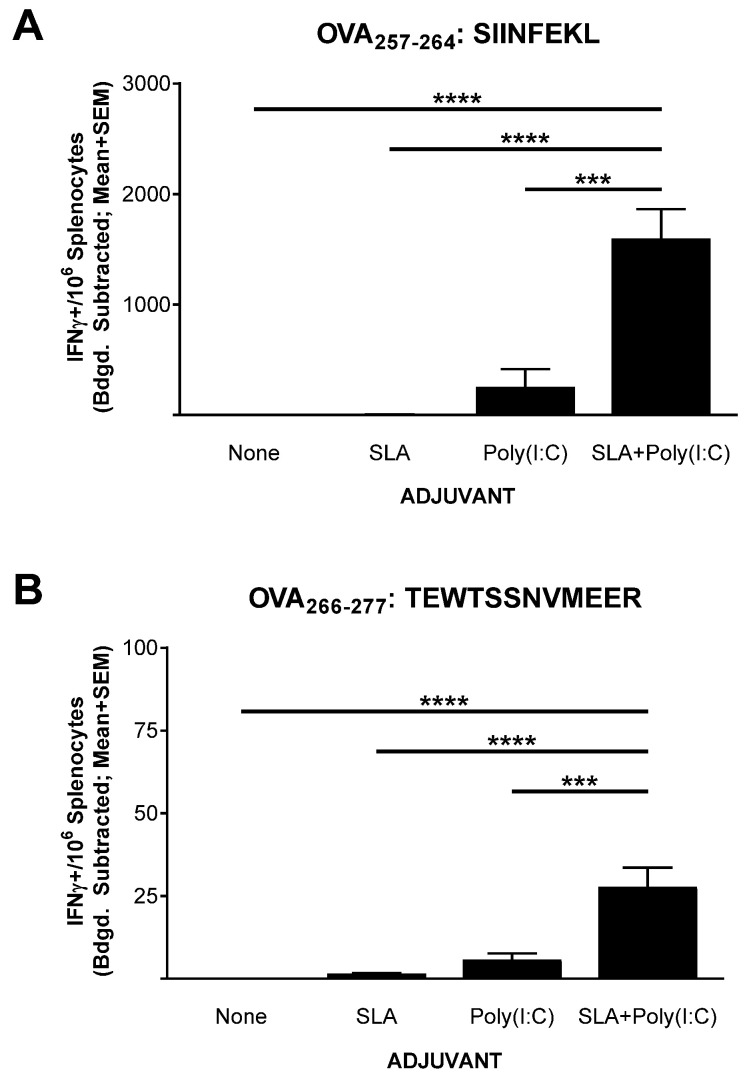
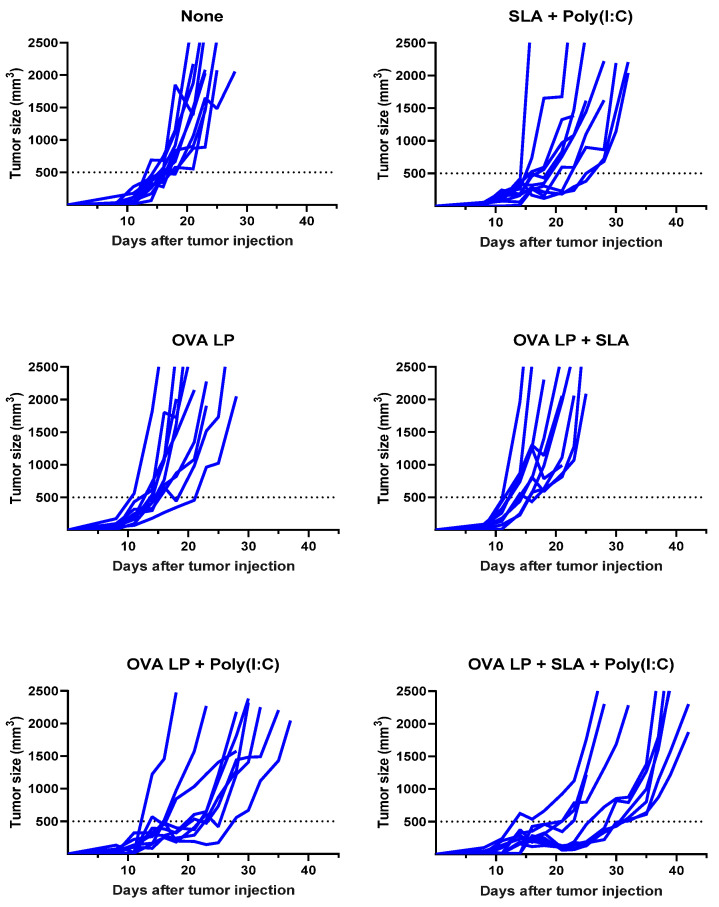
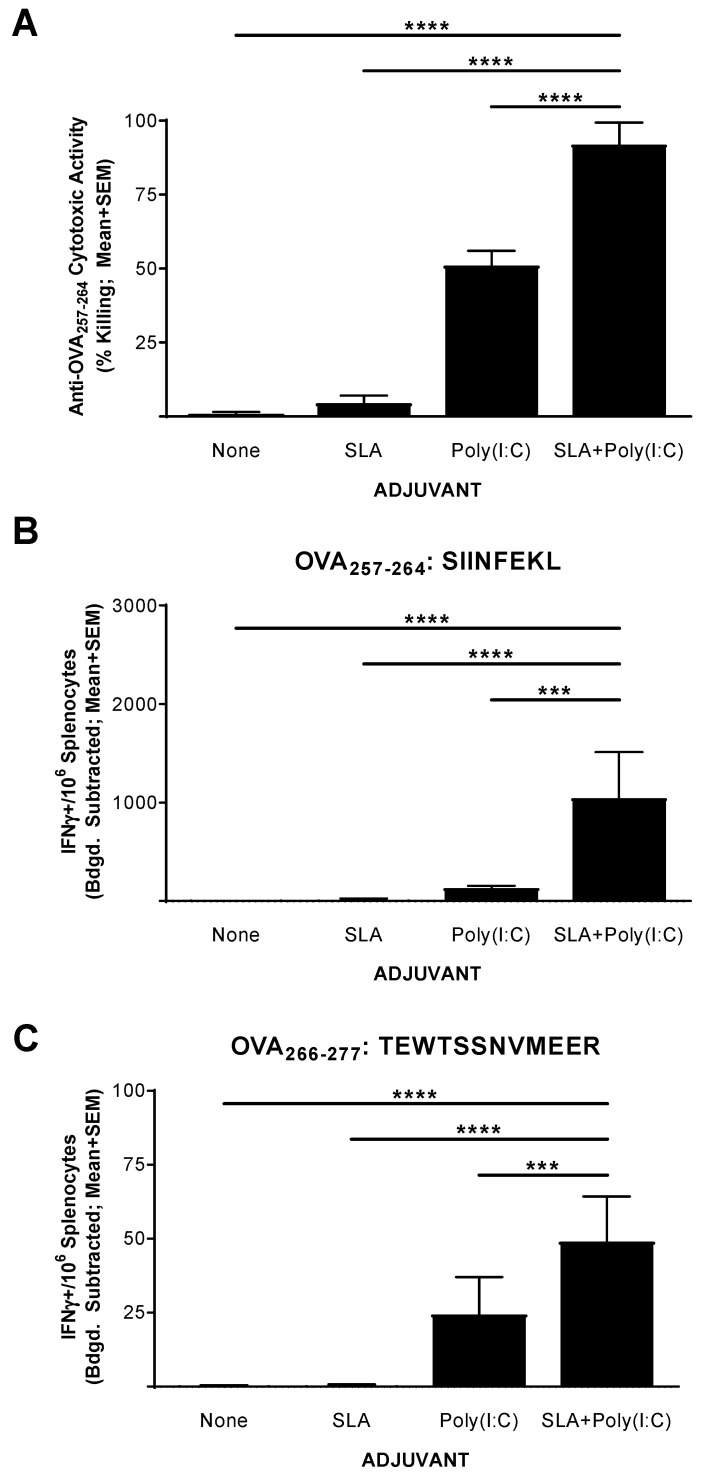
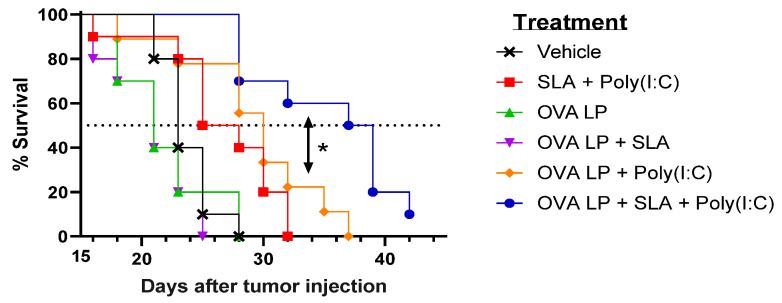
Cancer remains a leading cause of morbidity and mortality worldwide. While novel treatments have improved survival outcomes for some patients, new treatment modalities/platforms are needed to combat a wider variety of tumor types. Cancer vaccines harness the power of the immune system to generate targeted tumor-specific immune responses. Liposomes composed of glycolipids derived from archaea (i.e., archaeosomes) have been shown to be potent adjuvants, inducing robust, long-lasting humoral and cell-mediated immune responses to a variety of antigens. Herein, we evaluated the ability of archaeosomes composed of sulfated lactosyl archaeol (SLA), a semi-synthetic archaeal glycolipid, to enhance the immunogenicity of a synthetic long peptide-based vaccine formulation containing the dominant CD8 T cell epitope, SIINFEKL, from the weakly immunogenic model antigen ovalbumin. One advantage of immunizing with long peptides is the ability to include multiple epitopes, for example, the long peptide antigen was also designed to include the immediately adjacent CD4 epitope, TEWTSSNVMEER. SLA archaeosomes were tested alone or in combination with the toll-like receptor 3 (TLR3) agonist Poly(I:C). Overall, SLA archaeosomes synergized strongly with Poly(I:C) to induce robust antigen-specific CD8 T cell responses, which were highly functional in an in vivo cytolytic assay. Furthermore, immunization with this vaccine formulation suppressed tumor growth and extended mouse survival in a mouse melanoma tumor model. Overall, the combination of SLA archaeosomes and Poly(I:C) appears to be a promising adjuvant system when used along with long peptide-based antigens targeting cancer.
癌症仍然是全球发病和死亡的主要原因。虽然新型治疗方法改善了一些患者的生存结果,但仍需要新的治疗方式/平台来对抗更多类型的肿瘤。癌症疫苗利用免疫系统的力量产生靶向肿瘤特异性免疫反应。由古菌衍生的糖脂(即古菌脂质体)组成的脂质体已被证明是有效的佐剂,可诱导对多种抗原产生强大、持久的体液和细胞介导免疫反应。在此,我们评估了由半合成古菌糖脂硫酸化乳糖基古菌醇(SLA)组成的古菌脂质体增强基于合成长肽的疫苗制剂免疫原性的能力,该疫苗制剂含有来自弱免疫原性模型抗原卵清蛋白的主要CD8 T细胞表位SIINFEKL。用长肽免疫的一个优点是能够包含多个表位,例如,长肽抗原还被设计为包含紧邻的CD4表位TEWTSSNVMEER。单独测试了SLA古菌脂质体或与Toll样受体3(TLR3)激动剂聚肌苷酸-聚胞苷酸(Poly(I:C))联合测试。总体而言,SLA古菌脂质体与Poly(I:C)强烈协同作用,诱导强大的抗原特异性CD8 T细胞反应,这些反应在体内细胞溶解试验中具有高度功能性。此外,在小鼠黑色素瘤肿瘤模型中,用这种疫苗制剂免疫可抑制肿瘤生长并延长小鼠存活时间。总体而言,当与靶向癌症的基于长肽的抗原一起使用时,SLA古菌脂质体和Poly(I:C)的组合似乎是一种有前景的佐剂系统。