
加勒比海礁珊瑚对浮游微生物群落成员的选择性吸收。
Selective Uptake of Pelagic Microbial Community Members by Caribbean Reef Corals.
机构信息
Monterey Bay Aquarium Research Institute, Moss Landing, California, USA
GEOMAR Helmholtz Centre for Ocean Research, Kiel, Germany.
出版信息
Appl Environ Microbiol. 2021 Apr 13;87(9). doi: 10.1128/AEM.03175-20.
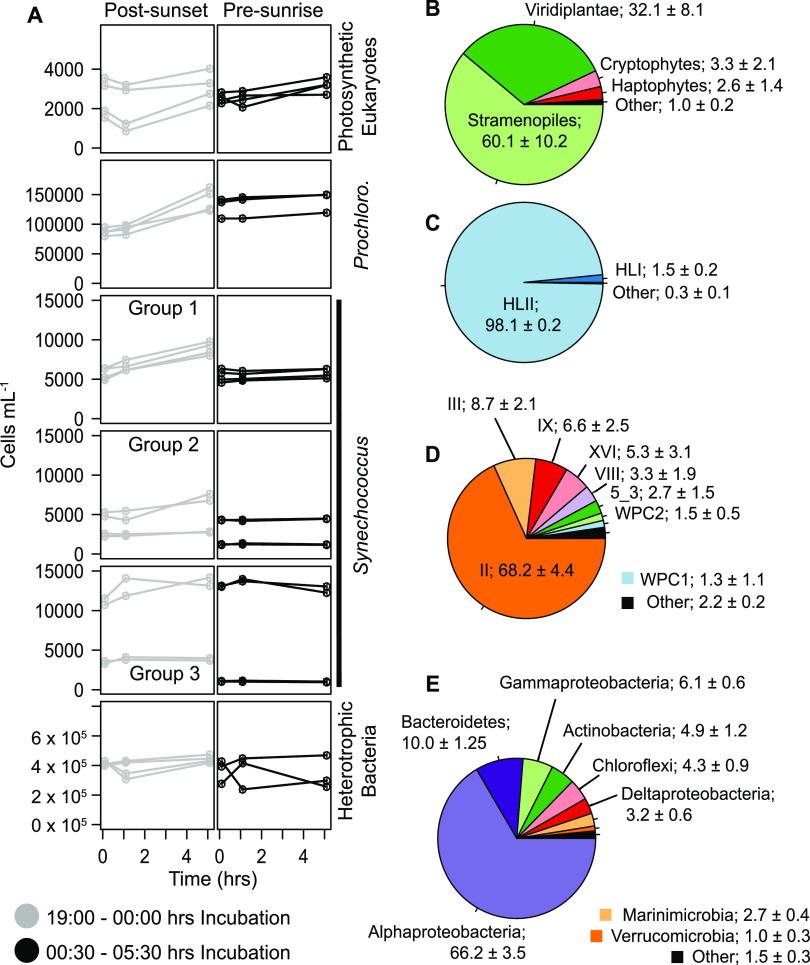
Coral reefs are possible sinks for microbes; however, the removal mechanisms at play are not well understood. Here, we characterize pelagic microbial groups at the CARMABI reef (Curaçao) and examine microbial consumption by three coral species: , , and Flow cytometry analyses of water samples collected from a depth of 10 m identified 6 microbial groups: , three groups of , photosynthetic eukaryotes, and heterotrophic bacteria. Minimum growth rates (μ) for , all groups, and photosynthetic eukaryotes were 0.55, 0.29, and 0.45 μ day, respectively, and suggest relatively high rates of productivity despite low nutrient conditions on the reef. During a series of 5-h incubations with reef corals performed just after sunset or prior to sunrise, reductions in the abundance of photosynthetic picoeukaryotes, and cells, were observed. Of the three groups, one decreased significantly during incubations with each coral and the other two only with Removal of carbon from the water column is based on coral consumption rates of phytoplankton and averaged between 138 ng h and 387 ng h, depending on the coral species. A lack of coral-dependent reduction in heterotrophic bacteria, differences in reductions, and diurnal variation in reductions of and , coinciding with peak cell division, point to selective feeding by corals. Our study indicates that bentho-pelagic coupling via selective grazing of microbial groups influences carbon flow and supports heterogeneity of microbial communities overlying coral reefs. We identify interactions between coral grazing behavior and the growth rates and cell abundances of pelagic microbial groups found surrounding a Caribbean reef. During incubation experiments with three reef corals, reductions in microbial cell abundance differed according to coral species and suggest specific coral or microbial mechanisms are at play. Peaks in removal rates of and cyanobacteria appear highest during postsunset incubations and coincide with microbial cell division. Grazing rates and effort vary across coral species and picoplankton groups, possibly influencing overall microbial composition and abundance over coral reefs. For reef corals, use of such a numerically abundant source of nutrition may be advantageous, especially under environmentally stressful conditions when symbioses with dinoflagellate algae break down.
珊瑚礁可能是微生物的汇,但其中的微生物去除机制尚不清楚。本研究以卡玛比礁(库拉索岛)为对象,对浮游微生物群进行了描述,并研究了三种珊瑚:、和对微生物的消耗。通过对从 10 米深处采集的水样进行流式细胞术分析,鉴定出 6 种微生物群:、三种、光合真核生物和异养细菌。、所有、光合真核生物的最小生长率(μ)分别为 0.55、0.29 和 0.45μ day,表明尽管珊瑚礁上的营养条件较低,但生产力仍相对较高。在一系列日落前后或日出前进行的 5 小时珊瑚培养实验中,观察到浮游微型真核生物、和细胞丰度减少。在与三种珊瑚的培养实验中,有一种减少明显,而另两种只在与珊瑚的培养实验中减少。从水柱中去除碳是基于珊瑚对浮游植物的消耗率,平均为 138ng h 和 387ng h,取决于珊瑚种类。由于缺乏珊瑚依赖的异养细菌减少、差异减少和与细胞分裂高峰一致的和减少的昼夜变化,表明珊瑚具有选择性摄食。本研究表明,通过选择性摄食微生物群,底栖-浮游耦合影响碳流动,并支持加勒比珊瑚礁上方微生物群落的异质性。我们确定了珊瑚摄食行为与周围加勒比礁浮游微生物群的生长率和细胞丰度之间的相互作用。在与三种珊瑚的培养实验中,根据珊瑚种类的不同,微生物细胞丰度的减少情况也不同,这表明存在特定的珊瑚或微生物机制在起作用。蓝细菌和的去除率峰值似乎在日落后的培养实验中最高,与微生物细胞分裂一致。摄食率和摄食努力因珊瑚种类和微微型浮游生物群而异,这可能会影响珊瑚礁上的整体微生物组成和丰度。对于珊瑚礁,利用这种数量丰富的营养源可能是有利的,尤其是在与甲藻共生关系瓦解的环境胁迫条件下。



 Zotero 插件