Department of Rehabilitation Medicine, Tianjin Huanhu Hospital, Tianjin, China.
Human Sensorimotor Control Laboratory, School of Kinesiology, University of Minnesota, Minneapolis, USA.
Sci Rep. 2021 Mar 5;11(1):5281. doi: 10.1038/s41598-021-84767-9.
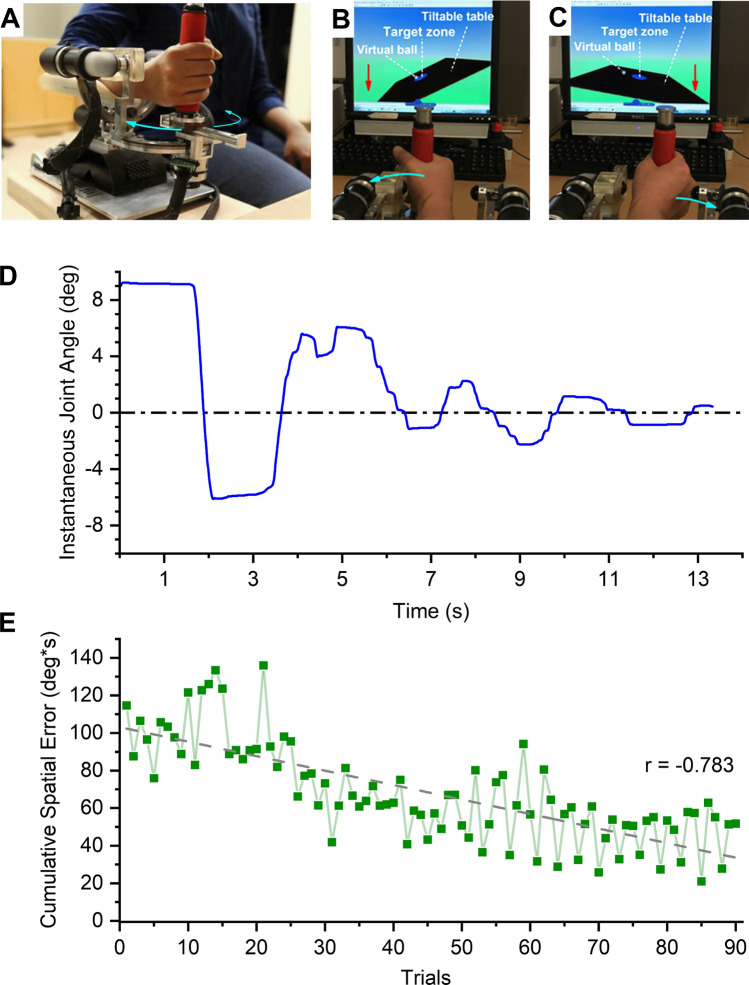
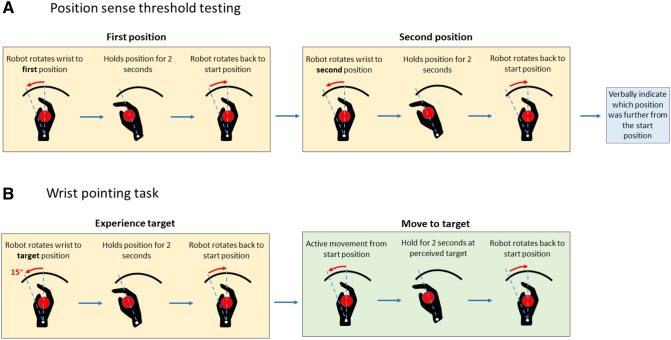
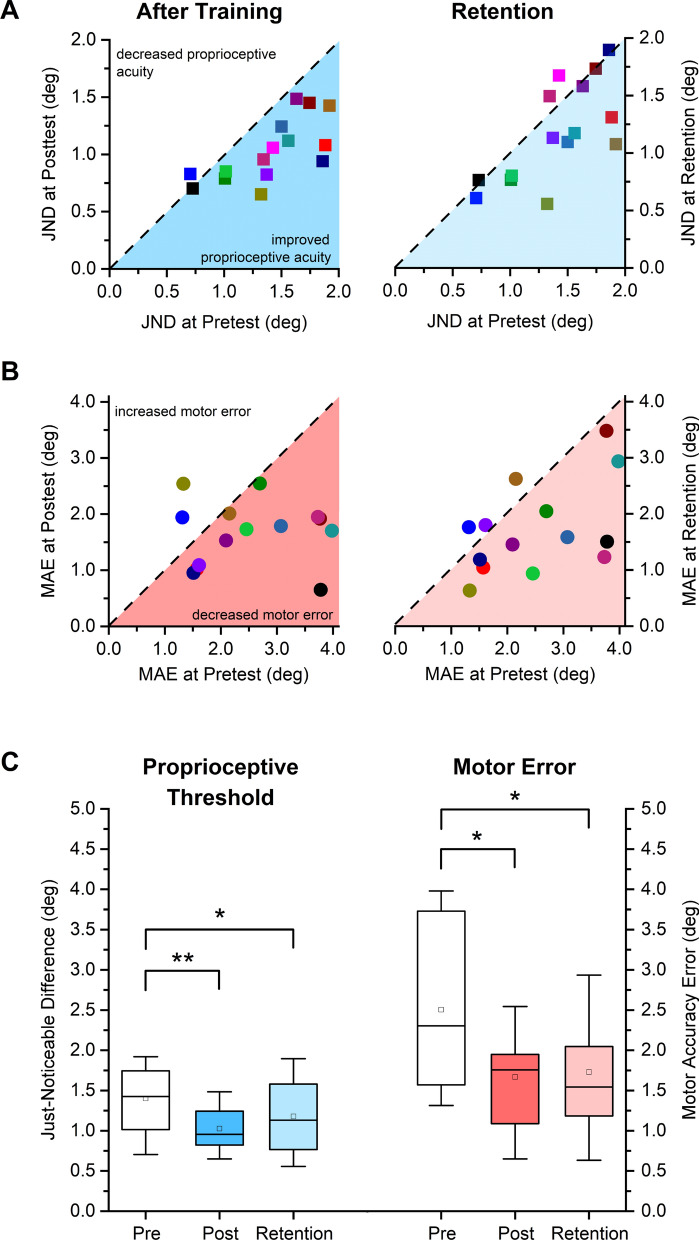
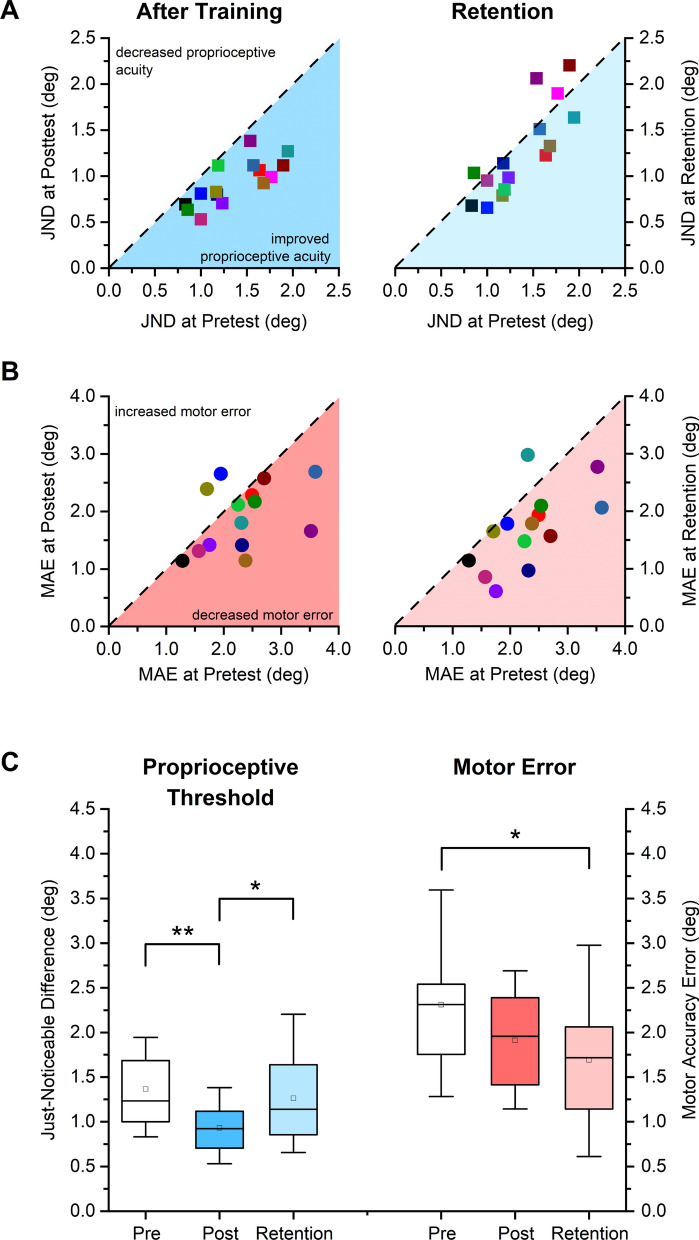
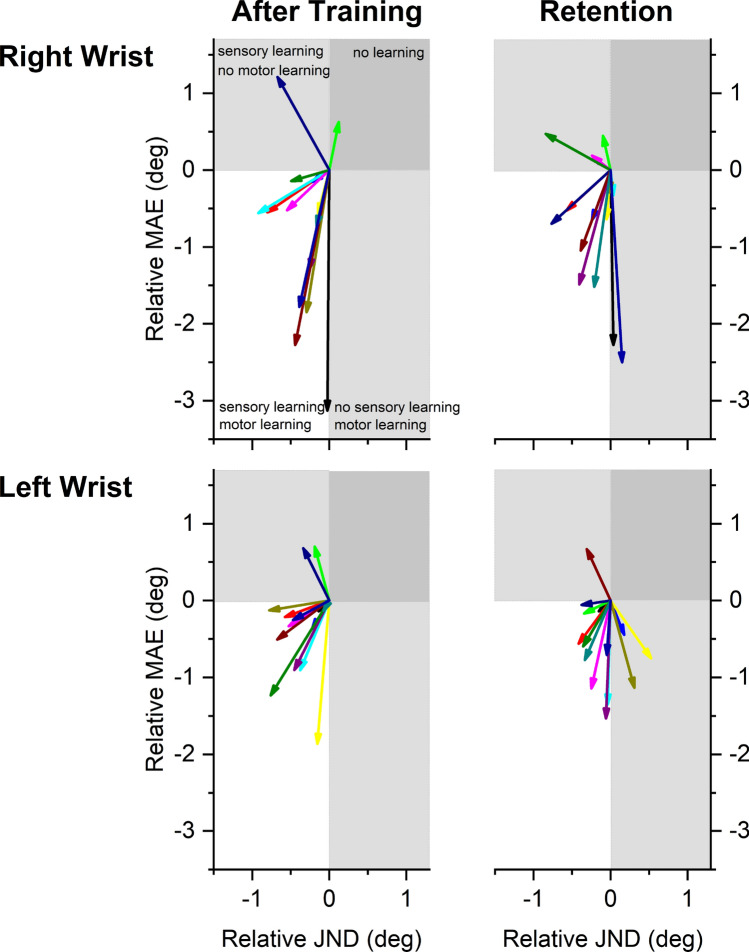
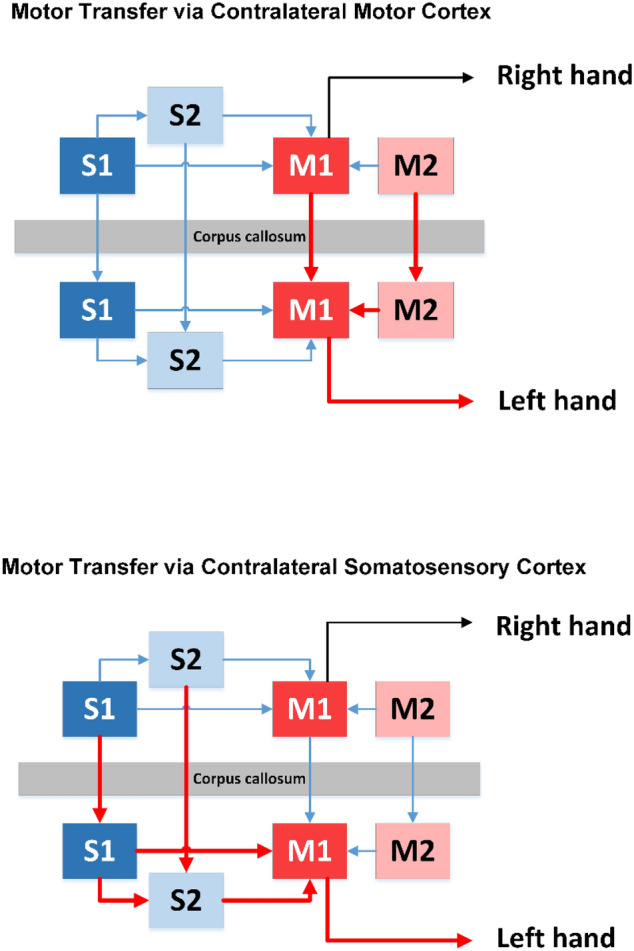
Proprioceptive training is a neurorehabilitation approach known to improve proprioceptive acuity and motor performance of a joint/limb system. Here, we examined if such learning transfers to the contralateral joints. Using a robotic exoskeleton, 15 healthy, right-handed adults (18-35 years) trained a visuomotor task that required making increasingly small wrist movements challenging proprioceptive function. Wrist position sense just-noticeable-difference thresholds (JND) and spatial movement accuracy error (MAE) in a wrist-pointing task that was not trained were assessed before and immediately as well as 24 h after training. The main results are: first, training reduced JND thresholds (- 27%) and MAE (- 33%) in the trained right wrist. Sensory and motor gains were observable 24 h after training. Second, in the untrained left wrist, mean JND significantly decreased (- 32%) at posttest. However, at retention the effect was no longer significant. Third, motor error at the untrained wrist declined slowly. Gains were not significant at posttest, but MAE was significantly reduced (- 27%) at retention. This study provides first evidence that proprioceptive-focused visuomotor training can induce proprioceptive and motor gains not only in the trained joint but also in the contralateral, homologous joint. We discuss the possible neurophysiological mechanism behind such sensorimotor transfer and its implications for neurorehabilitation.
本体感觉训练是一种神经康复方法,已知可提高关节/肢体系统的本体感觉敏锐度和运动表现。在这里,我们研究了这种学习是否会转移到对侧关节。使用机器人外骨骼,15 名健康的右利手成年人(18-35 岁)接受了一项视觉运动任务的训练,该任务要求进行越来越小的腕部运动,以挑战本体感觉功能。在训练前、训练后即刻以及 24 小时后,评估了在未训练的腕部指向任务中腕部位置感觉可察觉差异阈值 (JND) 和空间运动准确性误差 (MAE)。主要结果如下:首先,训练降低了训练右手腕的 JND 阈值 (-27%) 和 MAE (-33%)。在训练后 24 小时可以观察到感觉和运动增益。其次,在未训练的左手腕,平均 JND 在测试后显著降低 (-32%)。然而,在保留期,效果不再显著。第三,未训练手腕的运动误差缓慢下降。在测试后,增益不显著,但 MAE 在保留期显著降低 (-27%)。本研究首次提供证据表明,本体感觉为重点的视觉运动训练不仅可以在训练关节中引起本体感觉和运动增益,而且可以在对侧同源关节中引起增益。我们讨论了这种感觉运动转移背后的可能神经生理学机制及其对神经康复的意义。