Department of Pharmaceutics, School of Pharmacy, University of Washington, Seattle, Washington, USA.
Clin Pharmacol Ther. 2021 Aug;110(2):432-442. doi: 10.1002/cpt.2227. Epub 2021 May 1.
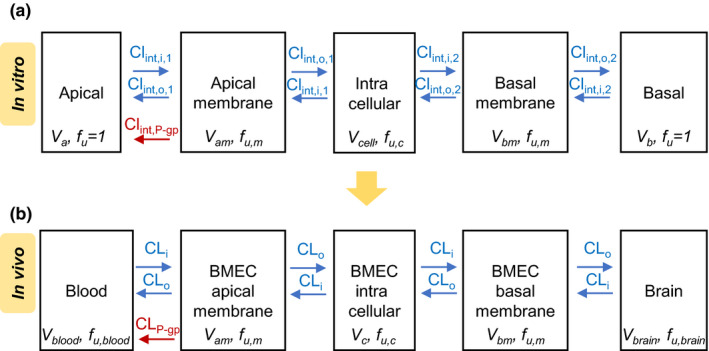
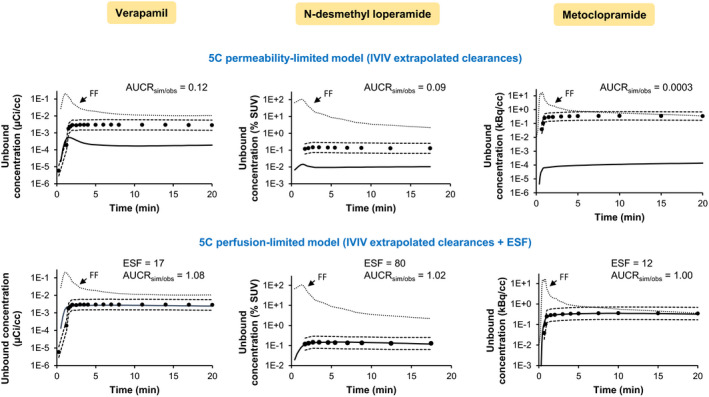
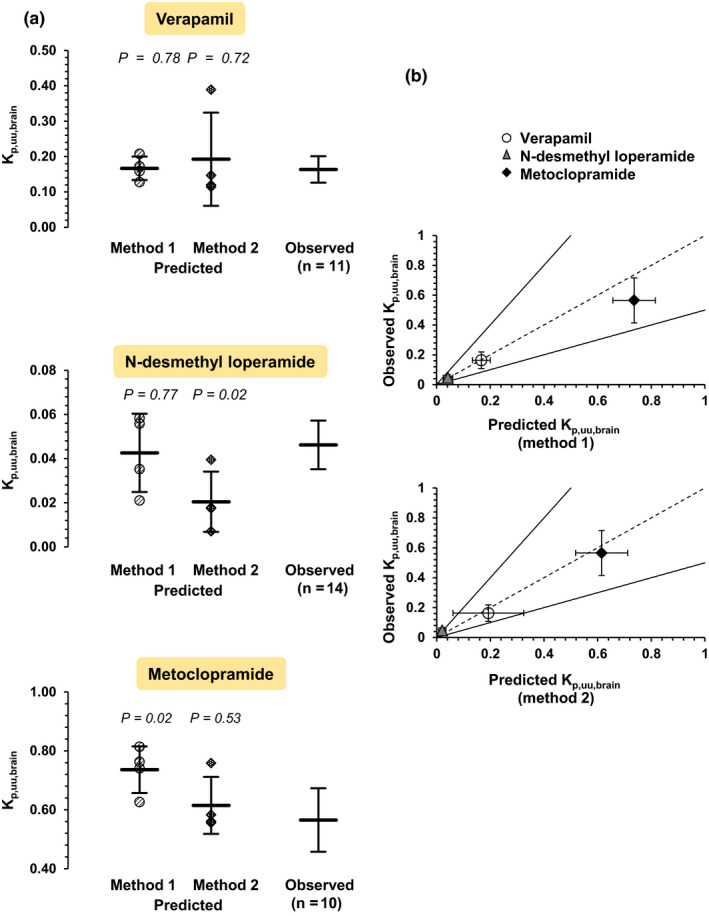
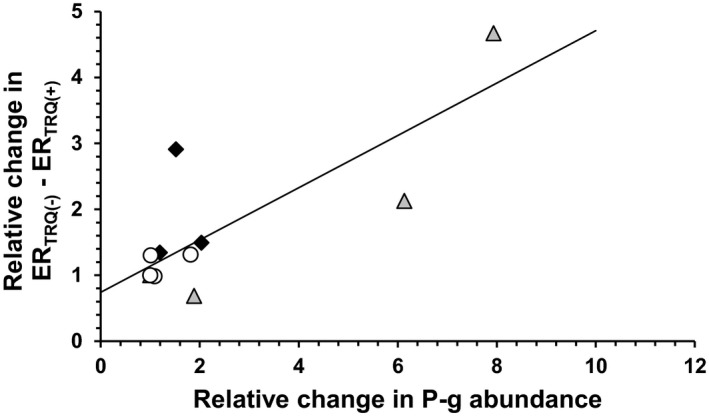
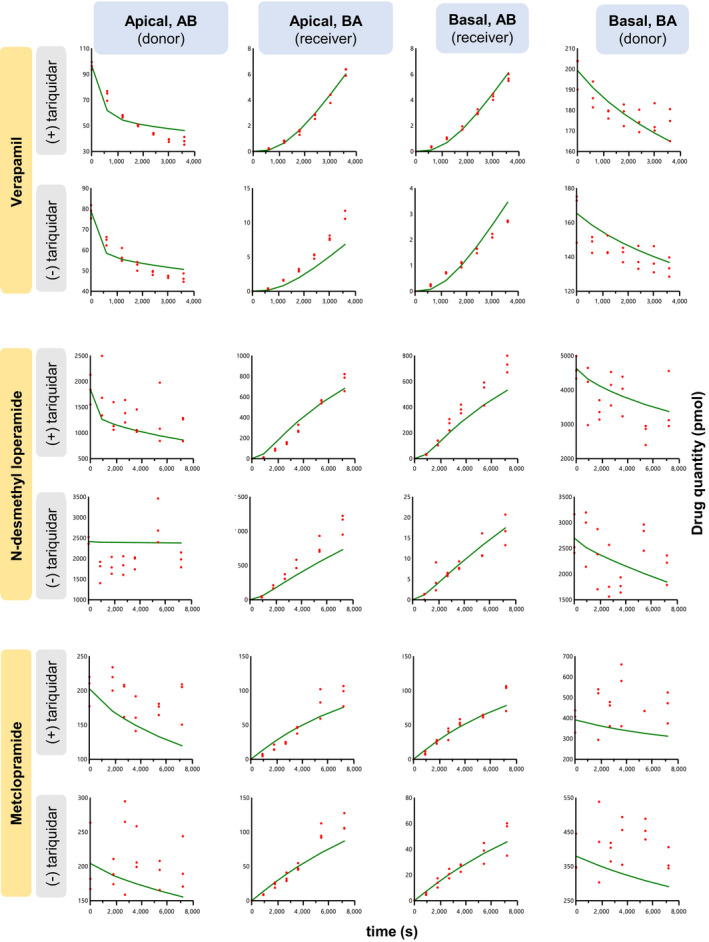
In order to optimize central nervous system (CNS) drug development, accurate prediction of the drug's human steady-state unbound brain interstitial fluid-to-plasma concentration ratio (K ) is critical, especially for drugs that are effluxed by the multiple drug resistance transporters (e.g., P-glycoprotein, P-gp). Due to lack of good in vitro human blood-brain barrier models, we and others have advocated the use of a proteomics-informed relative expressive factor (REF) approach to predict K . Therefore, we tested the success of this approach in humans, with a focus on P-gp substrates, using brain positron emission tomography imaging data for verification. To do so, the efflux ratio (ER) of verapamil, N-desmethyl loperamide, and metoclopramide was determined in human P-gp-transfected MDCKII cells using the Transwell assay. Then, using the ER estimate, K of the drug was predicted using REF (ER approach). Alternatively, in vitro passive and P-gp-mediated intrinsic clearances (CLs) of these drugs, estimated using a five-compartmental model, were extrapolated to in vivo using REF (active CL) and brain microvascular endothelial cells protein content (passive CL). The ER approach successfully predicted K of all three drugs within twofold of observed data and within 95% confidence interval of the observed data for verapamil and N-desmethyl loperamide. Using the in vitro-to-in vivo extrapolated clearance approach, K was reasonably well predicted but not the brain unbound interstitial fluid drug concentration-time profile. Therefore, we propose that the ER approach be used to predict K of CNS candidate drugs to enhance their success in development.
为了优化中枢神经系统 (CNS) 药物开发,准确预测药物在人体稳态下未结合脑间质液与血浆浓度比 (K ) 至关重要,尤其是对于那些被多药耐药转运体(如 P-糖蛋白,P-gp)外排的药物。由于缺乏良好的体外人血脑屏障模型,我们和其他人提倡使用蛋白质组学指导的相对表达因子 (REF) 方法来预测 K 。因此,我们使用脑正电子发射断层扫描成像数据进行验证,在人类中测试了这种方法的成功,重点是 P-gp 底物。为此,使用 Transwell 测定法在人 P-gp 转染的 MDCKII 细胞中测定了维拉帕米、N-去甲基洛哌丁胺和甲氧氯普胺的外排比 (ER)。然后,使用 ER 估计值,使用 REF(ER 方法)预测药物的 K 。或者,使用五房室模型估算这些药物的体外被动和 P-gp 介导的内在清除率 (CL),并使用 REF(主动 CL)和脑微血管内皮细胞蛋白含量(被动 CL)外推至体内。ER 方法成功预测了所有三种药物的 K ,与观察数据的两倍内和维拉帕米和 N-去甲基洛哌丁胺观察数据的 95%置信区间内。使用体外到体内外推清除率的方法,K 得到了很好的预测,但脑未结合间质液药物浓度-时间曲线不理想。因此,我们建议使用 ER 方法来预测 CNS 候选药物的 K ,以提高其开发成功率。