Choi Won-Tak
Department of Pathology, University of California at San Francisco, San Francisco, CA, USA.
J Pathol Transl Med. 2021 Mar;55(2):83-93. doi: 10.4132/jptm.2021.02.17. Epub 2021 Mar 9.
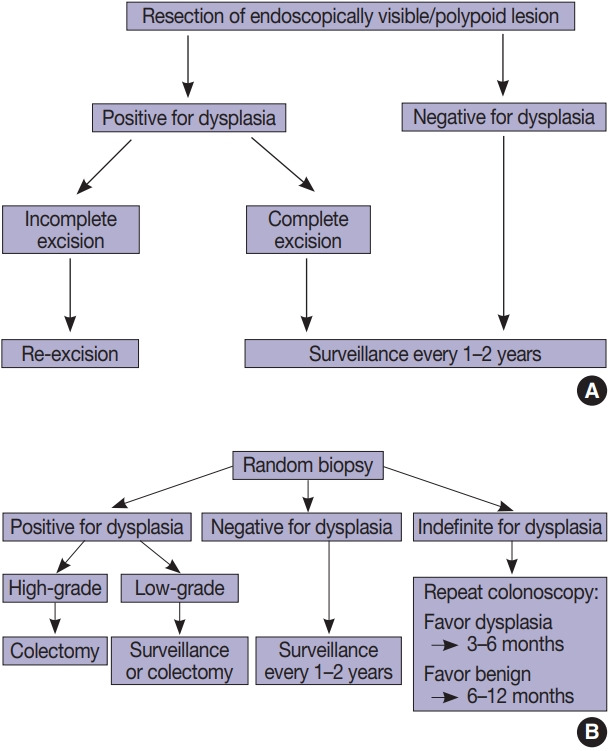
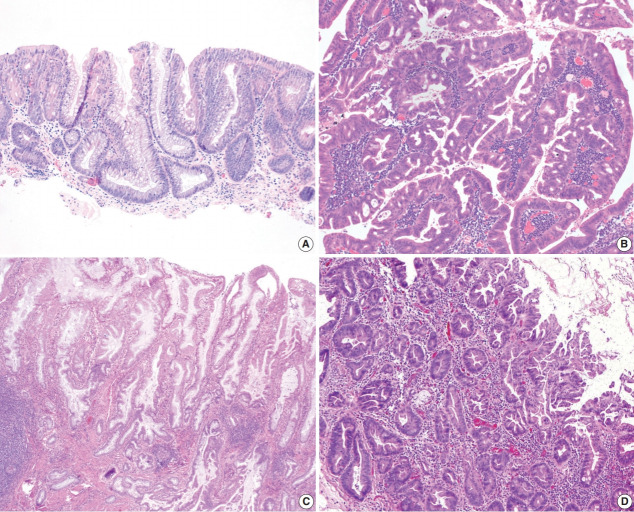
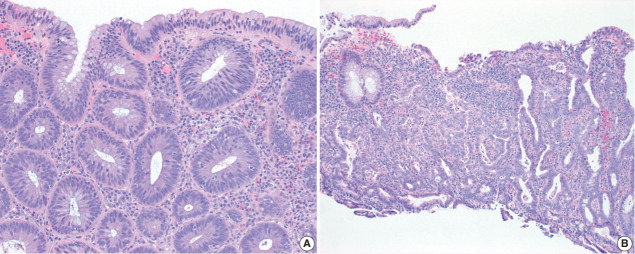
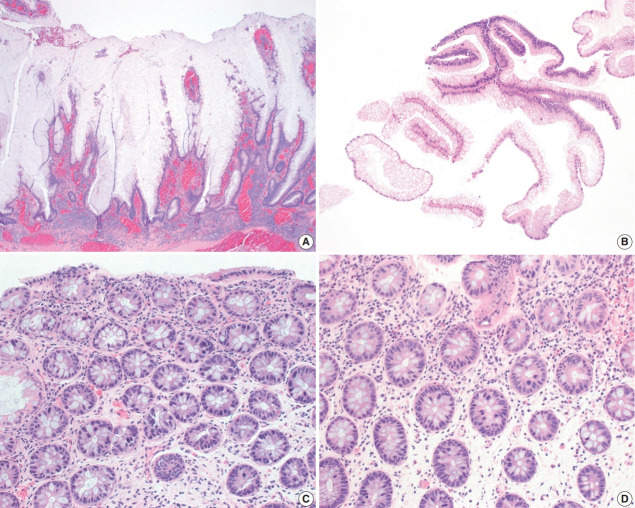
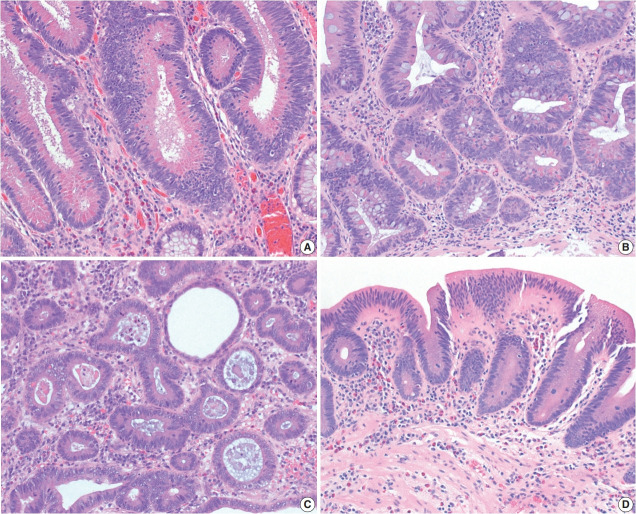
The early detection and grading of dysplasia is the current standard of care to minimize mortality from colorectal cancer (CRC) in patients with inflammatory bowel disease. With the development of advanced endoscopic resection techniques, colectomy is now reserved for patients with invisible/flat dysplasia (either high-grade [HGD] or multifocal low-grade dysplasia) or endoscopically unresectable lesions. Although most pathologists are familiar with the morphologic criteria of conventional (intestinal type) dysplasia, the most well-recognized form of dysplasia, an increasing number of diagnostic material has led to the recognition of several different morphologic patterns of epithelial dysplasia. The term "non-conventional" dysplasia has been coined to describe these changes, but to date, the recognition and full appreciation of these novel forms of dysplasia by practicing pathologists is uneven. The recognition of these non-conventional subtypes is becoming increasingly important, as some of them appear to have a higher risk of developing HGD or CRC than conventional dysplasia or sporadic adenomas. This review describes the morphologic characteristics of all seven non-conventional subtypes that have been reported to date as well as our current understanding of their clinicopathologic and molecular features that distinguish them from conventional dysplasia or sporadic adenomas.
发育异常的早期检测和分级是目前的医疗标准,目的是将炎症性肠病患者的结直肠癌(CRC)死亡率降至最低。随着先进内镜切除技术的发展,结肠切除术现在仅适用于患有不可见/扁平发育异常(高级别[HGD]或多灶性低级别发育异常)或内镜下无法切除的病变的患者。虽然大多数病理学家熟悉传统(肠型)发育异常的形态学标准,这是最广为人知的发育异常形式,但越来越多的诊断材料使人们认识到上皮发育异常的几种不同形态学模式。“非传统”发育异常这一术语已被用来描述这些变化,但迄今为止,执业病理学家对这些新型发育异常形式的认识和全面理解并不一致。识别这些非传统亚型变得越来越重要,因为其中一些亚型似乎比传统发育异常或散发性腺瘤发展为HGD或CRC的风险更高。本综述描述了迄今为止报道的所有七种非传统亚型的形态学特征,以及我们目前对它们的临床病理和分子特征的理解,这些特征将它们与传统发育异常或散发性腺瘤区分开来。