Bertile Fabrice, Habold Caroline, Le Maho Yvon, Giroud Sylvain
University of Strasbourg, CNRS, IPHC UMR 7178, Laboratoire de Spectrométrie de Masse Bio-Organique, Strasbourg, France.
University of Strasbourg, CNRS, IPHC UMR 7178, Ecology, Physiology & Ethology Department, Strasbourg, France.
Front Physiol. 2021 Feb 18;12:634953. doi: 10.3389/fphys.2021.634953. eCollection 2021.
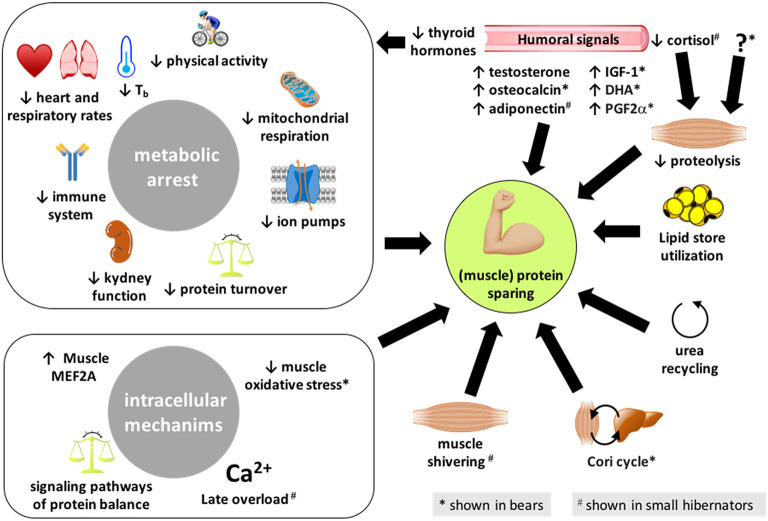
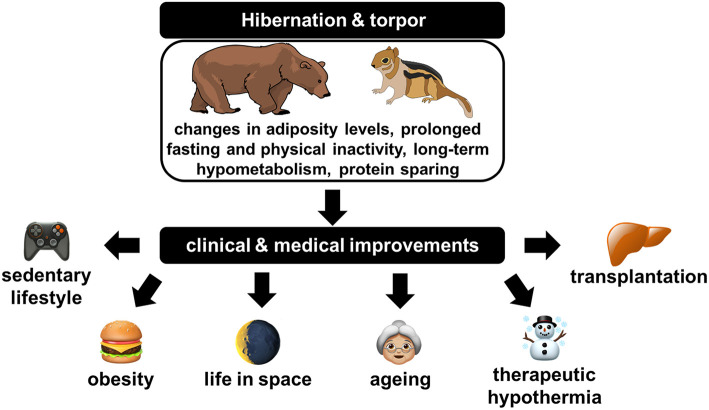
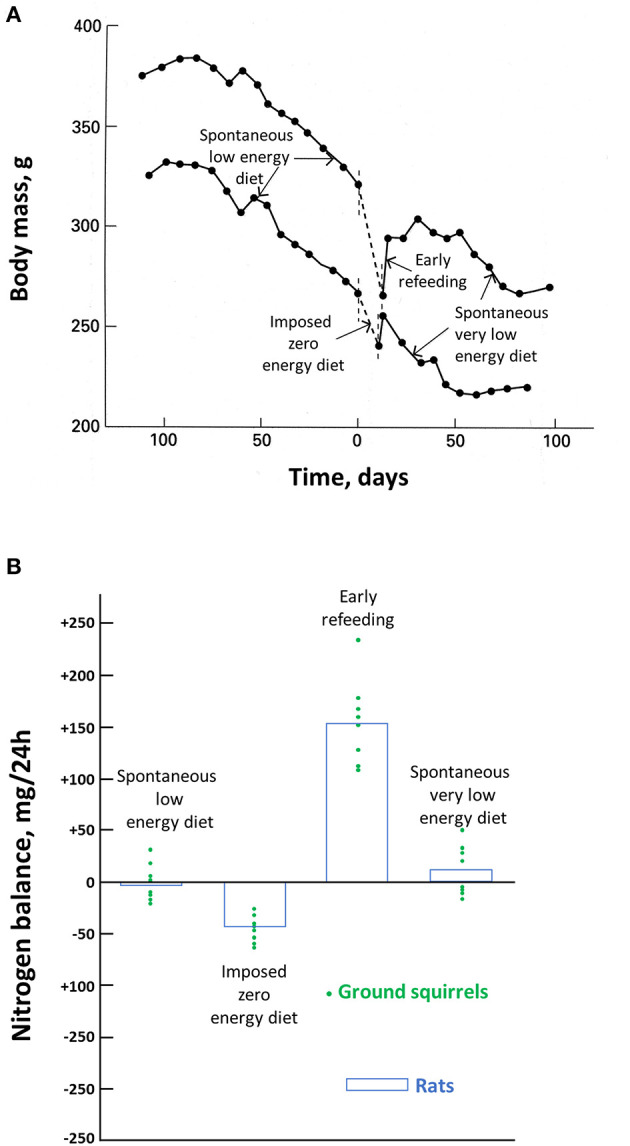
Proteins are not only the major structural components of living cells but also ensure essential physiological functions within the organism. Any change in protein abundance and/or structure is at risk for the proper body functioning and/or survival of organisms. Death following starvation is attributed to a loss of about half of total body proteins, and body protein loss induced by muscle disuse is responsible for major metabolic disorders in immobilized patients, and sedentary or elderly people. Basic knowledge of the molecular and cellular mechanisms that control proteostasis is continuously growing. Yet, finding and developing efficient treatments to limit body/muscle protein loss in humans remain a medical challenge, physical exercise and nutritional programs managing to only partially compensate for it. This is notably a major challenge for the treatment of obesity, where therapies should promote fat loss while preserving body proteins. In this context, hibernating species preserve their lean body mass, including muscles, despite total physical inactivity and low energy consumption during torpor, a state of drastic reduction in metabolic rate associated with a more or less pronounced hypothermia. The present review introduces metabolic, physiological, and behavioral adaptations, e.g., energetics, body temperature, and nutrition, of the torpor or hibernation phenotype from small to large mammals. Hibernating strategies could be linked to allometry aspects, the need for periodic rewarming from torpor, and/or the ability of animals to fast for more or less time, thus determining the capacity of individuals to save proteins. Both fat- and food-storing hibernators rely mostly on their body fat reserves during the torpid state, while minimizing body protein utilization. A number of them may also replenish lost proteins during arousals by consuming food. The review takes stock of the physiological, molecular, and cellular mechanisms that promote body protein and muscle sparing during the inactive state of hibernation. Finally, the review outlines how the detailed understanding of these mechanisms at play in various hibernators is expected to provide innovative solutions to fight human muscle atrophy, to better help the management of obese patients, or to improve the preservation of organs.
蛋白质不仅是活细胞的主要结构成分,还确保生物体内部的基本生理功能。蛋白质丰度和/或结构的任何变化都可能危及生物体的正常身体功能和/或生存。饥饿导致的死亡归因于全身蛋白质总量减少约一半,肌肉废用引起的身体蛋白质流失是导致固定不动的患者、久坐不动的人或老年人出现主要代谢紊乱的原因。控制蛋白质稳态的分子和细胞机制的基础知识在不断增加。然而,找到并开发有效的治疗方法来限制人体/肌肉蛋白质流失仍然是一项医学挑战,体育锻炼和营养计划只能部分弥补这一问题。这尤其是肥胖治疗中的一项重大挑战,在肥胖治疗中,疗法应促进脂肪减少,同时保留身体蛋白质。在这种情况下,冬眠物种尽管在蛰伏期间完全不活动且能量消耗低,但仍能保持其瘦体重,包括肌肉,蛰伏是一种代谢率急剧降低并伴有或多或少明显体温过低的状态。本综述介绍了从小型到大型哺乳动物蛰伏或冬眠表型的代谢、生理和行为适应,例如能量学、体温和营养。冬眠策略可能与异速生长方面、从蛰伏中定期复温的需求和/或动物或多或少长时间禁食的能力有关,从而决定个体保存蛋白质的能力。脂肪储存型和食物储存型冬眠动物在蛰伏状态下大多依赖其体内脂肪储备,同时尽量减少身体蛋白质的利用。其中一些动物还可能在苏醒期间通过进食补充流失的蛋白质。本综述总结了在冬眠不活动状态下促进身体蛋白质和肌肉保留的生理、分子和细胞机制。最后,本综述概述了对各种冬眠动物中这些机制的详细理解如何有望提供创新解决方案,以对抗人类肌肉萎缩、更好地帮助管理肥胖患者或改善器官保存。