Iglesias-Soler Eliseo, Rúa-Alonso María, Rial-Vázquez Jessica, Lete-Lasa Jose Ramón, Clavel Iván, Giráldez-García Manuel A, Rico-Díaz Javier, Corral Miguel Rodríguez-Del, Carballeira-Fernández Eduardo, Dopico-Calvo Xurxo
Performance and Health Group, Faculty of Sports Sciences and Physical Education, Department of Physical Education and Sports, University of A Coruna, A Coruña, Spain.
General Sport Secretariat, Galician Government, Santiago de Compostela, Spain.
Front Psychol. 2021 Feb 19;12:627834. doi: 10.3389/fpsyg.2021.627834. eCollection 2021.
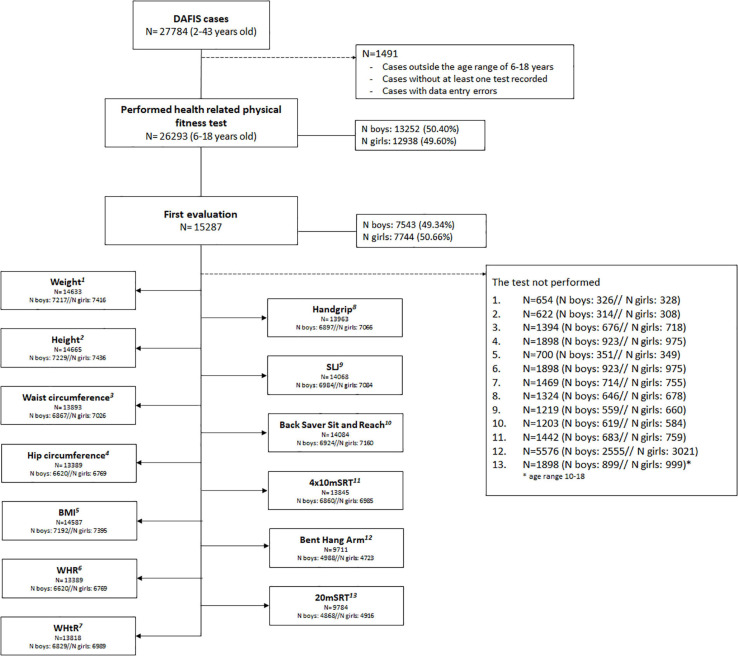
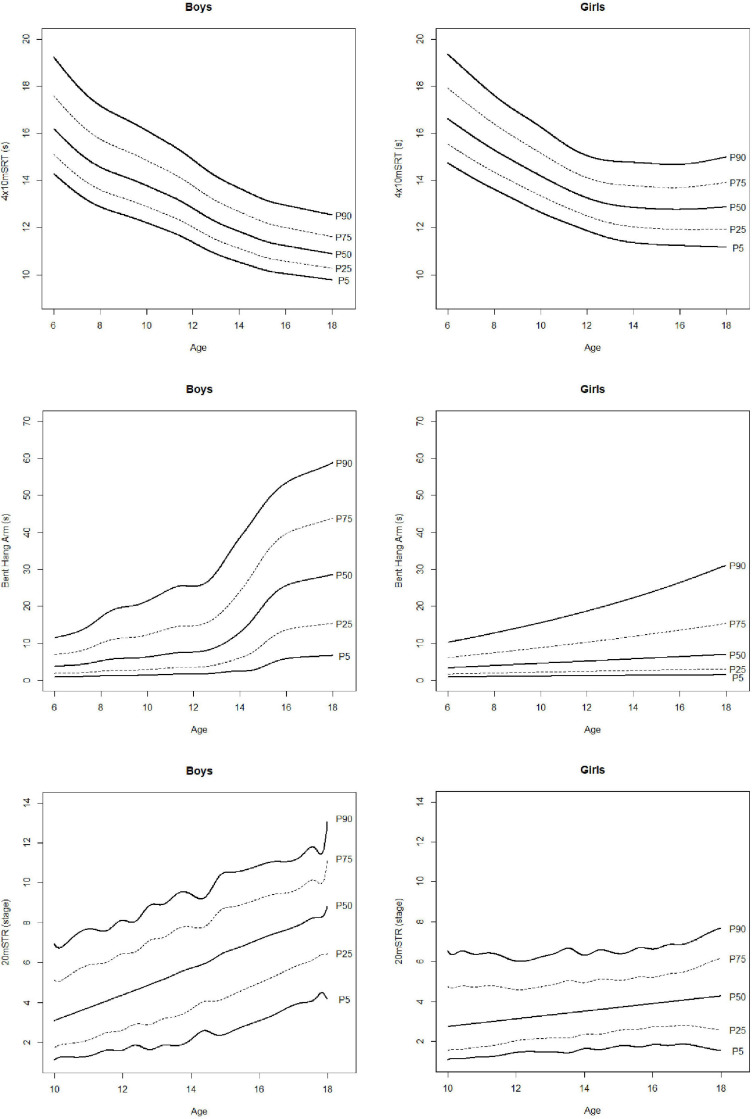
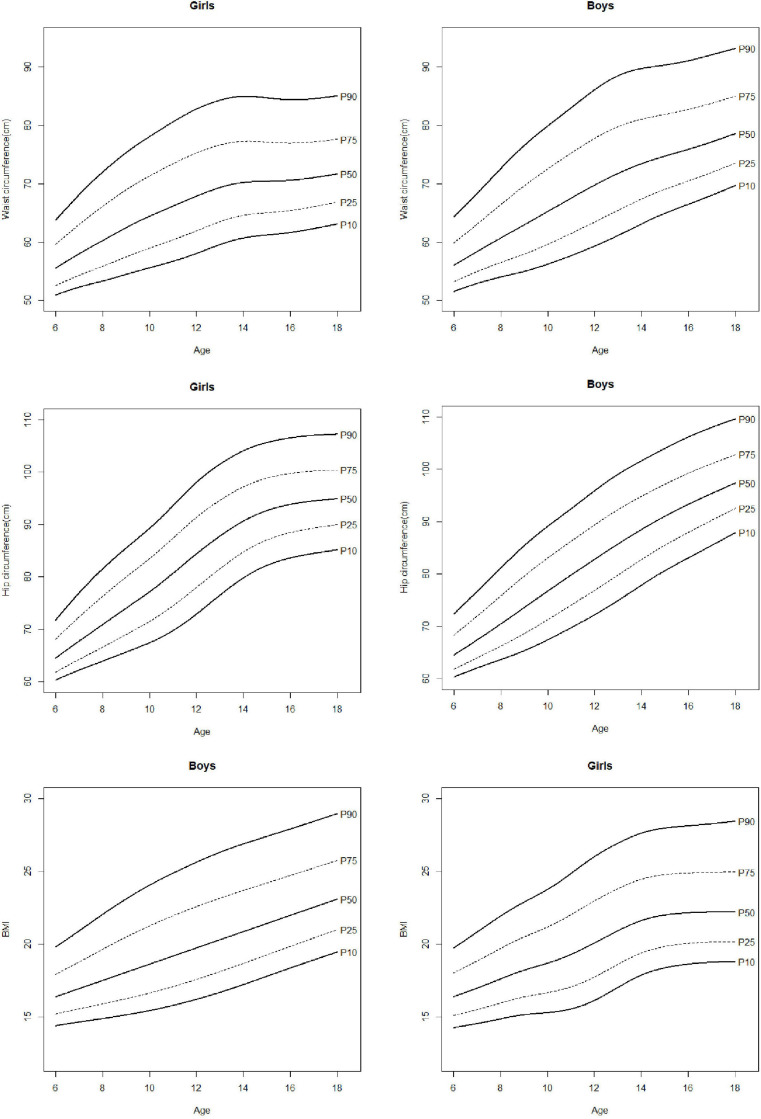
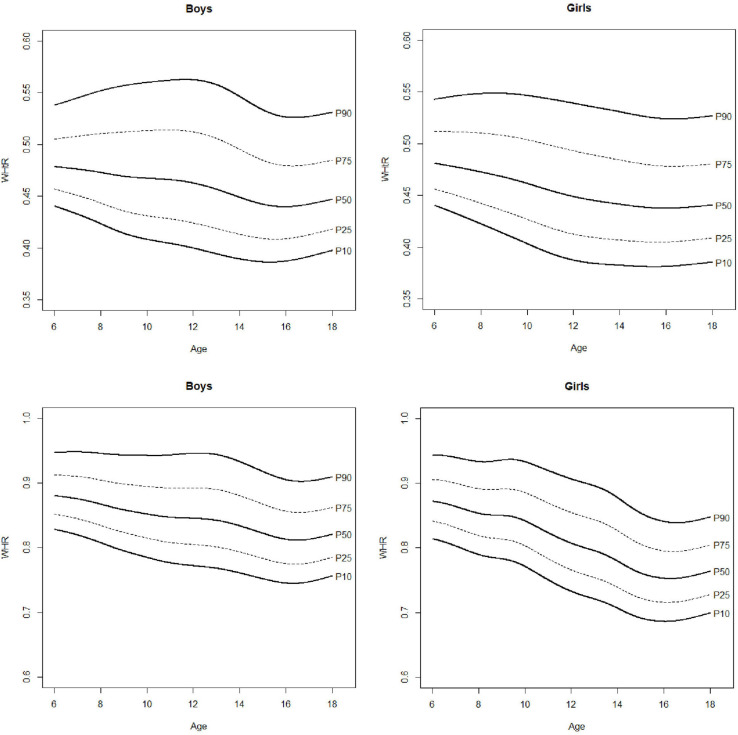
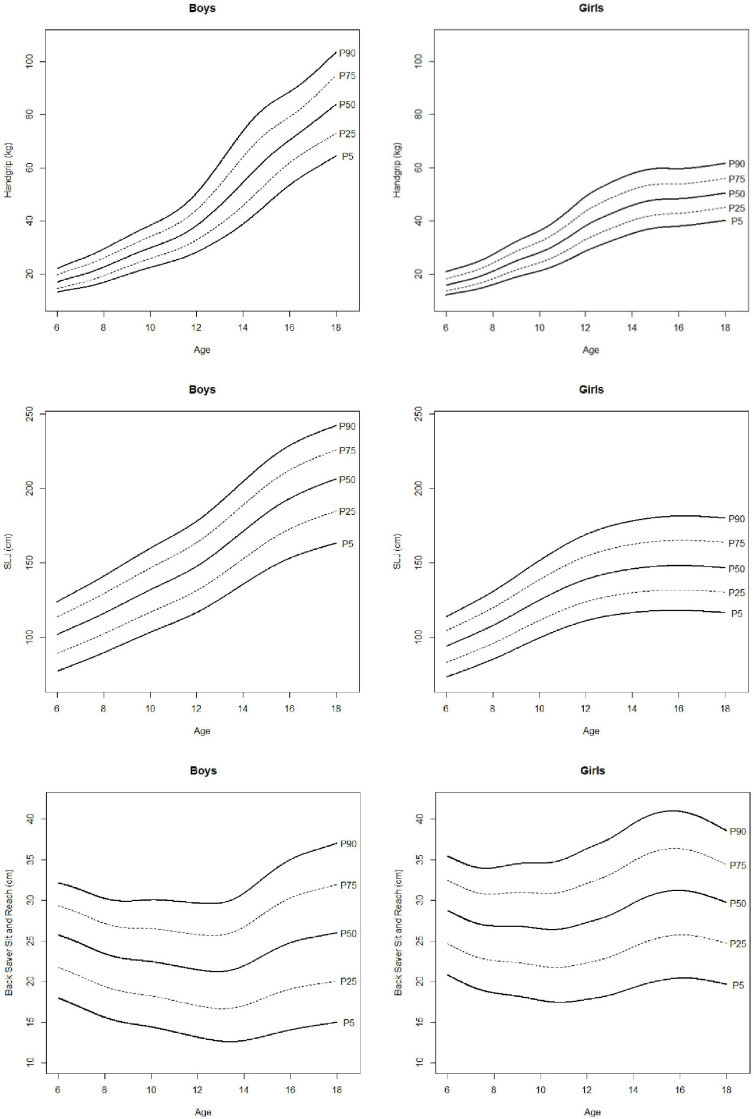
Assessing physical fitness has emerged as a proxy of the health status of children and adolescents and therefore as relevant from a public health point of view. DAFIS is a project included in Plan Galicia Saudable (Healthy Galicia Plan) of the regional government of Galicia (Spain). DAFIS consists of an on-line software devoted to record the results of a standard physical fitness protocol carried out as a part of the physical education curriculum. The aims of this study were: to obtain normative values of physical fitness of the Galician school population evaluated in the DAFIS project, and to identify a reduced number of components and tests able to capture a significant amount of the variability in the physical fitness of children and adolescents. From an initial sample of 27784 records, 15287 cases (7543 males, 7744 females) were considered after filtering. Generalized Additive Models for Location, Scale and Shape were used for obtaining percentile curves and tables for each sex. Furthermore, a principal components analysis was performed, selecting the number of components by applying the Kaiser's rule and selecting a subset of variables considering the correlation between each variable and the components. Percentile curves and normative values are reported for each test and sex. Physical fitness was better in boys than in girls throughout age groups, except for flexibility that was consistently higher in girls. Two main components were detected throughout age groups: the first one representing body composition and partially cardiorespiratory fitness and the second one muscular fitness. For boys and girls, waist to height ratio had the highest correlations with the first component in four out of six age groups. The highest correlation with the second component, was most frequently observed for the handgrip test both in boys and girls (four out of six age groups). This study provides evidence about the utility of school community actions like DAFIS aimed to track the health-related fitness of children and adolescents. The results suggest that fat mass distribution (i.e., waist to height ratio and waist circumference) and muscular performance (mainly handgrip) concentrate a high proportion physical fitness variance.
评估体能已成为衡量儿童和青少年健康状况的一个指标,因此从公共卫生角度来看具有重要意义。DAFIS是西班牙加利西亚自治区政府“健康加利西亚计划”中的一个项目。DAFIS包含一个在线软件,用于记录作为体育课程一部分所开展的标准体能测试的结果。本研究的目的是:获取在DAFIS项目中评估的加利西亚学校人群的体能规范值,并确定能够反映儿童和青少年体能显著变异性的较少数量的组成部分和测试项目。在对27784条记录的初始样本进行筛选后,纳入了15287例(7543名男性,7744名女性)。使用位置、尺度和形状的广义相加模型来获取各性别百分位数曲线和表格。此外,进行了主成分分析,通过应用凯泽法则选择成分数量,并根据每个变量与成分之间的相关性选择变量子集。报告了每个测试项目和性别的百分位数曲线及规范值。除柔韧性在各年龄组中女孩始终高于男孩外,各年龄组男孩的体能均优于女孩。在各年龄组中检测到两个主要成分:第一个代表身体成分和部分心肺功能,第二个代表肌肉功能。对于男孩和女孩,在六个年龄组中的四个组中,腰高比与第一个成分的相关性最高。在男孩和女孩中,握力测试与第二个成分的相关性最高(六个年龄组中的四个组)。本研究为像DAFIS这样旨在跟踪儿童和青少年健康相关体能的学校社区行动的效用提供了证据。结果表明,脂肪量分布(即腰高比和腰围)和肌肉表现(主要是握力)集中了很大比例的体能变异性。