Cestero Juan J, Castanheira Sónia, Pucciarelli M Graciela, García-Del Portillo Francisco
Laboratory of Intracellular Bacterial Pathogens, National Centre for Biotechnology (CNB)-CSIC, Madrid, Spain.
Department of Molecular Biology, Autonomous University of Madrid, Madrid, Spain.
Front Microbiol. 2021 Feb 19;12:633701. doi: 10.3389/fmicb.2021.633701. eCollection 2021.
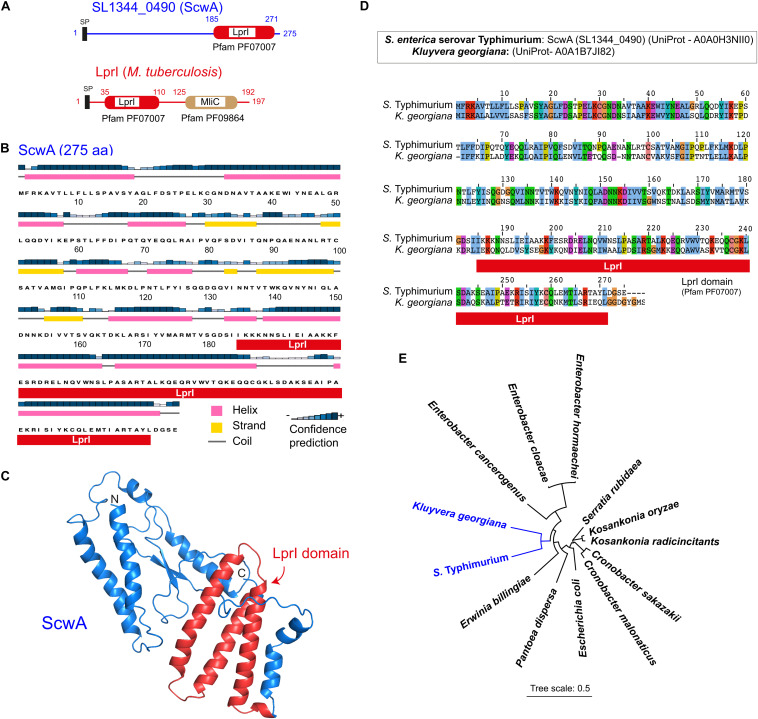
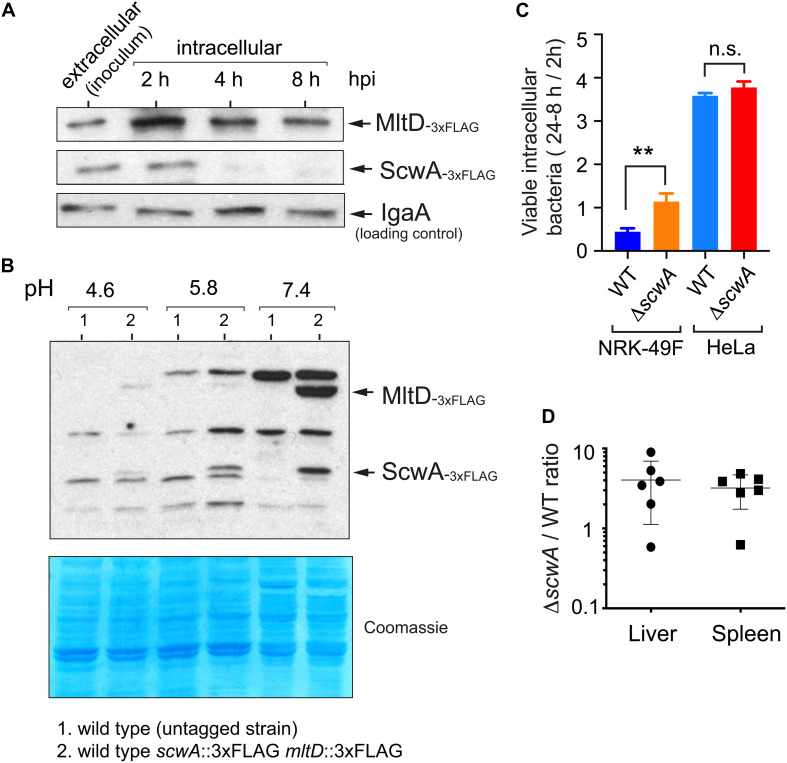
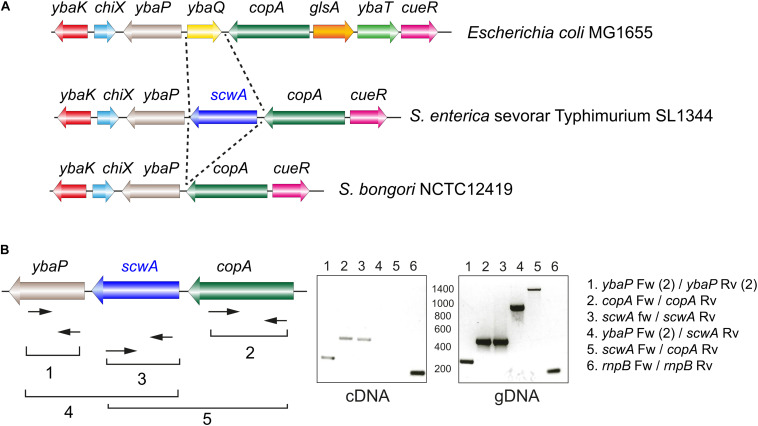
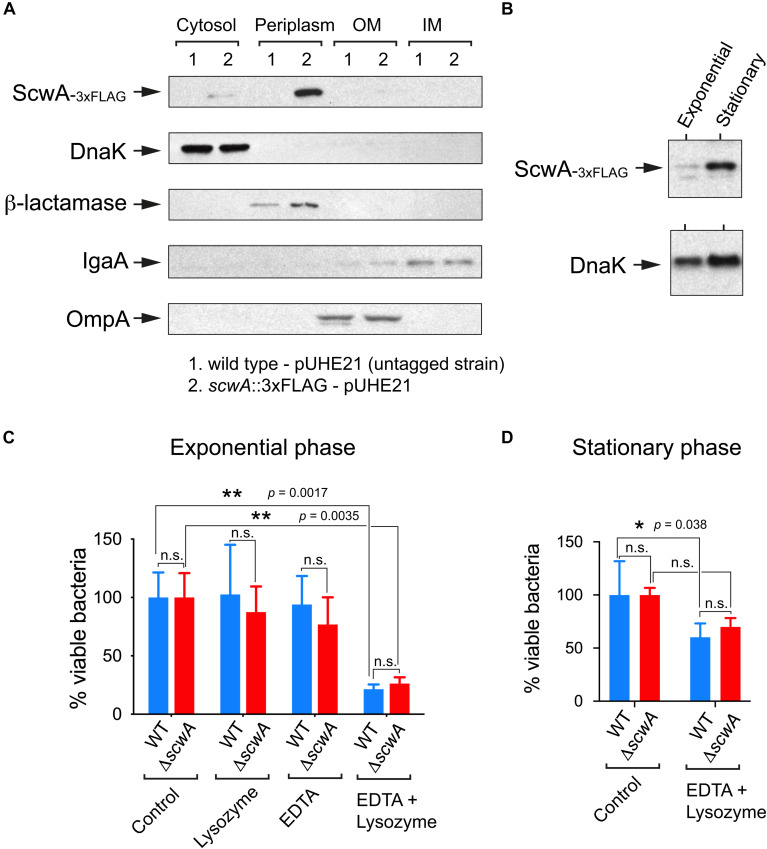
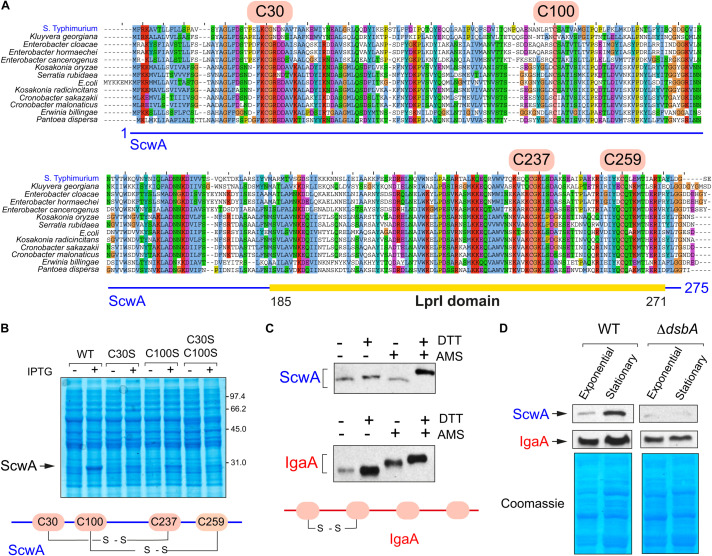
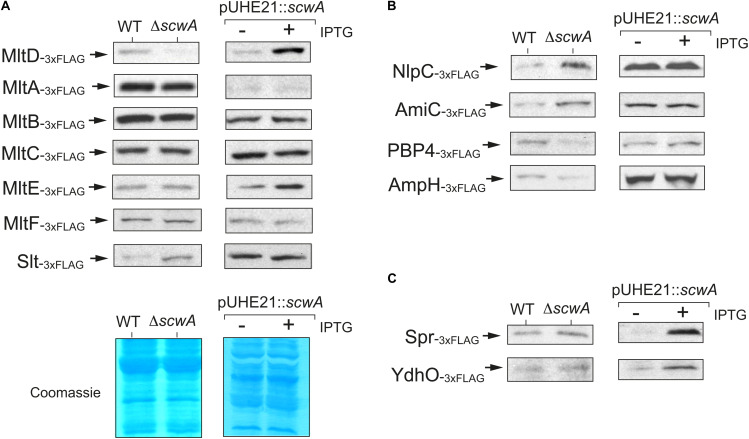
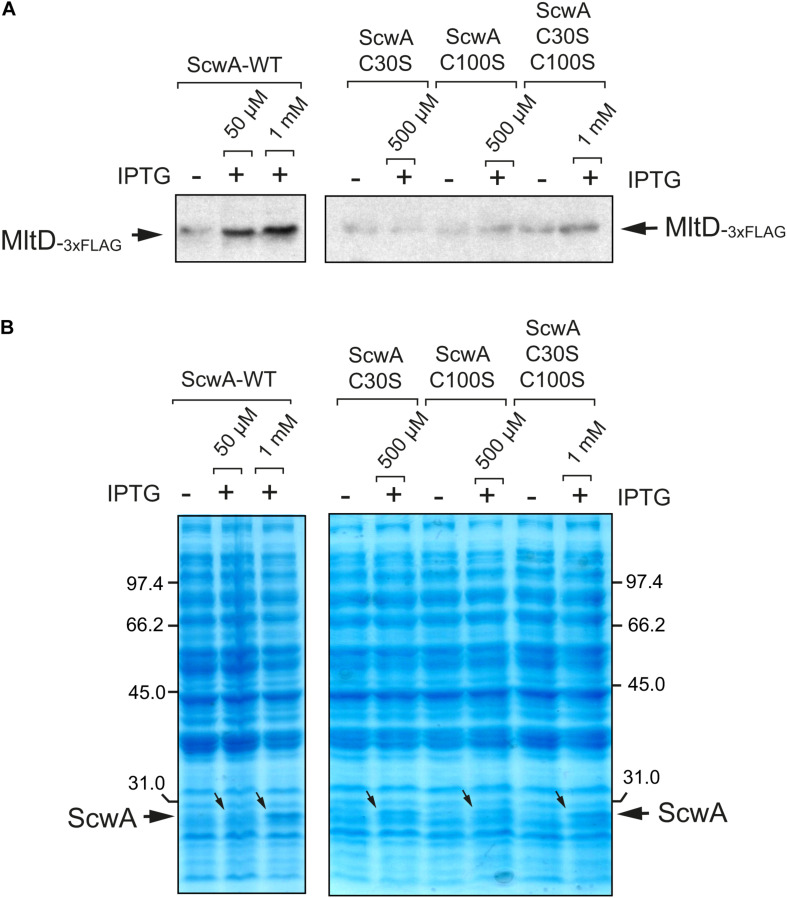
Horizontal gene transfer has shaped the evolution of as pathogen. Some functions acquired by this mechanism include enzymes involved in peptidoglycan (PG) synthesis and remodeling. Here, we report a novel serovar Typhimurium protein that is absent in non-pathogenic bacteria and bears a LprI functional domain, first reported in a lipoprotein conferring lysozyme resistance. Based on the presence of such domain, we hypothesized a role of this Typhimurium protein in PG metabolism. This protein, which we named ScwA for cell wall-related regulator-A, controls positively the levels of the murein lytic transglycosylase MltD. In addition, the levels of other enzymes that cleave bonds in the PG lattice were affected in a mutant lacking ScwA, including a soluble lytic tranglycosylase (Slt), the amidase AmiC, and a few endo- and carboxypeptidases (NlpC, PBP4, and AmpH). The gene has lower G+C content than the genomic average (43.1 vs. 52.2%), supporting acquisition by horizontal transfer. ScwA is located in the periplasm, stabilized by two disulfide bridges, produced preferentially in stationary phase and down-regulated following entry of the pathogen into eukaryotic cells. ScwA deficiency, however, results in a hypervirulent phenotype in the murine typhoid model. Based on these findings, we conclude that ScwA may be exploited by Typhimurium to ensure cell envelope homeostasis along the infection and to prevent host overt damage. This role could be accomplished by controlling the production or stability of a reduced number of peptidoglycan hydrolases whose activities result in the release of PG fragments.
水平基因转移塑造了作为病原体的[具体细菌名称未给出]的进化。通过这种机制获得的一些功能包括参与肽聚糖(PG)合成和重塑的酶。在这里,我们报道了一种新型鼠伤寒血清型蛋白,它在非致病细菌中不存在,并带有LprI功能域,该功能域首次在一种赋予溶菌酶抗性的脂蛋白中被报道。基于该结构域的存在,我们推测这种鼠伤寒蛋白在PG代谢中发挥作用。我们将这种蛋白命名为ScwA(细胞壁相关调节因子A),它正向调控胞壁质溶解转糖基酶MltD的水平。此外,在缺乏ScwA的突变体中,其他在PG晶格中切割键的酶的水平也受到影响,包括可溶性溶菌转糖基酶(Slt)、酰胺酶AmiC以及一些内肽酶和羧肽酶(NlpC、PBP4和AmpH)。[具体细菌名称未给出]基因的G + C含量低于基因组平均水平(43.1%对52.2%),支持其通过水平转移获得。ScwA位于周质中,由两个二硫键稳定,在稳定期优先产生,并且在病原体进入真核细胞后下调。然而,ScwA缺陷在鼠伤寒模型中导致超毒力表型。基于这些发现,我们得出结论,鼠伤寒[具体细菌名称未给出]可能利用ScwA来确保在感染过程中细胞包膜的稳态,并防止宿主受到明显损伤。这一作用可以通过控制数量减少的肽聚糖水解酶的产生或稳定性来实现,这些酶的活性导致PG片段的释放。