Center for Sport, Exercise and Life Sciences, Coventry University, Coventry, United Kingdom.
College of Medical and Dental Sciences, Centre for Computational Biology, Institute of Cancer and Genomic Sciences, University of Birmingham, Birmingham, United Kingdom.
Front Immunol. 2021 Feb 19;12:643529. doi: 10.3389/fimmu.2021.643529. eCollection 2021.
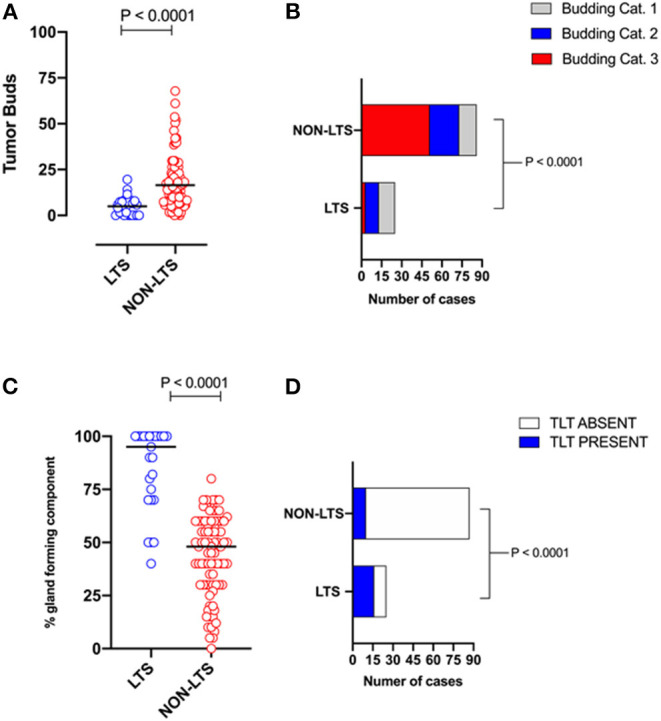
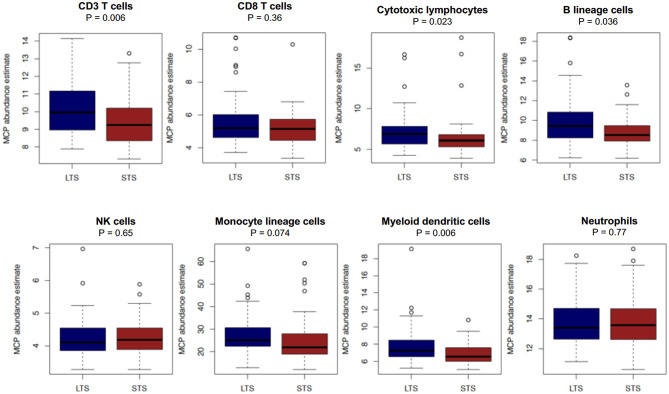
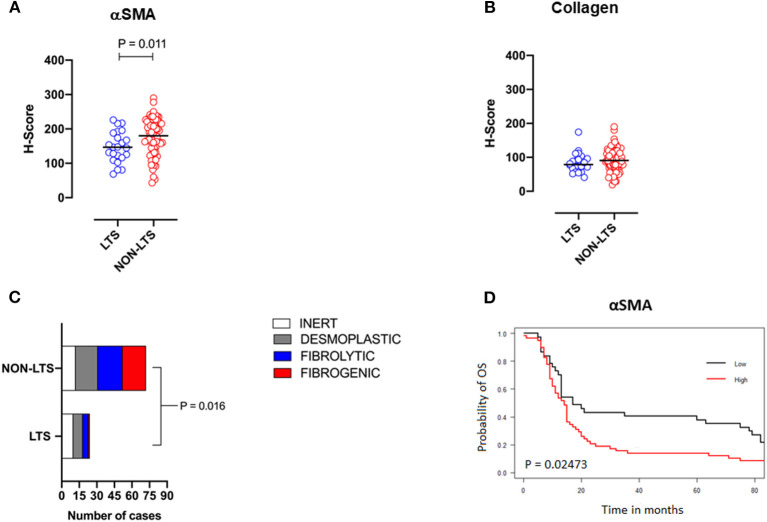
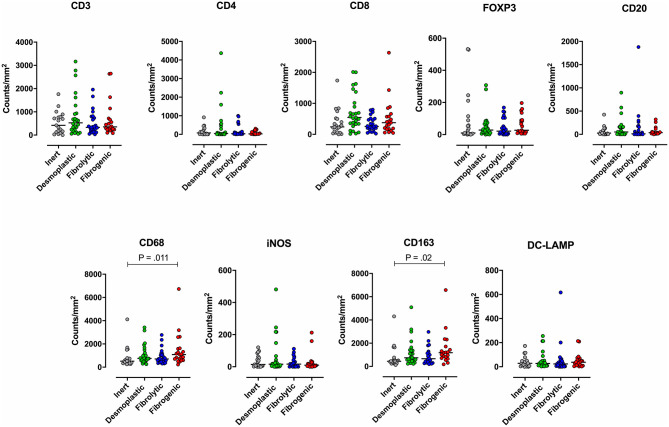
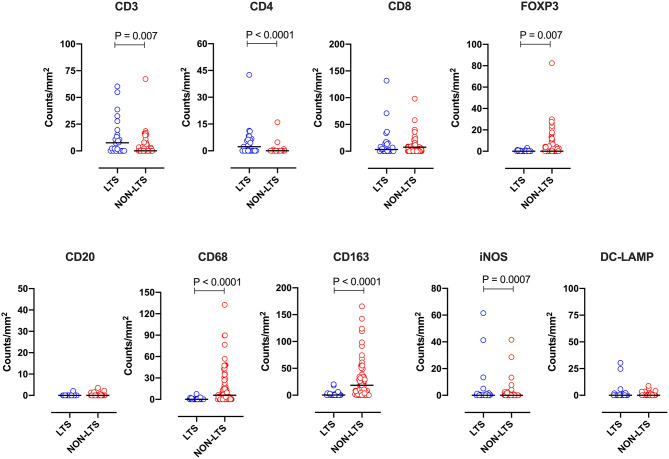
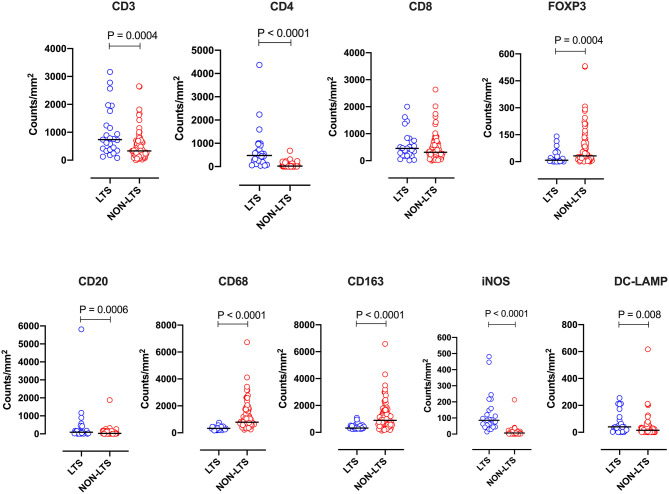
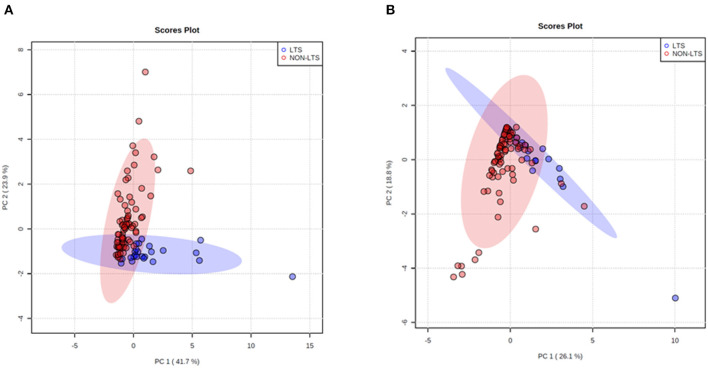
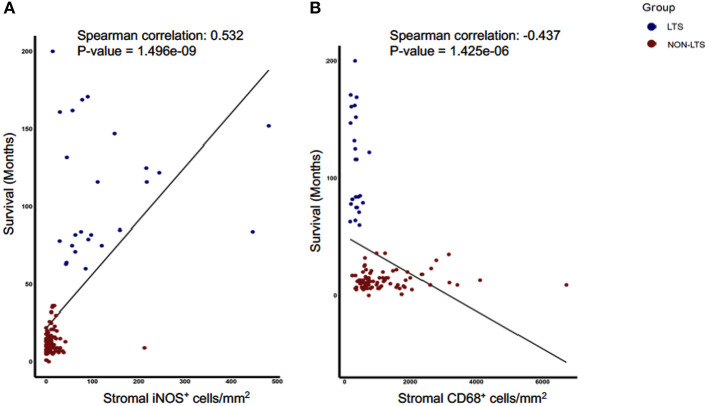
The aggressive biology and treatment refractory nature of pancreatic ductal adenocarcinoma (PDAC) significantly limits long-term survival. Examining the tumor microenvironment (TME) of long-term survivors (LTS) of PDAC offers the potential of unveiling novel biological insights and therapeutic targets. We performed an integrated approach involving immunophenotyping, stromal scoring and histomorphological profiling of a cohort of 112 PDAC-cases, including 25 long-term survivors (LTSs, OS ≥ 60 months). Mutational frequencies were assessed using targeted next generation sequencing. Finally, we validated our findings using an external cohort of microarray data from PDAC patients. LTS cases exhibit a largely quiescent population of cancer-associated fibroblasts (CAFs). Immune profiling revealed key differences between LTS and NON-LTS cases in the intratumoral and stromal compartments. In both compartments, LTS cases exhibit a T cell inflamed profile with higher density of CD3 T cells, CD4 T cells, iNOS leukocytes and strikingly diminished numbers of CD68 total macrophages, CD163 (M2) macrophages and FOXP3 Tregs. A large proportion of LTS cases exhibited tertiary lymphoid tissue (TLT) formation, which has been observed to be a positive prognostic marker in a number of tumor types. Using a Random-Forest variable selection approach, we identified the density of stromal iNOS cells and CD68 cells as strong positive and negative prognostic variables, respectively. In an external cohort, computational cell-type deconvolution revealed a higher abundance of T cells, B lymphocytes and dendritic cells (DCs) in patients with long-term OS compared to short-term survivors. Thus, profiling of long-term survivors in an external cohort, strongly corroborated the T cell-inflamed TME observed in our LTS group. Collectively, our findings highlight the prognostic importance of TME profiles in PDAC, underlining the crucial role of tumor associated macrophages (TAMs) and the potential interdependence between immunosuppressive TAMs and activated CAFs in pancreatic cancer. Additionally, our data has potential for precision medicine and patient stratification. Patients with a T cell inflamed TME might derive benefit from agonistic T cell antibodies (e.g., OX40 or CD137 agonists). Alternately, patients with activated CAFs and high infiltration of immunosuppressive TAMs are highly likely to exhibit therapeutic responses to macrophage targeted drugs (e.g., anti-CSF1R) and anti-CAF agents.
胰腺导管腺癌(PDAC)具有侵袭性生物学特性和治疗耐药性,这极大地限制了长期生存。研究 PDAC 长期幸存者(LTS)的肿瘤微环境(TME)有可能揭示新的生物学见解和治疗靶点。我们采用免疫表型分析、基质评分和组织形态学分析的综合方法,对包括 25 例长期幸存者(LTS,OS≥60 个月)在内的 112 例 PDAC 病例进行了研究。使用靶向下一代测序评估突变频率。最后,我们使用 PDAC 患者的微阵列数据的外部队列验证了我们的发现。LTS 病例表现出大量静止的癌相关成纤维细胞(CAFs)。免疫分析显示,LTS 和 NON-LTS 病例在肿瘤内和基质区室中的关键差异。在这两个区室中,LTS 病例均表现出 T 细胞浸润的特征,CD3 T 细胞、CD4 T 细胞、iNOS 白细胞的密度较高,而总巨噬细胞 CD68、CD163(M2)巨噬细胞和 FOXP3 Treg 的数量明显减少。很大一部分 LTS 病例表现出三级淋巴组织(TLT)形成,这在许多肿瘤类型中被观察到是一个积极的预后标志物。使用随机森林变量选择方法,我们确定基质 iNOS 细胞和 CD68 细胞的密度分别是强烈的阳性和阴性预后变量。在一个外部队列中,计算细胞类型去卷积显示,与短期幸存者相比,具有长期 OS 的患者中 T 细胞、B 淋巴细胞和树突状细胞(DC)的丰度更高。因此,在外部队列中对长期幸存者进行的分析,强烈证实了我们在 LTS 组中观察到的 T 细胞浸润的 TME。总之,我们的研究结果突出了 PDAC 中 TME 谱的预后重要性,强调了肿瘤相关巨噬细胞(TAMs)的关键作用以及在胰腺癌中免疫抑制性 TAMs 和活化 CAFs 之间的潜在相互依存关系。此外,我们的数据具有精准医学和患者分层的潜力。具有 T 细胞浸润性 TME 的患者可能受益于激动性 T 细胞抗体(例如,OX40 或 CD137 激动剂)。相反,具有活化 CAFs 和高浸润免疫抑制性 TAMs 的患者很可能对巨噬细胞靶向药物(例如,抗 CSF1R)和抗 CAF 药物有治疗反应。