Rosado Mario J, Rencoret Jorge, Marques Gisela, Gutiérrez Ana, Del Río José C
Department of Plant Biotechnology, Instituto de Recursos Naturales y Agrobiología de Sevilla, CSIC, Seville, Spain.
Front Plant Sci. 2021 Feb 19;12:640475. doi: 10.3389/fpls.2021.640475. eCollection 2021.
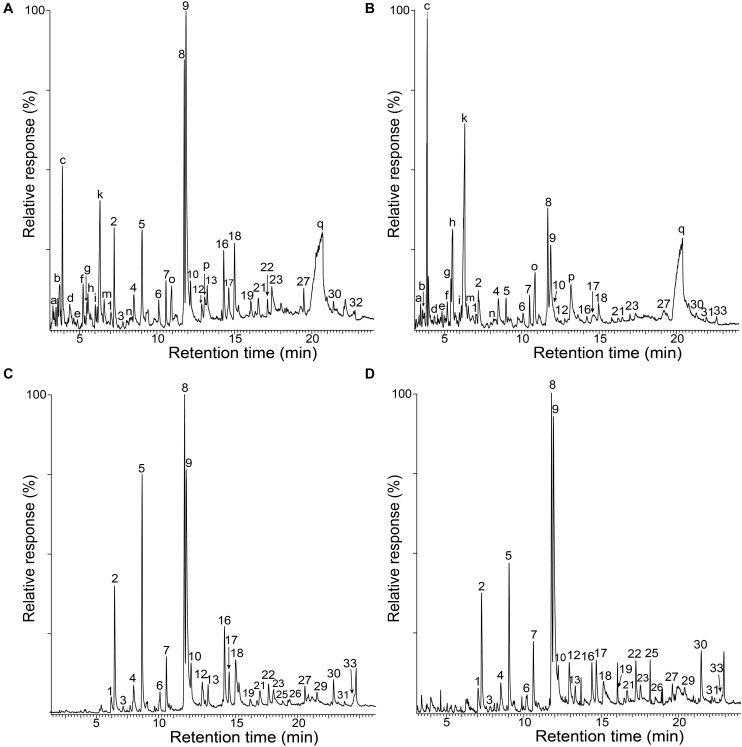
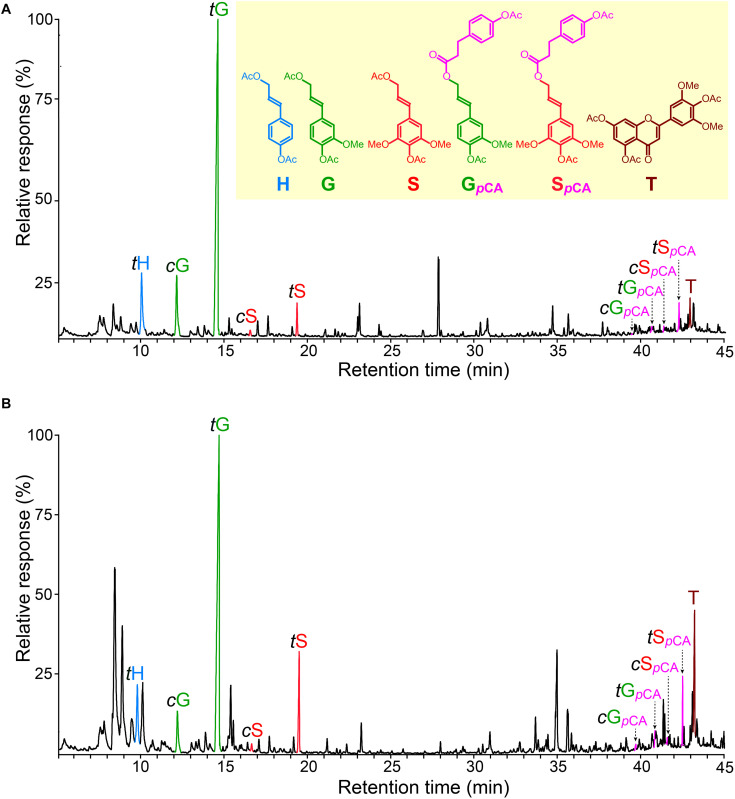
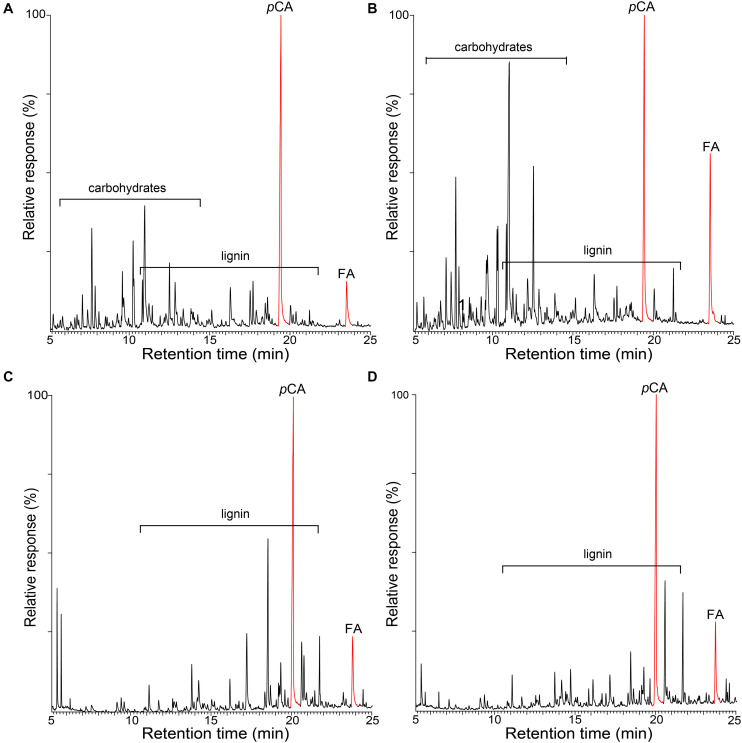
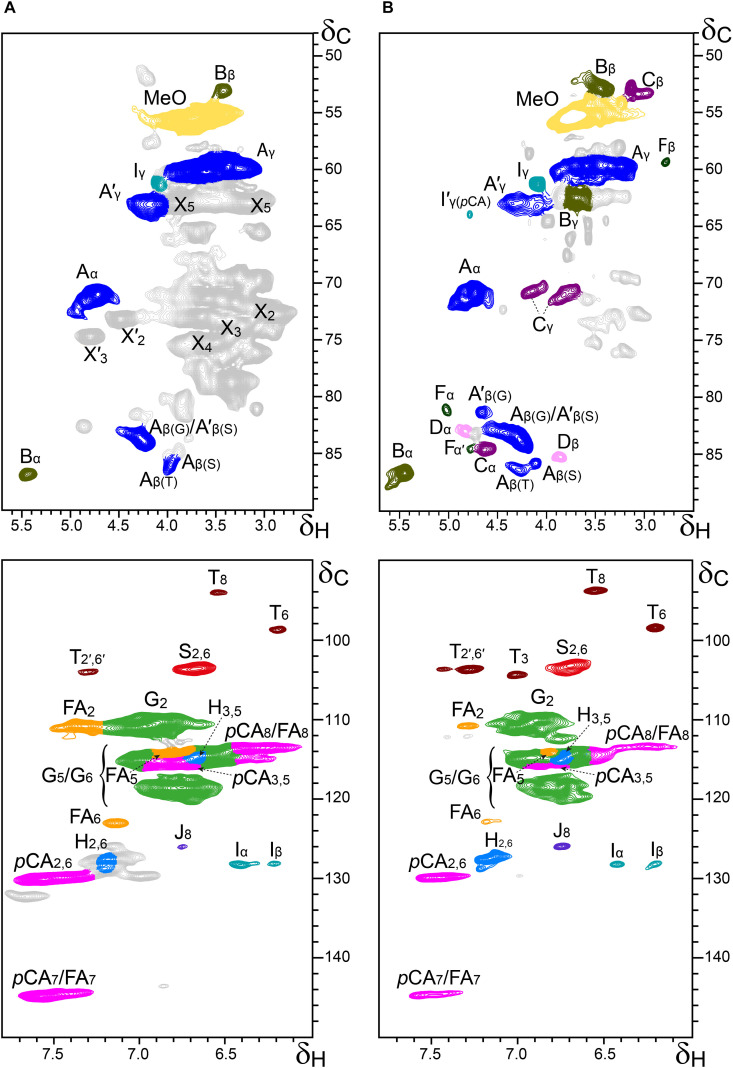
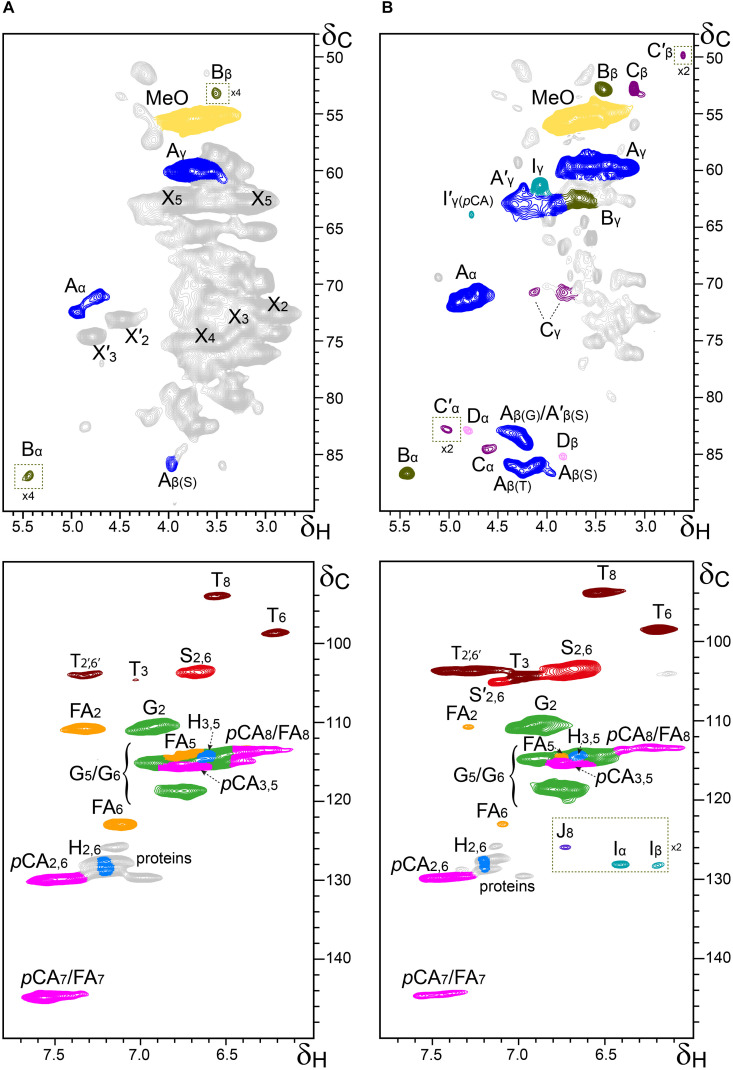
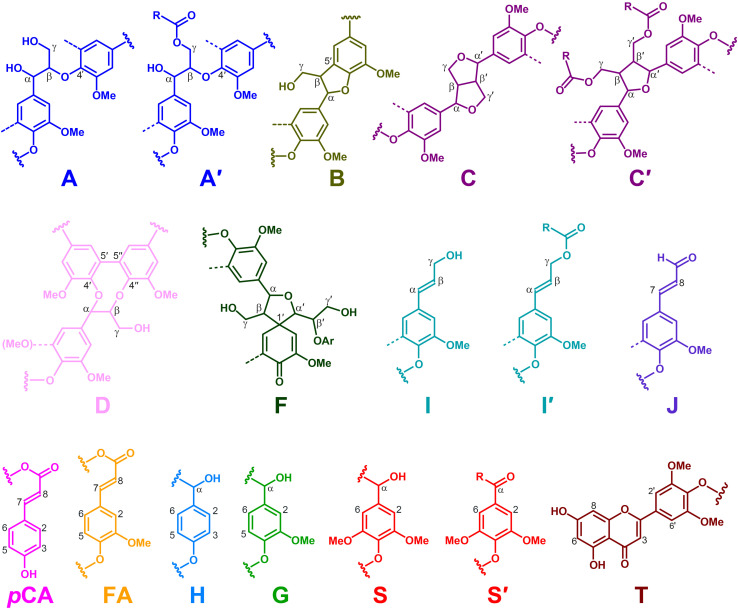
Rice ( L.) is a major cereal crop used for human nutrition worldwide. Harvesting and processing of rice generates huge amounts of lignocellulosic by-products such as rice husks and straw, which present important lignin contents that can be used to produce chemicals and materials. In this work, the structural characteristics of the lignins from rice husks and straw have been studied in detail. For this, whole cell walls of rice husks and straw and their isolated lignin preparations were thoroughly analyzed by an array of analytical techniques, including pyrolysis coupled to gas chromatography-mass spectrometry (Py-GC/MS), nuclear magnetic resonance (NMR), and derivatization followed by reductive cleavage (DFRC). The analyses revealed that both lignins, particularly the lignin from rice husks, were highly enriched in guaiacyl (G) units, and depleted in -hydroxyphenyl (H) and syringyl (S) units, with H:G:S compositions of 7:81:12 (for rice husks) and 5:71:24 (for rice straw). These compositions were reflected in the relative abundances of the different interunit linkages. Hence, the lignin from rice husks were depleted in β--4' alkyl-aryl ether units (representing 65% of all inter-unit linkages), but presented important amounts of β-5' (phenylcoumarans, 23%) and other condensed units. On the other hand, the lignin from rice straw presented higher levels of β--4' alkyl-aryl ethers (78%) but lower levels of phenylcoumarans (β-5', 12%) and other condensed linkages, consistent with a lignin with a slightly higher S/G ratio. In addition, both lignins were partially acylated at the γ-OH of the side-chain (ca. 10-12% acylation degree) with -coumarates, which overwhelmingly occurred over S-units. Finally, important amounts of the flavone tricin were also found incorporated into these lignins, being particularly abundant in the lignin of rice straw.
水稻(Oryza sativa L.)是全球用于人类营养的主要谷类作物。水稻的收获和加工会产生大量木质纤维素副产品,如稻壳和稻草,它们含有重要的木质素成分,可用于生产化学品和材料。在这项工作中,对稻壳和稻草中木质素的结构特征进行了详细研究。为此,通过一系列分析技术,包括热解气相色谱 - 质谱联用(Py - GC/MS)、核磁共振(NMR)以及衍生化后还原裂解(DFRC),对稻壳和稻草的全细胞壁及其分离的木质素制剂进行了全面分析。分析表明,两种木质素,特别是稻壳中的木质素,富含愈创木基(G)单元,而对羟基苯基(H)和紫丁香基(S)单元含量较低,H:G:S组成为7:81:12(稻壳)和5:71:24(稻草)。这些组成反映在不同单元间连接的相对丰度上。因此,稻壳中的木质素β - O - 4'烷基 - 芳基醚单元含量较低(占所有单元间连接的65%),但含有大量的β - 5'(苯基香豆素,23%)和其他缩合单元。另一方面,稻草中的木质素β - O - 4'烷基 - 芳基醚含量较高(78%),但苯基香豆素(β - 5',12%)和其他缩合连接含量较低,这与S/G比略高的木质素一致。此外,两种木质素在侧链的γ - OH处均有部分被香豆酸酰化(酰化度约为10 - 12%),且主要发生在S单元上。最后,还发现大量黄酮类化合物小麦黄素也掺入到这些木质素中,在稻草木质素中尤为丰富。