Karlsson Jan, Galavazi Marije, Jansson Stefan, Jendle Johan
University Health Care Research Center Faculty of Medicine and Health Örebro University Örebro Sweden.
School of Medical Sciences Faculty of Medicine and Health Örebro University Örebro Sweden.
Obes Sci Pract. 2020 Oct 28;7(1):4-13. doi: 10.1002/osp4.464. eCollection 2021 Feb.
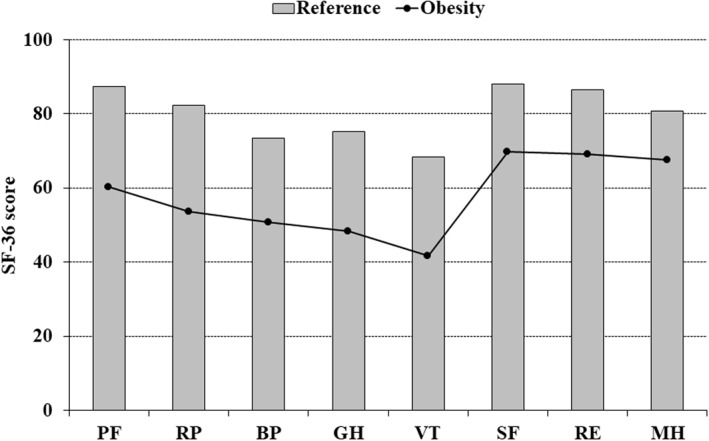
Obesity is associated with reduced health-related quality of life (HRQoL). Outcomes of nonsurgical weight loss treatment on HRQoL are inconsistent and it is unclear how much weight reduction, or what type of treatment, is required for significant improvements. This study aimed to evaluate the effects of a lifestyle intervention program on weight, eating behaviors, and HRQoL, and to describe participants' experiences of treatment.
This 2-year intervention trial in persons with class II or III obesity comprised a 3-month liquid low-energy diet (880 kcal/d) followed by a 3-month reintroduction to regular foods, combined with behavioral group treatment.
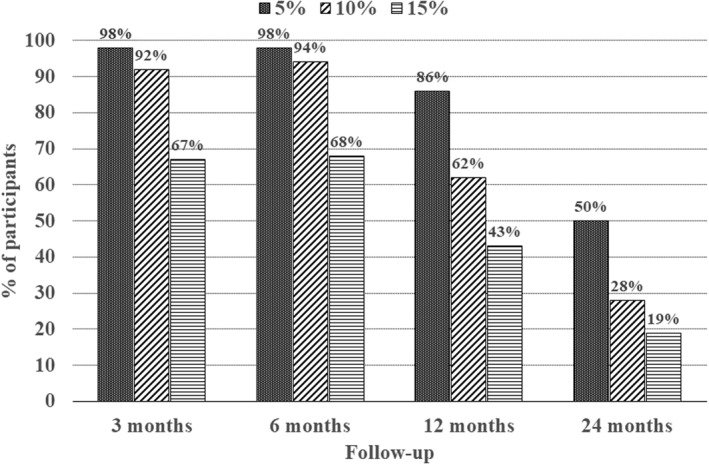
Fifty-five participants (73% women) were included, mean (SD) age 43.2 (12.4) years, and mean body mass index 42.0 (6.0) kg/m. Mean weight loss at 6, 12, and 24 months was 18.9%, 13.7%, and 7.2%, respectively. Short- and long-term effects on eating behavior were favorable. Twelve of 14 HRQoL domains were improved at 6 months, compared to eight domains at 12 months. After 24 months, 2 of 14 domains, physical and psychosocial functioning, were improved. The treatment program was well accepted by the participants.
Substantial weight loss after 6 months was associated with extensive improvements in HRQoL, comprising the physical, psychosocial, and mental domains. Significant weight regain was observed between 6 and 24 months follow-up. Modest weight loss after 24 months was associated with moderate improvement in physical functioning and large improvement in psychosocial functioning. The effect on psychosocial functioning is most likely related to both weight loss and behavioral treatment.
肥胖与健康相关生活质量(HRQoL)降低有关。非手术减肥治疗对HRQoL的效果并不一致,目前尚不清楚需要减轻多少体重或采用何种治疗方式才能实现显著改善。本研究旨在评估生活方式干预计划对体重、饮食行为和HRQoL的影响,并描述参与者的治疗体验。
这项针对II级或III级肥胖患者的为期2年的干预试验包括为期3个月的流食低能量饮食(880千卡/天),随后是为期3个月的常规食物重新引入阶段,并结合行为小组治疗。
纳入了55名参与者(73%为女性),平均(标准差)年龄43.2(12.4)岁,平均体重指数42.0(6.0)千克/米²。6个月、12个月和24个月时的平均体重减轻分别为18.9%、13.7%和7.2%。对饮食行为的短期和长期影响均为有利。与12个月时的8个领域相比,14个HRQoL领域中有12个在6个月时得到改善。24个月后,14个领域中的2个,即身体和心理社会功能,得到改善。参与者对治疗方案的接受度良好。
6个月后显著的体重减轻与HRQoL在身体、心理社会和精神领域的广泛改善有关。在6至24个月的随访期间观察到显著的体重反弹。24个月后适度的体重减轻与身体功能的中度改善和心理社会功能的大幅改善有关。对心理社会功能的影响很可能与体重减轻和行为治疗均有关。