Ruud Kjær Eva Kristine, Jensen Jakob Schmidt, Jakobsen Kathrine Kronberg, Lelkaitis Giedrius, Wessel Irene, von Buchwald Christian, Grønhøj Christian
Department of Otorhinolaryngology, Head and Neck Surgery and Audiology, University of Copenhagen, Rigshospitalet, Copenhagen, Denmark.
Department of Pathology, University of Copenhagen, Rigshospitalet, Copenhagen, Denmark.
Front Oncol. 2021 Feb 17;10:617184. doi: 10.3389/fonc.2020.617184. eCollection 2020.
Comorbidity is presumed to impact survival of head and neck squamous cell cancer (HNSCC) patients. However, the prevalence and prognostic impact of comorbidity in these patients is not yet well established. The aim of this study is to outline the comorbidity burden of HNSCC patients and investigate the relation to overall survival and cancer-specific mortality.
The comorbidity burden of patients registered with HNSCC in the Danish Cancer Registry between 1980 and 2014 was evaluated based on the Charlson Comorbidity Index (CCI). Patients' risks of comorbid conditions compared to age- and gender-matched controls were estimated by odds ratios (OR). The impact of comorbidity on overall survival and cancer-specific mortality was evaluated by Cox regression and Kaplan-Meier survival analysis.
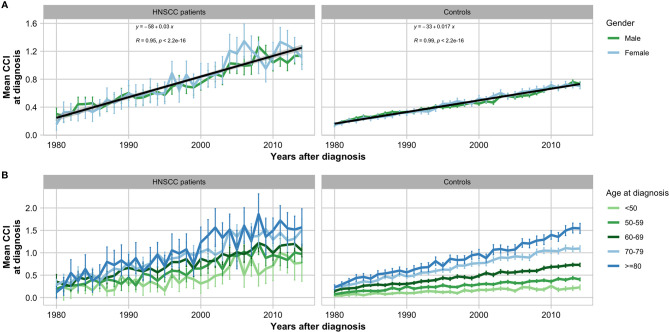
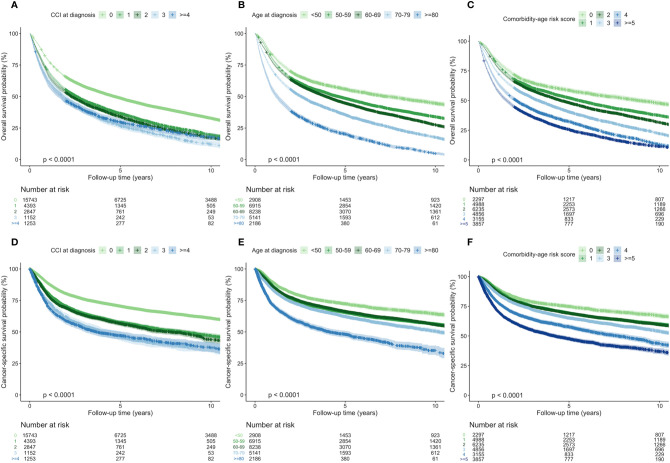
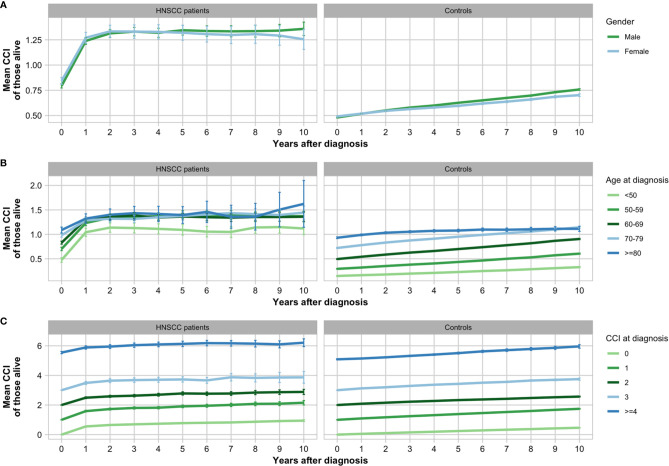
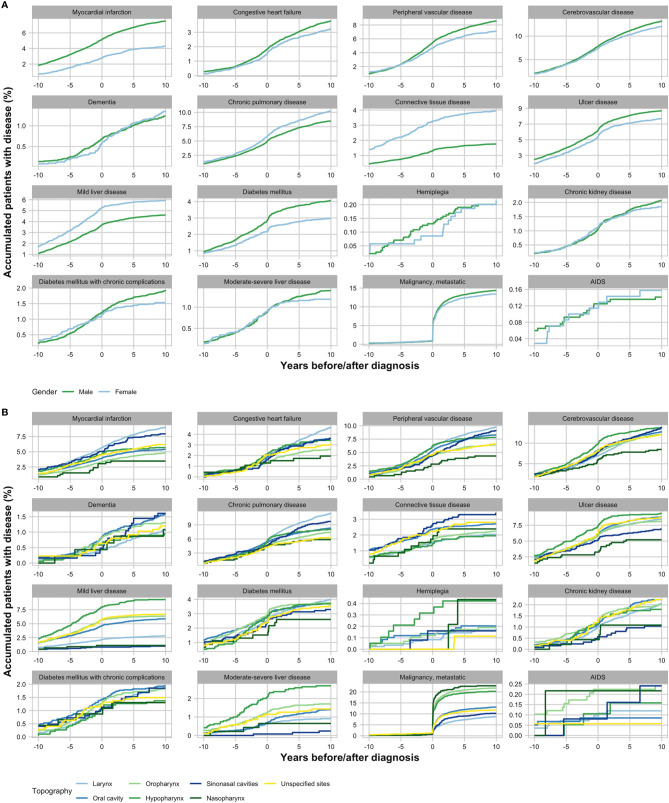
A total of 25,388 HNSCC patients were included (72.5% male; mean age 63.2 years at diagnosis; median follow-up 3.0 years). CCI at diagnosis was significantly higher in patients compared to controls (). The most common comorbid conditions among the patients were additional non-metastatic malignancy (10.9%) and cerebrovascular disease (7.7%). Compared to controls, patients had higher odds of metastatic malignancy (OR: 4.65; 95% CI: 4.21-5.15; ), mild liver disease (OR: 6.95; 95% CI: 6.42-7.53; ), and moderate-severe liver disease (OR: 7.28; 95% CI: 6.14-8.65; ). The multivariate Cox analysis revealed increasing hazard ratios with increasing CCI and in coherence the Kaplan-Meier curves showed poorer overall survival and increased cancer-specific mortality in patients with higher CCI.
HNSCC patients' comorbidity burden was significantly greater compared to the general population and increased comorbidity was correlated with increased cancer-related mortality.
合并症被认为会影响头颈部鳞状细胞癌(HNSCC)患者的生存。然而,这些患者中合并症的患病率及其预后影响尚未完全明确。本研究的目的是概述HNSCC患者的合并症负担,并研究其与总生存期和癌症特异性死亡率的关系。
基于Charlson合并症指数(CCI)评估1980年至2014年间在丹麦癌症登记处登记的HNSCC患者的合并症负担。通过比值比(OR)估计患者与年龄和性别匹配的对照组相比患合并症的风险。通过Cox回归和Kaplan-Meier生存分析评估合并症对总生存期和癌症特异性死亡率的影响。
共纳入25388例HNSCC患者(男性占72.5%;诊断时平均年龄63.2岁;中位随访时间3.0年)。患者诊断时的CCI显著高于对照组()。患者中最常见的合并症是其他非转移性恶性肿瘤(10.9%)和脑血管疾病(7.7%)。与对照组相比,患者发生转移性恶性肿瘤的几率更高(OR:4.65;95%CI:4.21-5.15;)、轻度肝病(OR:6.95;95%CI:6.42-7.53;)和中重度肝病(OR:7.28;95%CI:6.14-8.65;)。多变量Cox分析显示,随着CCI升高,风险比增加,并且Kaplan-Meier曲线一致显示,CCI较高的患者总生存期较差,癌症特异性死亡率增加。
与普通人群相比,HNSCC患者的合并症负担显著更大,合并症增加与癌症相关死亡率增加相关。