PhD. Physiotherapist and Professor, Professional and Academic Master's Program, Laboratory for Evidence-Based Healthcare, Escola Superior em Ciências da Saúde (ESCS), Brasília (DF), Brazil.
PhD. Physician and Medical Education Manager, Undergraduate Medical Course, Escola Superior em Ciências da Saúde (ESCS), Brasília (DF), Brazil; Professor, Academic Master's Program, Escola Superior em Ciências da Saúde (ESCS), Brasília (DF), Brazil; and Professor, Family Health Master's Program (ProfSaúde), Escola Superior em Ciências da Saúde (ESCS), Brasília (DF), Brazil.
Sao Paulo Med J. 2021 Mar-Apr;139(2):91-97. doi: 10.1590/1516-3180.2020.0346.R1.18112020.
Rheumatoid arthritis (RA) is a chronic disease with higher prevalence among women aged between 30 and 50 years and general prevalence of 1% worldwide. Interventions promoting improvement of quality of life for individuals with RA are required. Tai Chi appears to be a low-cost alternative, with studies showing positive results from this technique. However, regarding aspects of RA such as pain and sensitivity, studies remain inconclusive.
To compare the effectiveness of the Tai Chi method for treating patients diagnosed with rheumatoid arthritis, among systematic reviews.
Overview of systematic reviews with Cochrane and non-Cochrane methodology.
Systematic reviews involving quasi-randomized and randomized clinical trials (RCTs) on use of Tai Chi, with no restrictions regarding the date and language of publication, were included.
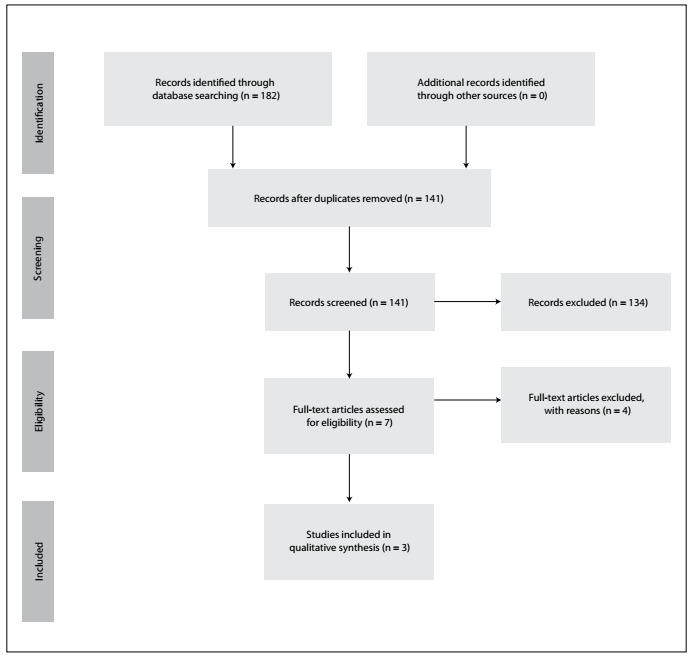
Three systematic reviews were included. The effects of Tai Chi associated with education and stretching exercises versus education and stretching were evaluated in these reviews. They showed that improvements in the variables of mood, depression and functional index were associated with use of Tai Chi.
The findings suggest that clinical improvement was achieved, although not statistically significant with regard to pain and disease pattern, as assessed using the ACR20 measurement. Improvements relating to disability and quality of life were also seen. There was a low level of evidence and therefore caution in data analysis is recommended. The three studies included showed poor reliability for providing an accurate and complete summary of use of Tai Chi among people diagnosed with rheumatoid arthritis.
CRD42019125501.
类风湿关节炎(RA)是一种慢性病,在 30 至 50 岁的女性中更为常见,全球发病率为 1%。需要采取干预措施来提高 RA 患者的生活质量。太极拳似乎是一种低成本的选择,研究表明这种技术有积极的效果。然而,关于 RA 患者的疼痛和敏感性等方面,研究结果仍不一致。
在系统评价中比较太极拳治疗类风湿关节炎患者的效果。
采用 Cochrane 和非 Cochrane 方法学的系统评价概述。
纳入关于太极拳使用的准随机和随机临床试验(RCT)的系统评价,不限制发表日期和语言。
共纳入 3 项系统评价。这些综述评估了太极拳联合教育和伸展运动与单纯教育和伸展运动的效果。结果表明,太极拳与情绪、抑郁和功能指数等变量的改善相关。
研究结果表明,虽然在使用 ACR20 测量评估疼痛和疾病模式方面没有统计学意义,但临床改善得到了实现。残疾和生活质量的改善也得到了证实。证据水平较低,因此建议在数据分析中谨慎处理。纳入的三项研究在准确全面地总结 RA 患者太极拳使用情况方面的可靠性较差。
CRD42019125501。