Laboratory of Clinical Chemistry and Hematology, Academic Hospital of Parma..
Academy of Emergency Medicine and Care, Pavia, Italy.
Acta Biomed. 2021 Feb 4;92(1):e2021045. doi: 10.23750/abm.v92i1.9153.
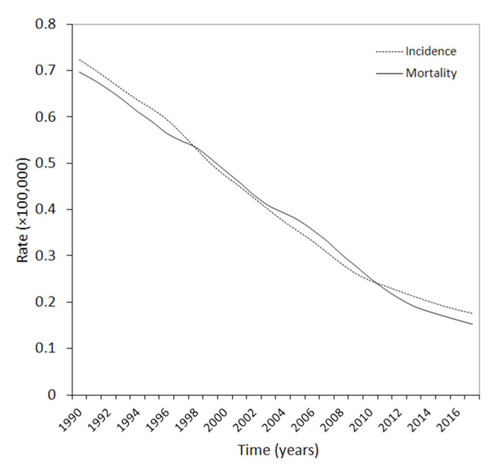
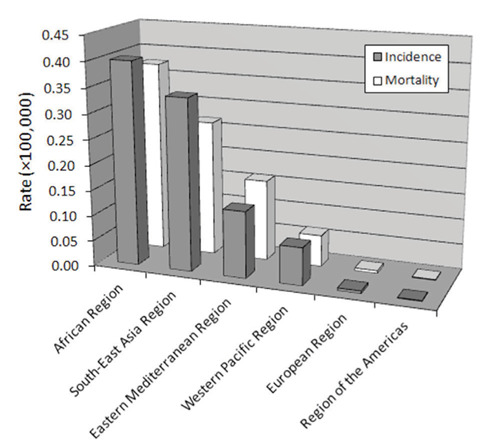
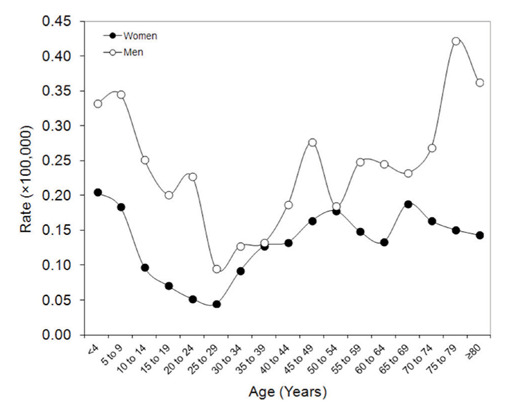
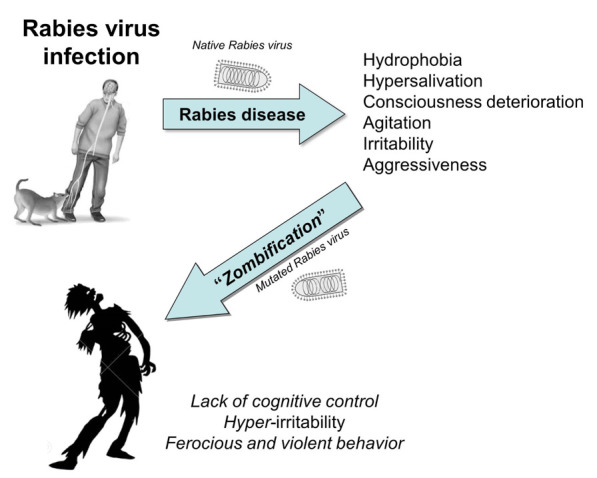
Human rabies disease is caused by Rabies Lyssavirus, a virus belonging to Rhabdoviridae family. The more frequent means of contagion is through bites of infected mammals (especially dogs, but also bats, skunks, foxes, raccoons and wolves) which, lacerating the skin, directly inoculate virus-laden saliva into the underlying tissues. Immediately after inoculation, the Rabies virus enters neural axons and migrates along peripheral nerves towards the central nervous system, where it preferentially localizes and injuries neurons of brainstem, thalamus, basal ganglia and spinal cord. After an initial prodromic period, the infection evolves towards two distinct clinical entities, encompassing encephalitic (i.e., "furious"; ~70-80% of cases) and paralytic (i.e., "dumb"; ~20-30% of cases) rabies disease. The former subtype is characterized by fever, hyperactivity, hydrophobia, hypersalivation, deteriorated consciousness, phobic or inspiratory spasms, autonomic stimulation, irritability, up to aggressive behaviours. The current worldwide incidence and mortality of rabies disease are estimated at 0.175×100,000 and 0.153×100,000, respectively. The incidence is higher in Africa and South-East Asia, nearly double in men than in women, with a higher peak in childhood. Mortality remains as high as ~90%. Since patients with encephalitic rabies remind the traditional image of "Zombies", we need to think out-of-the-box, in that apocalyptic epidemics of mutated Rabies virus may be seen as an imaginable menace for mankind. This would be theoretically possible by either natural or artificial virus engineering, producing viral strains characterized by facilitated human-to-human transmission, faster incubation, enhanced neurotoxicity and predisposition towards developing highly aggressive behaviours.
人类狂犬病是由狂犬病病毒引起的,狂犬病病毒属于弹状病毒科狂犬病毒属。更常见的感染途径是被感染的哺乳动物(尤其是狗,但也包括蝙蝠、臭鼬、狐狸、浣熊和狼)咬伤,这些动物会撕裂皮肤,直接将带有病毒的唾液接种到下面的组织中。接种后,狂犬病病毒立即进入神经轴突,并沿着周围神经向中枢神经系统迁移,在那里它优先定位和损伤脑干、丘脑、基底神经节和脊髓的神经元。在初始前驱期之后,感染会发展为两种不同的临床实体,包括脑炎型(即“狂躁型”;约 70-80%的病例)和麻痹型(即“哑型”;约 20-30%的病例)狂犬病。前者的亚型特征是发热、多动、恐水症、流涎过多、意识恶化、恐惧症或吸气性痉挛、自主刺激、易怒、甚至出现攻击性行为。目前全球狂犬病的发病率和死亡率估计分别为 0.175×100,000 和 0.153×100,000。在非洲和东南亚,发病率更高,男性发病率几乎是女性的两倍,在儿童中发病率更高。死亡率仍然高达约 90%。由于患有脑炎型狂犬病的患者让人想起传统的“僵尸”形象,我们需要跳出常规思维,认为可能会出现变异的狂犬病病毒引发的世界末日般的大流行,这对人类来说是一种可想象的威胁。这在理论上是可能的,无论是通过自然还是人工病毒工程,产生具有以下特征的病毒株:更容易在人与人之间传播、潜伏期更短、更强的神经毒性以及更容易发展为高度攻击性行为。