Computational Biology Department, Carnegie Mellon University, Pittsburgh, Pennsylvania, United States of America.
The Meakins-Christie Laboratories at the Research Institute of the McGill University Heath Centre Research Institute, Montréal, Canada.
PLoS Comput Biol. 2021 Mar 8;17(3):e1008810. doi: 10.1371/journal.pcbi.1008810. eCollection 2021 Mar.
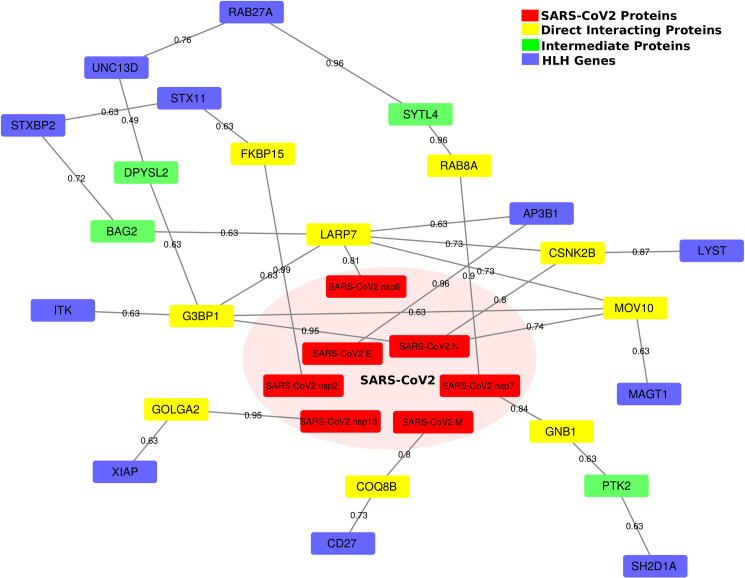
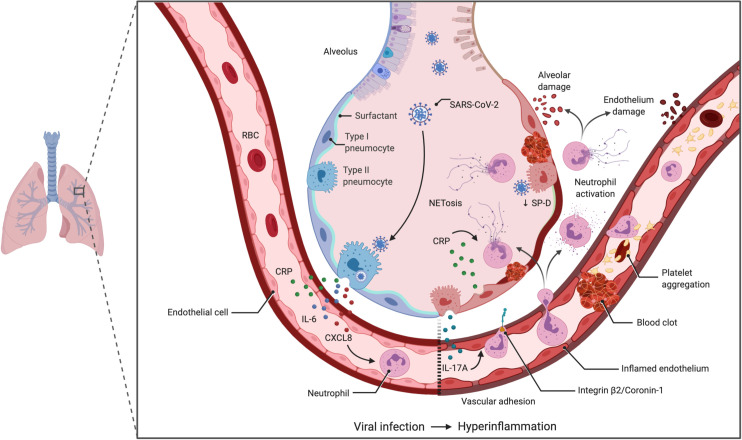
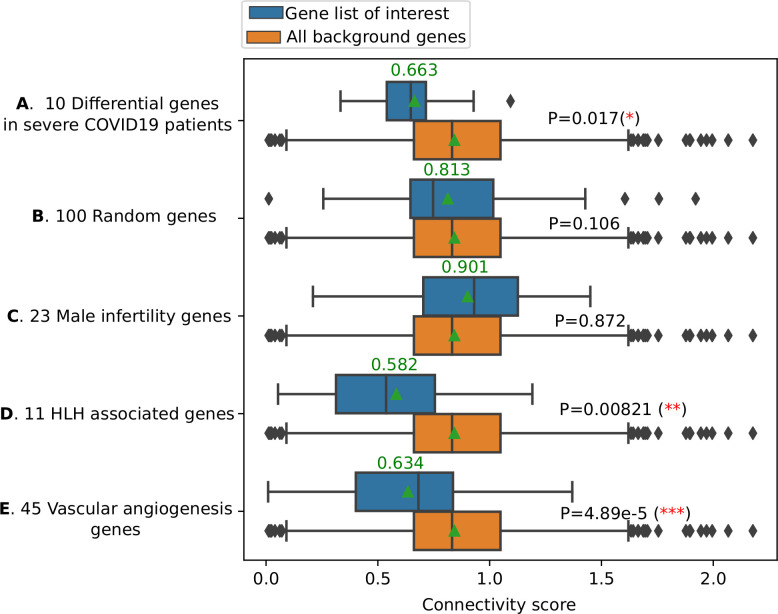
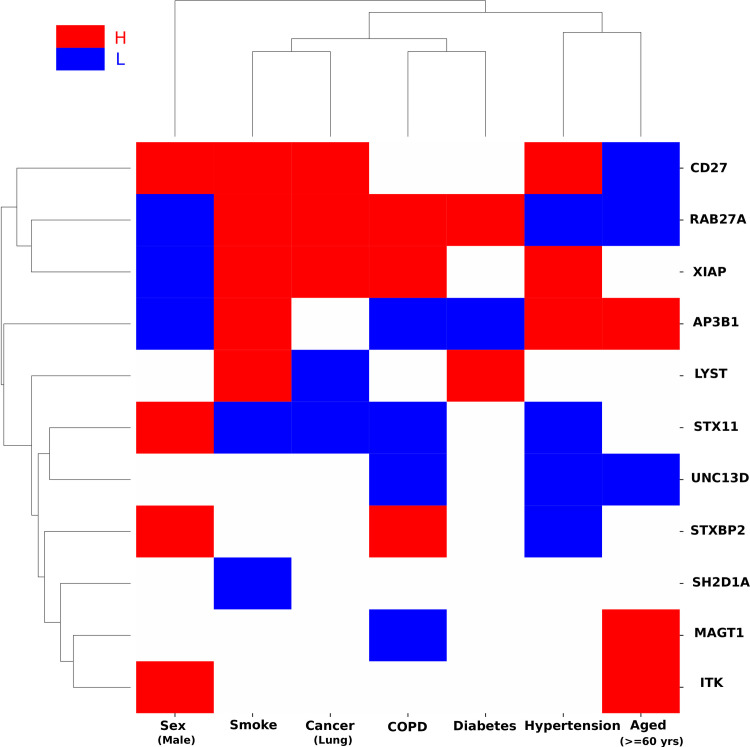
Abnormal coagulation and an increased risk of thrombosis are features of severe COVID-19, with parallels proposed with hemophagocytic lymphohistiocytosis (HLH), a life-threating condition associated with hyperinflammation. The presence of HLH was described in severely ill patients during the H1N1 influenza epidemic, presenting with pulmonary vascular thrombosis. We tested the hypothesis that genes causing primary HLH regulate pathways linking pulmonary thromboembolism to the presence of SARS-CoV-2 using novel network-informed computational algorithms. This approach led to the identification of Neutrophils Extracellular Traps (NETs) as plausible mediators of vascular thrombosis in severe COVID-19 in children and adults. Taken together, the network-informed analysis led us to propose the following model: the release of NETs in response to inflammatory signals acting in concert with SARS-CoV-2 damage the endothelium and direct platelet-activation promoting abnormal coagulation leading to serious complications of COVID-19. The underlying hypothesis is that genetic and/or environmental conditions that favor the release of NETs may predispose individuals to thrombotic complications of COVID-19 due to an increase risk of abnormal coagulation. This would be a common pathogenic mechanism in conditions including autoimmune/infectious diseases, hematologic and metabolic disorders.
异常凝血和血栓形成风险增加是严重 COVID-19 的特征,与噬血细胞性淋巴组织细胞增生症(HLH)有相似之处,HLH 是一种与过度炎症相关的危及生命的病症。在 H1N1 流感流行期间,严重患病患者出现了 HLH,表现为肺血管血栓形成。我们使用新型网络信息计算算法来检验这样一个假设,即导致原发性 HLH 的基因调节与 SARS-CoV-2 存在相关的肺血栓栓塞的途径。这种方法导致鉴定出中性粒细胞胞外陷阱(NETs)是儿童和成人严重 COVID-19 中血管血栓形成的合理介质。综合来看,网络信息分析使我们提出了以下模型:炎症信号作用下 NETs 的释放与 SARS-CoV-2 损害内皮细胞协同作用,并直接促进血小板活化,导致异常凝血,从而导致 COVID-19 的严重并发症。其潜在假设是,有利于 NETs 释放的遗传和/或环境条件可能使个体易患 COVID-19 的血栓并发症,因为异常凝血的风险增加。这将是包括自身免疫/感染性疾病、血液和代谢紊乱在内的多种病症的共同致病机制。