Faculty of Epidemiology and Population Health, London School of Hygiene and Tropical Medicine, London, United Kingdom.
Faculty of Epidemiology and Population Health, London School of Hygiene and Tropical Medicine, London, United Kingdom; Department of Statistics, Computer Science and Applications "G. Parenti", University of Florence, Florence, Italy.
Environ Res. 2021 May;196:110977. doi: 10.1016/j.envres.2021.110977. Epub 2021 Mar 6.
SARS-CoV-2 caused the COVID-19 pandemic in 2020. The virus is likely to show seasonal dynamics in European climates as other respiratory viruses and coronaviruses do. Analysing the association with meteorological factors might be helpful to anticipate how cases will develop with changing seasons.
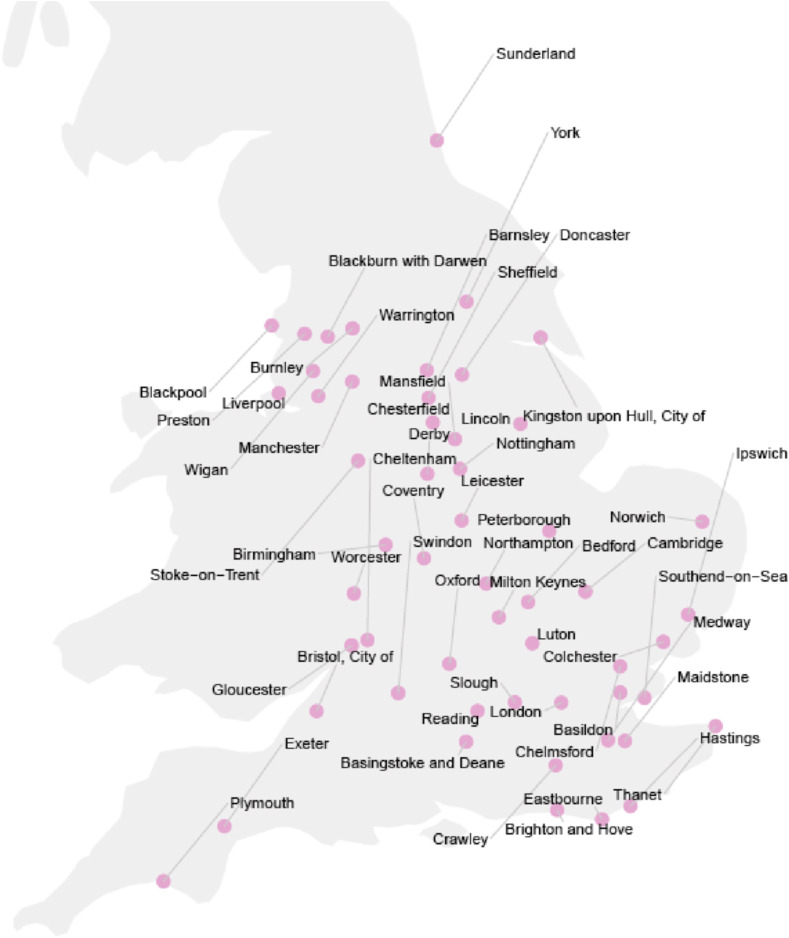
Routinely measured ambient daily mean temperature, absolute humidity, and relative humidity were the explanatory variables of this analysis. Test-positive COVID-19 cases represented the outcome variable. The analysis included 54 English cities. A two-stage meta-regression was conducted. At the first stage, we used a quasi-Poisson generalized linear model including distributed lag non-linear elements. Thereby, we investigate the explanatory variables' non-linear effects as well as the non-linear effects across lags.
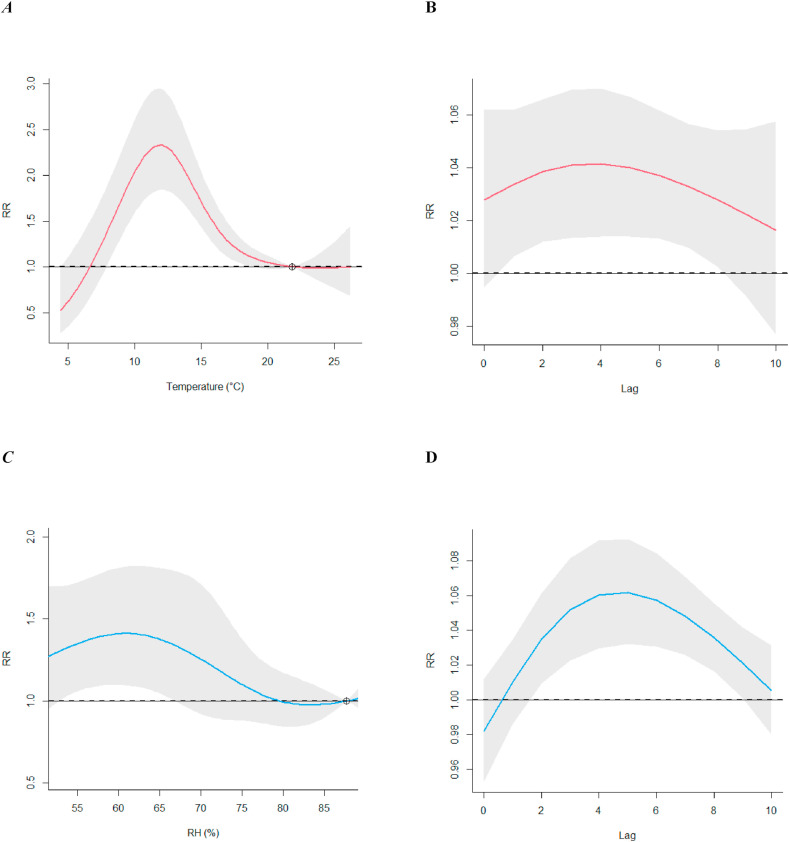
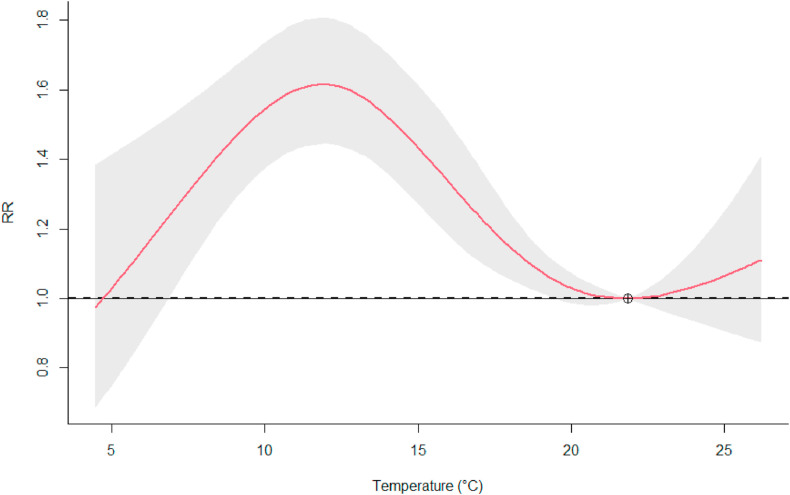
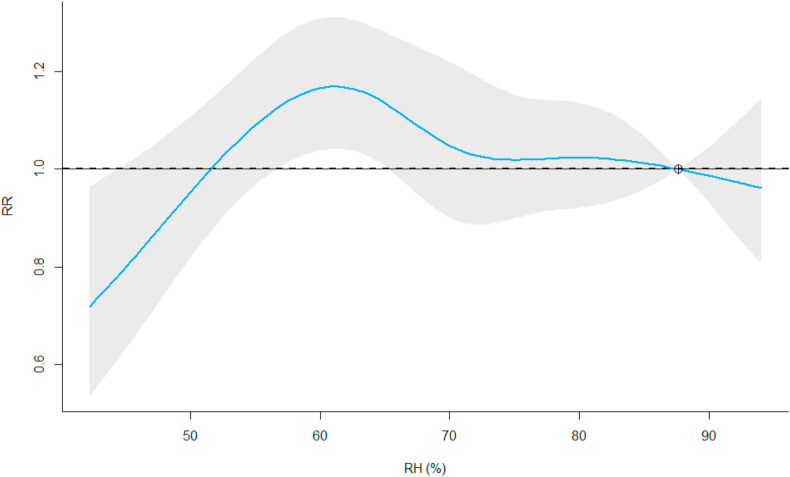
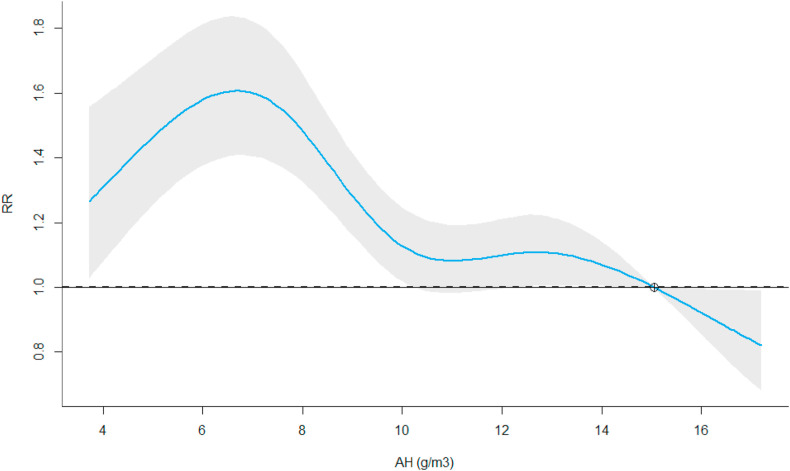
This study found a non-linear association of COVID-19 cases with temperature. At 11.9°C there was 1.62-times (95%-CI: 1.44; 1.81) the risk of cases compared to the temperature-level with the smallest risk (21.8°C). Absolute humidity exhibited a 1.61-times (95%-CI: 1.41; 1.83) elevated risk at 6.6 g/m compared to the centering at 15.1 g/m. When adjusting for temperature RH shows a 1.41-fold increase in risk of COVID-19 incidence (95%-CI: 1.09; 1.81) at 60.7% in respect to 87.6%.
The analysis suggests that in England meteorological variables likely influence COVID-19 case development. These results reinforce the importance of non-pharmaceutical interventions (e.g., social distancing and mask use) during all seasons, especially with cold and dry weather conditions.
SARS-CoV-2 于 2020 年引发了 COVID-19 大流行。该病毒可能像其他呼吸道病毒和冠状病毒一样,在欧洲气候中呈现季节性动态。分析与气象因素的关联可能有助于预测随着季节变化病例将如何发展。
本分析的解释变量为日常平均温度、绝对湿度和相对湿度的日常测量值。检测阳性的 COVID-19 病例代表了因变量。该分析包括 54 个英国城市。进行了两阶段荟萃回归分析。在第一阶段,我们使用了包含分布式滞后非线性元素的拟泊松广义线性模型。由此,我们调查了解释变量的非线性效应以及滞后之间的非线性效应。
本研究发现 COVID-19 病例与温度呈非线性关联。与风险最小的温度水平(21.8°C)相比,在 11.9°C 时,病例的风险增加了 1.62 倍(95%CI:1.44;1.81)。与以 15.1 g/m 为中心的湿度相比,绝对湿度在 6.6 g/m 时的风险增加了 1.61 倍(95%CI:1.41;1.83)。在调整温度后,RH 显示 COVID-19 发病率的风险增加了 1.41 倍(95%CI:1.09;1.81),在 60.7%时相对于 87.6%。
该分析表明,在英国,气象变量可能会影响 COVID-19 病例的发展。这些结果强调了在所有季节(特别是在寒冷和干燥的天气条件下)实施非药物干预(例如社交距离和佩戴口罩)的重要性。