
贫民窟女性心理健康的社会决定因素:一项系统综述。
Social determinants of mental health of women living in slum: a systematic review.
作者信息
Abdi Fatemeh, Rahnemaei Fatemeh Alsadat, Shojaei Parisa, Afsahi Fatemeh, Mahmoodi Zohreh
机构信息
Social Determinants of Health Research Center, Alborz University of Medical Sciences, Karaj, Iran.
Student Research Committee, Nursing and Midwifery Faculty, Shahid Beheshti University of Medical Sciences, Tehran, Iran.
出版信息
Obstet Gynecol Sci. 2021 Mar;64(2):143-155. doi: 10.5468/ogs.20264. Epub 2021 Feb 4.
OBJECTIVE
With the rise of urbanization globally, the problem of living in slums has become a problem for the civil society. As a vulnerable segment, women make up half of the population in these regions; therefore, women's mental health has always been a concern. The purpose of this study was to review the social determinants of mental health in women living in slum areas.
METHODS
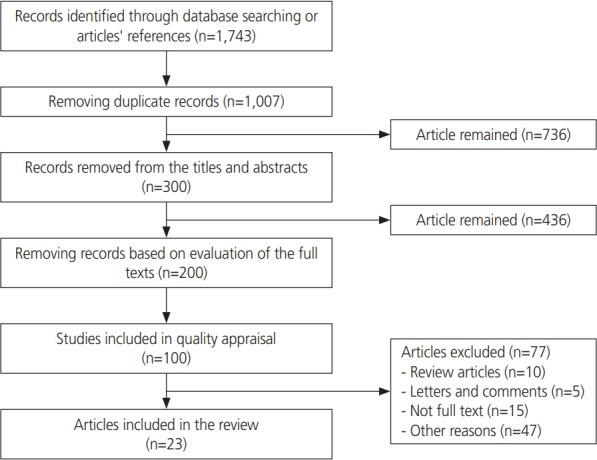
We systematically reviewed articles published between 2009 and 2019 on the social determinants of women's mental health in SID, Magiran, Google scholar, PubMed, Scopus, Science Direct, Embase, MEDLINE, PsychINFO, and PsychARTICLES databases using MeSH keywords according to PRISMA guidelines. The quality of the studies was assessed depending on the type of study using Ottawa Newcastle" scale and Joanna Briggs Institute quality assessment tools. Finally, 23 studies were analyzed.
RESULTS
Different social determinants influenced the mental health of women living in slum areas. Among the structural determinants, the socioeconomic level had the highest frequency, and gender was in the second rank with the highest correlation with poorer women's mental health status. Among the intermediate determinants, living conditions, food insecurity, social capital, and social support were most frequently associated with mental health status.
CONCLUSION
Women living in slum areas are prone to developing mental disorders and poorer mental health; therefore, supporting these women and creating job opportunities to raise their incomes and, subsequently, improve their social, economic, and living conditions should be taken into consideration. In addition, this requires careful planning and comprehensive social support.
目的
随着全球城市化进程的加快,贫民窟居住问题已成为民间社会面临的一个问题。作为弱势群体,女性占这些地区人口的一半;因此,女性的心理健康一直备受关注。本研究的目的是回顾贫民窟地区女性心理健康的社会决定因素。
方法
我们根据PRISMA指南,使用医学主题词(MeSH)关键词,系统回顾了2009年至2019年间发表在SID、Magiran、谷歌学术、PubMed、Scopus、Science Direct、Embase、MEDLINE、PsychINFO和PsychARTICLES数据库中关于女性心理健康社会决定因素的文章。根据研究类型,使用渥太华纽卡斯尔量表和乔安娜·布里格斯研究所质量评估工具对研究质量进行评估。最后,对23项研究进行了分析。
结果
不同的社会决定因素影响着贫民窟地区女性的心理健康。在结构决定因素中,社会经济水平出现频率最高,性别排在第二位,与贫困女性心理健康状况的相关性最高。在中间决定因素中,生活条件、粮食不安全、社会资本和社会支持与心理健康状况的关联最为频繁。
结论
生活在贫民窟地区的女性容易出现精神障碍和心理健康状况较差的问题;因此,应考虑支持这些女性并创造就业机会以提高她们的收入,进而改善她们的社会、经济和生活条件。此外,这需要精心规划和全面的社会支持。
 Zotero 插件