Sorbonne Université, INSERM, Centre De Recherche Saint-Antoine, CRSA, AP-HP, Saint Antoine Hospital, Gastroenterology Department, Paris, France.
INRAE, UMR1319 Micalis & AgroParisTech, Jouy En Josas, France.
Gut Microbes. 2021 Jan-Dec;13(1):1-19. doi: 10.1080/19490976.2021.1893113.
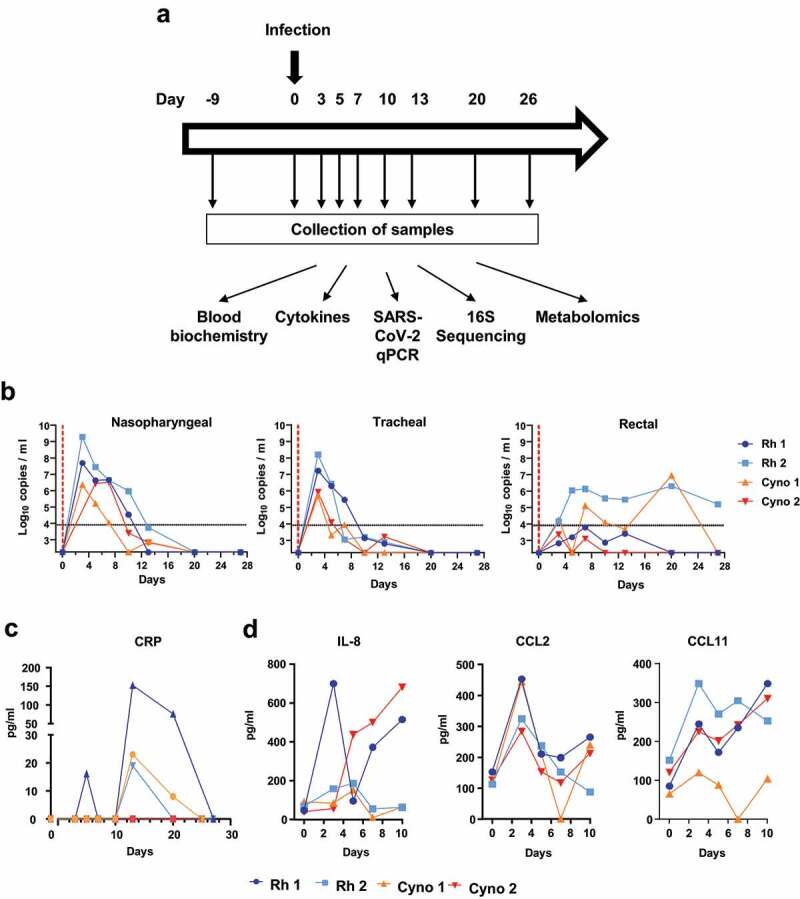
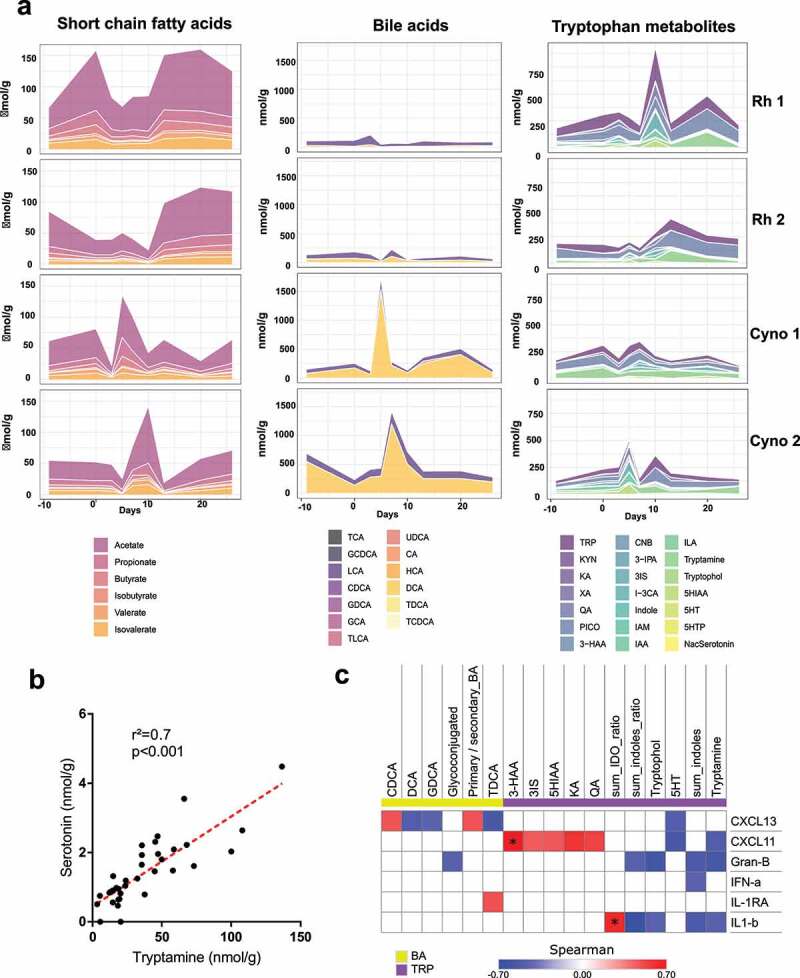
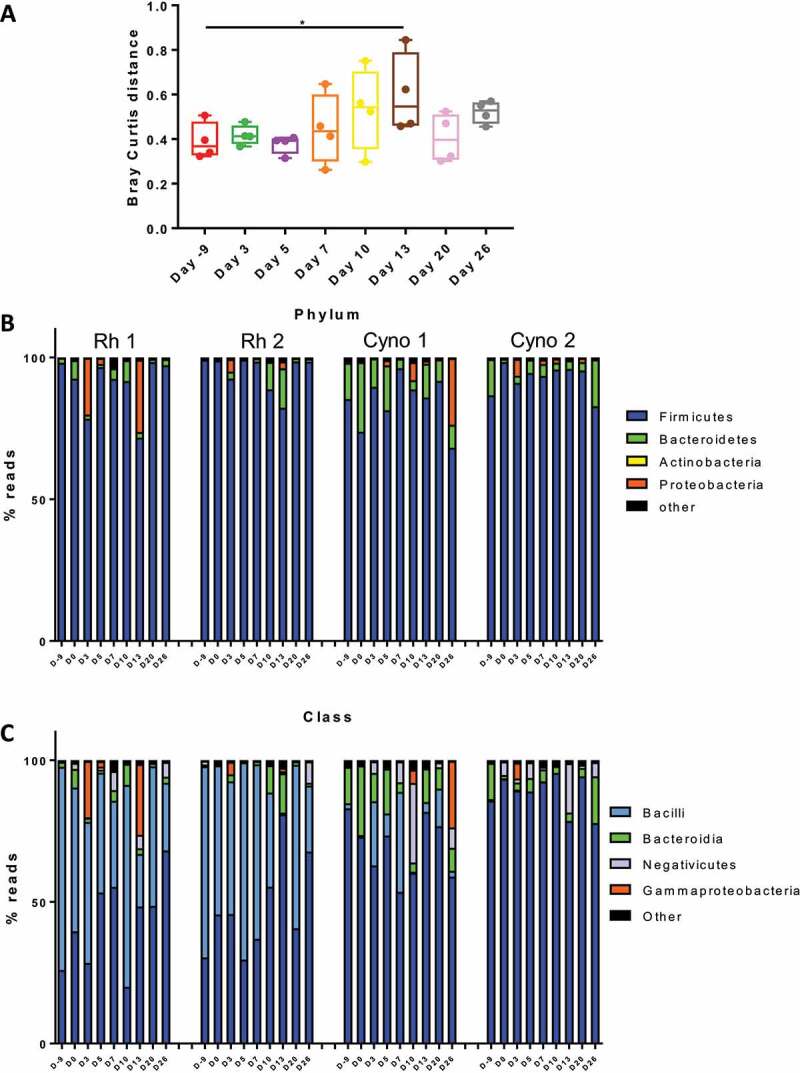
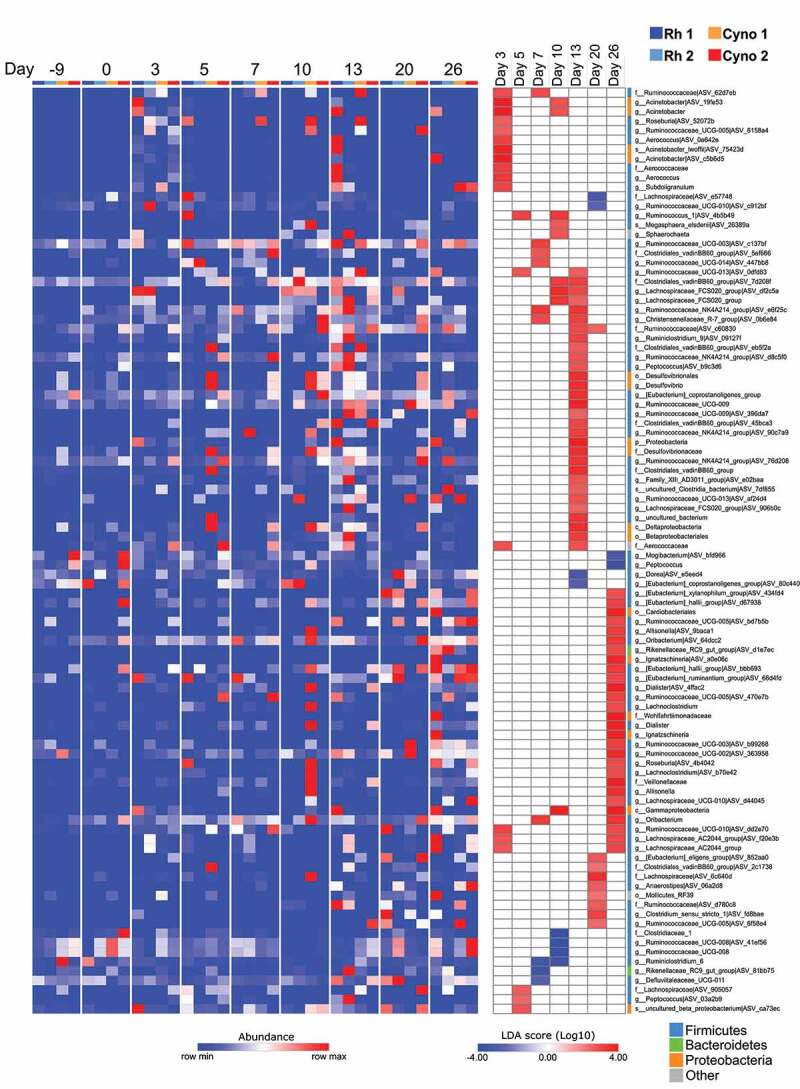
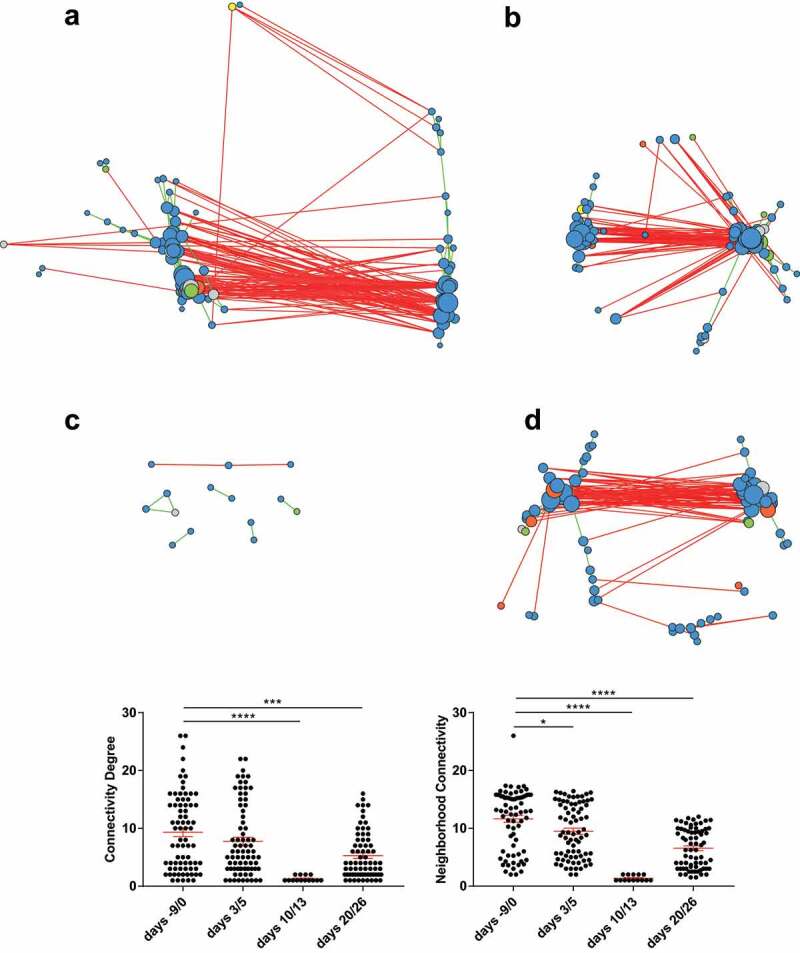
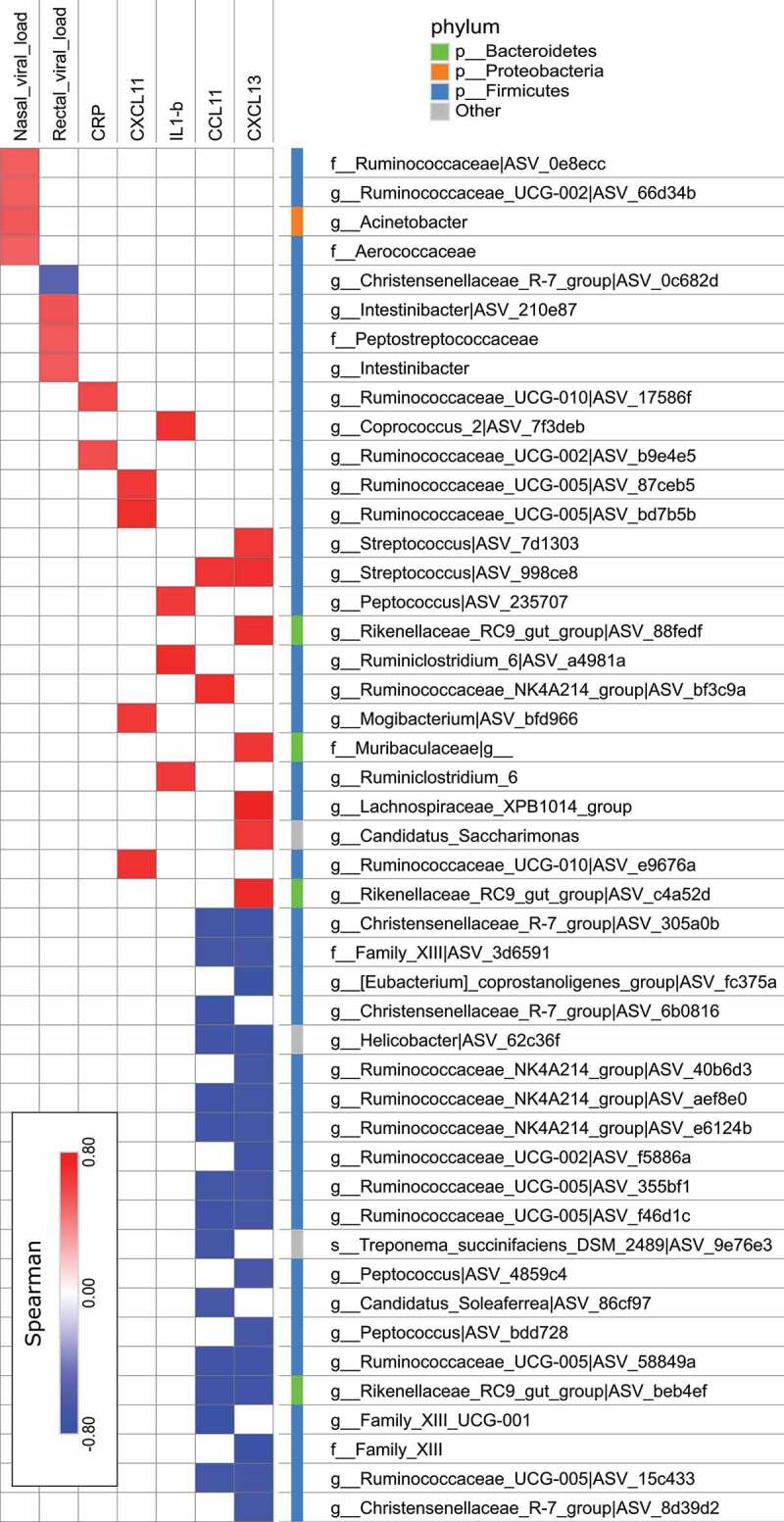
The current pandemic of coronavirus disease (COVID) 2019 constitutes a global public health issue. Regarding the emerging importance of the gut-lung axis in viral respiratory infections, analysis of the gut microbiota's composition and functional activity during a severe acute respiratory syndrome coronavirus 2 (SARS-CoV-2) infection might be instrumental in understanding and controling COVID 19. We used a nonhuman primate model (the macaque), that recapitulates mild COVID-19 symptoms, to analyze the effects of a SARS-CoV-2 infection on dynamic changes of the gut microbiota. 16S rRNA gene profiling and analysis of β diversity indicated significant changes in the composition of the gut microbiota with a peak at 10-13 days post-infection (dpi). Analysis of bacterial abundance correlation networks confirmed disruption of the bacterial community at 10-13 dpi. Some alterations in microbiota persisted after the resolution of the infection until day 26. Some changes in the relative bacterial taxon abundance associated with infectious parameters. Interestingly, the relative abundance of (Proteobacteria) and some genera of the Ruminococcaceae family (Firmicutes) was positively correlated with the presence of SARS-CoV-2 in the upper respiratory tract. Targeted quantitative metabolomics indicated a drop in short-chain fatty acids (SCFAs) and changes in several bile acids and tryptophan metabolites in infected animals. The relative abundance of several taxa known to be SCFA producers (mostly from the Ruminococcaceae family) was negatively correlated with systemic inflammatory markers while the opposite correlation was seen with several members of the genus . Collectively, SARS-CoV-2 infection in a nonhuman primate is associated with changes in the gut microbiota's composition and functional activity.
当前的 2019 年冠状病毒病(COVID)大流行构成了全球公共卫生问题。鉴于肠道-肺部轴在病毒性呼吸道感染中的重要性不断增加,分析严重急性呼吸综合征冠状病毒 2(SARS-CoV-2)感染期间肠道微生物组的组成和功能活动,可能有助于理解和控制 COVID-19。我们使用了一种非人类灵长类动物模型(猕猴),该模型重现了轻度 COVID-19 症状,来分析 SARS-CoV-2 感染对肠道微生物组动态变化的影响。16S rRNA 基因谱分析和β多样性分析表明,肠道微生物组的组成发生了显著变化,感染后 10-13 天达到峰值。细菌丰度相关网络分析证实,在感染后 10-13 天,细菌群落受到破坏。感染缓解后,一些微生物群的改变持续到第 26 天。一些与感染参数相关的相对细菌分类群丰度的变化。有趣的是,(变形菌门)和一些瘤胃球菌科(厚壁菌门)属的相对丰度与上呼吸道中 SARS-CoV-2 的存在呈正相关。靶向定量代谢组学表明,感染动物体内短链脂肪酸(SCFAs)含量下降,几种胆汁酸和色氨酸代谢物发生变化。已知是 SCFA 产生菌(主要来自瘤胃球菌科)的几个分类群的相对丰度与系统炎症标志物呈负相关,而 的几个成员则呈正相关。总的来说,非人类灵长类动物的 SARS-CoV-2 感染与肠道微生物组的组成和功能活性的变化有关。