CHU Lille, Institut Pasteur de Lille, U1019 - UMR 9017 - CIIL - Center for Infection and Immunity of Lille, Univ. Lille, CNRS, Inserm, Lille, France.
UMR 9017, Centre National de la Recherche Scientifique (CNRS), Lille, France.
Gut Microbes. 2022 Jan-Dec;14(1):2100200. doi: 10.1080/19490976.2022.2100200.
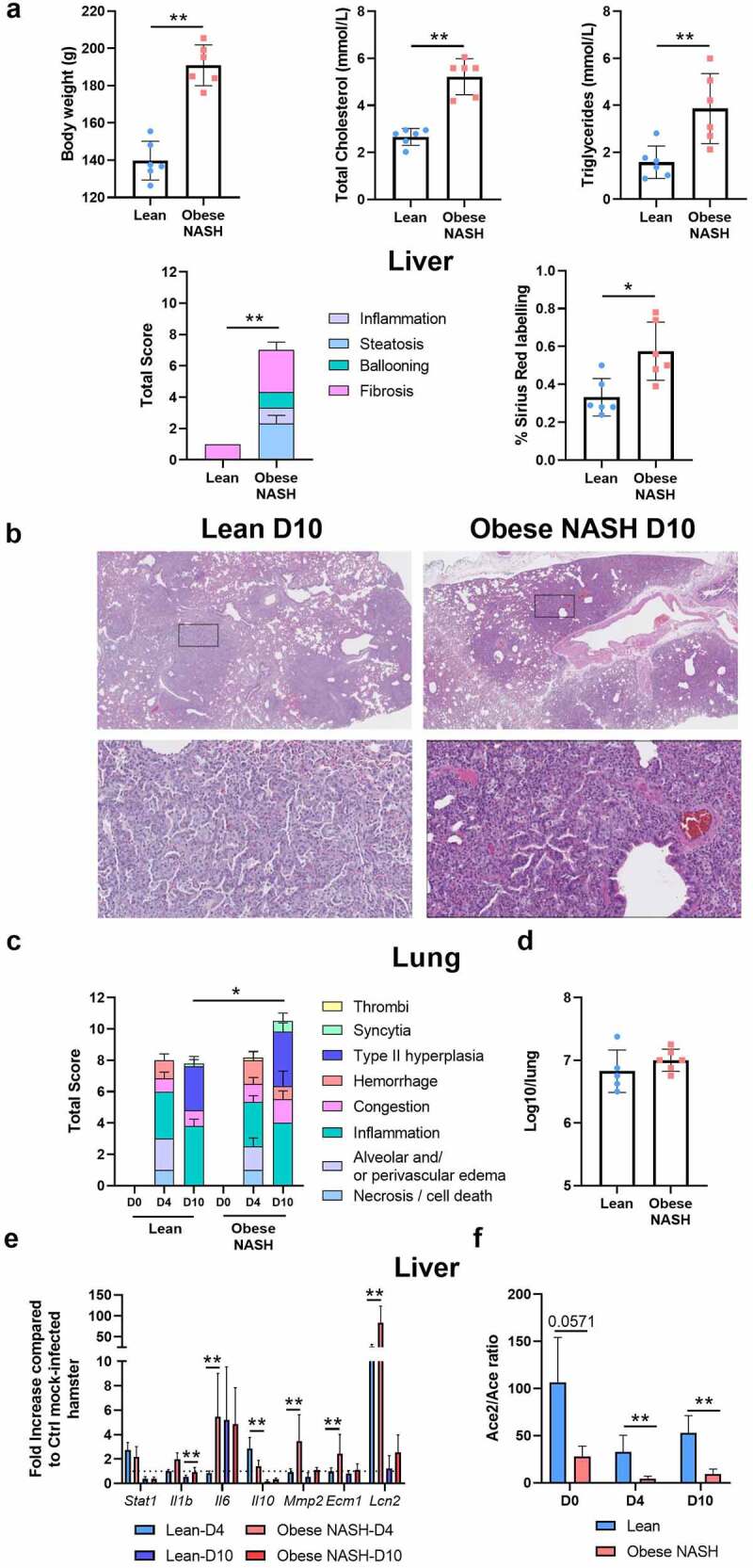
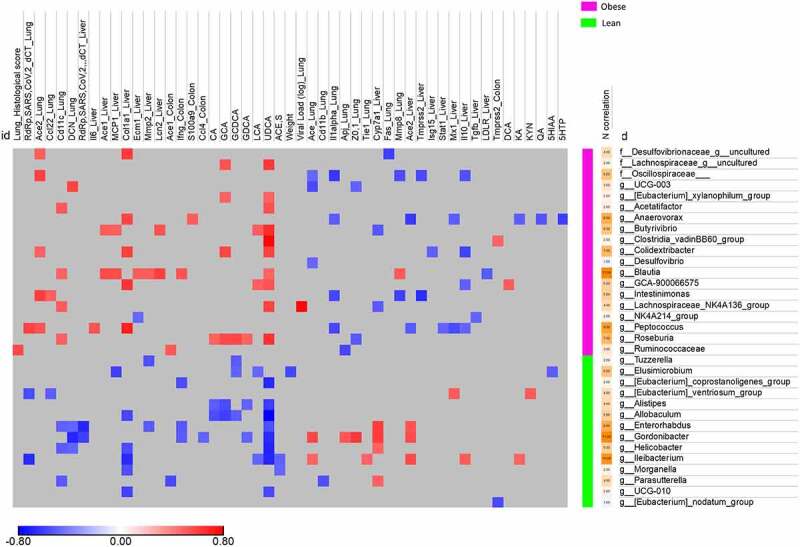
Obese patientss with nonalcoholic steatohepatitis (NASH) are particularly prone to developing severe forms of coronavirus disease 19 (COVID-19). The gut-to-lung axis is critical during viral infections of the respiratory tract, and a change in the gut microbiota's composition might have a critical role in disease severity. Here, we investigated the consequences of infection with severe acute respiratory syndrome coronavirus 2 (SARS-CoV-2) on the gut microbiota in the context of obesity and NASH. To this end, we set up a nutritional model of obesity with dyslipidemia and NASH in the golden hamster, a relevant preclinical model of COVID-19. Relative to lean non-NASH controls, obese NASH hamsters develop severe inflammation of the lungs and liver. 16S rRNA gene profiling showed that depending on the diet, SARS-CoV-2 infection induced various changes in the gut microbiota's composition. Changes were more prominent and transient at day 4 post-infection in lean animals, alterations still persisted at day 10 in obese NASH animals. A targeted, quantitative metabolomic analysis revealed changes in the gut microbiota's metabolic output, some of which were diet-specific and regulated over time. Our results showed that specifically diet-associated taxa are correlated with disease parameters. Correlations between infection variables and diet-associated taxa highlighted a number of potentially protective or harmful bacteria in SARS-CoV-2-infected hamsters. In particular, some taxa in obese NASH hamsters ( and ) were associated with pro-inflammatory parameters in both the lungs and the liver. These taxon profiles and their association with specific disease markers suggest that microbial patterns might influence COVID-19 outcomes.
肥胖的非酒精性脂肪性肝炎 (NASH) 患者尤其容易发展为严重的 2019 年冠状病毒病 (COVID-19)。在呼吸道病毒感染期间,肠道-肺部轴至关重要,肠道微生物组组成的变化可能在疾病严重程度中发挥关键作用。在这里,我们研究了严重急性呼吸综合征冠状病毒 2 (SARS-CoV-2) 感染对肥胖和 NASH 背景下肠道微生物组的影响。为此,我们在金黄地鼠中建立了一个具有血脂异常和 NASH 的肥胖营养模型,金黄地鼠是 COVID-19 的相关临床前模型。与瘦非 NASH 对照相比,肥胖 NASH 金黄地鼠的肺部和肝脏炎症严重。16S rRNA 基因谱分析表明,根据饮食不同,SARS-CoV-2 感染会导致肠道微生物组组成发生各种变化。在感染后第 4 天,瘦动物的变化更为明显和短暂,而在肥胖 NASH 动物中,这种变化仍持续到第 10 天。靶向、定量代谢组学分析显示肠道微生物组代谢产物输出发生变化,其中一些变化具有饮食特异性并随时间而变化。我们的结果表明,特定的饮食相关分类群与疾病参数相关。感染变量与饮食相关分类群之间的相关性突出了 SARS-CoV-2 感染金黄地鼠中一些潜在的保护性或有害细菌。特别是,肥胖 NASH 金黄地鼠中的一些分类群(和)与肺部和肝脏中的促炎参数相关。这些分类群谱及其与特定疾病标志物的关联表明,微生物模式可能影响 COVID-19 的结果。