Department of Systems Biology in Thromboregulation, Kagoshima University Graduate School of Medical and Dental Sciences, 8-35-1 Sakuragaoka, Kagoshima, 890-8544, Japan.
Crit Care. 2021 Mar 8;25(1):95. doi: 10.1186/s13054-021-03524-6.
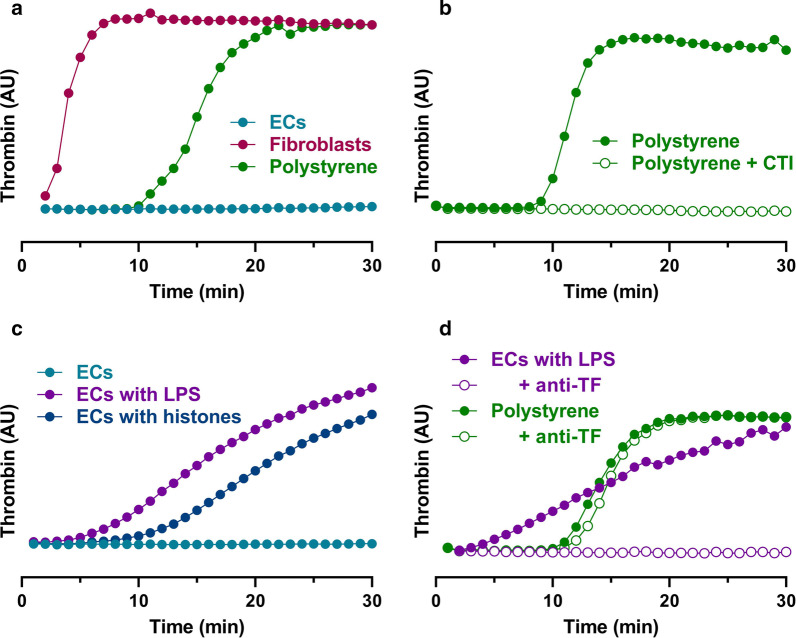
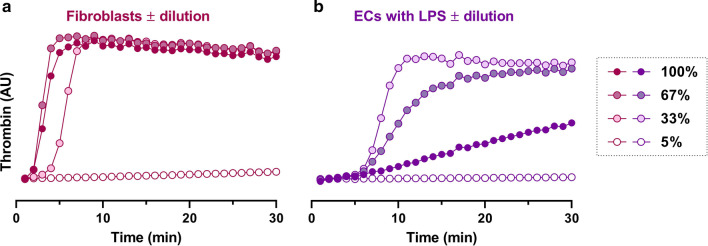
Endothelial cells play a key role in maintaining intravascular patency through their anticoagulant properties. They provide a favorable environment for plasma anticoagulant proteins, including antithrombin, tissue factor pathway inhibitor, and protein C. Under septic conditions, however, the anticoagulant properties of endothelial cells are compromised. Rather, activated/injured endothelial cells can provide a scaffold for intravascular coagulation. For example, the expression of tissue factor, an important initiator of the coagulation pathway, is induced on the surface of activated endothelial cells. Phosphatidylserine, a high-affinity scaffold for gamma-carboxyglutamate domain containing coagulation factors, including FII, FVII, FIX, and FX, is externalized to the outer leaflet of the plasma membrane of injured endothelial cells. Hemodilution decreases not only coagulation factors but also plasma anticoagulant proteins, resulting in unleashed activation of coagulation on the surface of activated/injured endothelial cells. The aberrant activation of coagulation can be suppressed in part by the supplementation of recombinant antithrombin and recombinant thrombomodulin. This review aims to overview the physiological and pathological functions of endothelial cells along with proof-of-concept in vitro studies. The pathophysiology of COVID-19-associated thrombosis is also discussed.
内皮细胞通过其抗凝特性在维持血管通畅方面发挥着关键作用。它们为血浆抗凝蛋白提供了有利的环境,包括抗凝血酶、组织因子途径抑制剂和蛋白 C。然而,在脓毒症条件下,内皮细胞的抗凝特性受损。相反,激活/损伤的内皮细胞可以为血管内凝血提供支架。例如,组织因子的表达,即凝血途径的重要启动子,在激活的内皮细胞表面被诱导。磷脂酰丝氨酸是包括 FII、FVII、FIX 和 FX 在内的 γ-羧基谷氨酸结构域凝血因子的高亲和力支架,外排在损伤内皮细胞质膜的外叶。血液稀释不仅会减少凝血因子,还会减少血浆抗凝蛋白,导致激活的/损伤的内皮细胞表面凝血的不受控制的激活。重组抗凝血酶和重组血栓调节蛋白的补充部分抑制了凝血的异常激活。本综述旨在概述内皮细胞的生理和病理功能以及体外研究的概念验证。还讨论了 COVID-19 相关血栓形成的病理生理学。