
不同疾病严重程度的 COVID-19 患者的二分法和不完全适应性免疫。
The dichotomous and incomplete adaptive immunity in COVID-19 patients with different disease severity.
机构信息
Institute of Immunology, Third Military Medical University, Chongqing, China.
Chongqing Public Health Medical Center, Chongqing, China.
出版信息
Signal Transduct Target Ther. 2021 Mar 8;6(1):113. doi: 10.1038/s41392-021-00525-3.
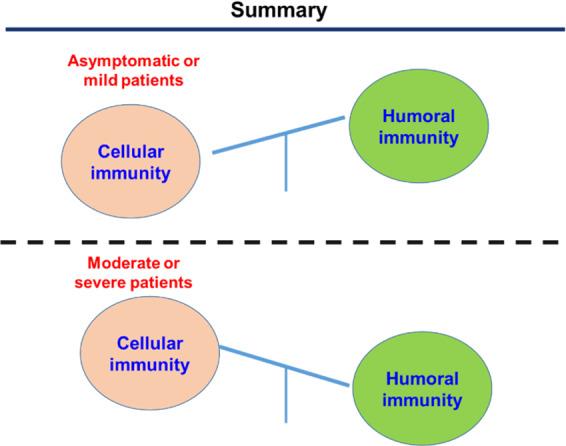
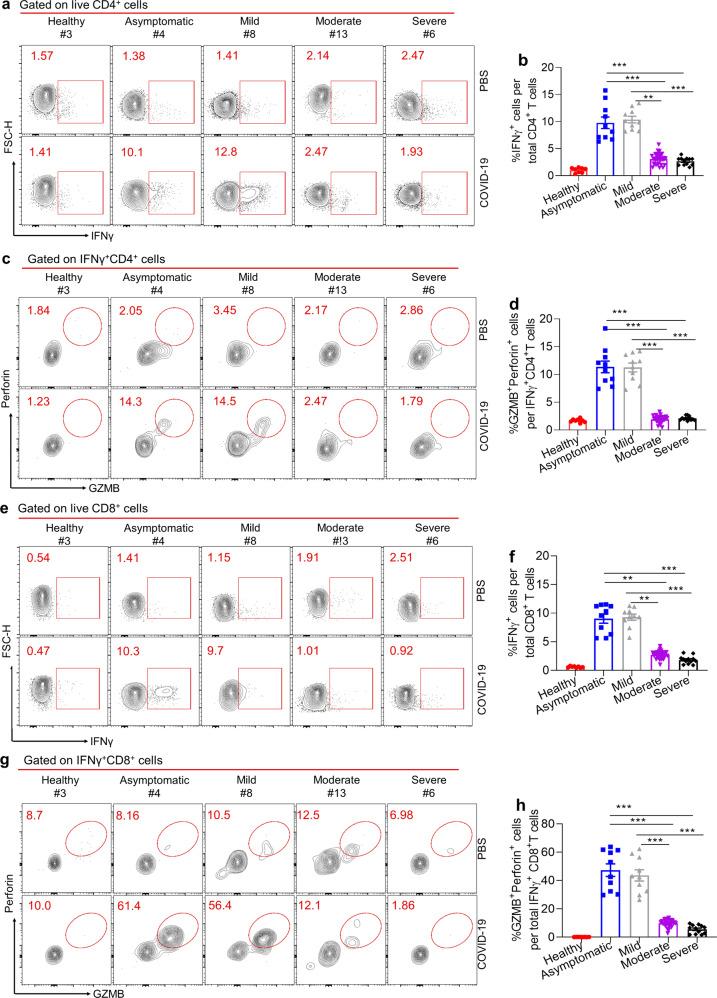
The adaptive immunity that protects patients from coronavirus disease 2019 (COVID-19), caused by severe acute respiratory syndrome coronavirus 2 (SARS-CoV-2), is not well characterized. In particular, the asymptomatic patients have been found to induce weak and transient SARS-CoV-2 antibody responses, but the underlying mechanisms remain unknown; meanwhile, the protective immunity that guide the recovery of these asymptomatic patients is elusive. Here, we characterized SARS-CoV-2-specific B-cell and T-cell responses in 10 asymptomatic patients and 64 patients with other disease severity (mild, n = 10, moderate, n = 32, severe, n = 12) and found that asymptomatic or mild symptomatic patients failed to mount virus-specific germinal center (GC) B cell responses that result in robust and prolonged humoral immunity, assessed by GC response indicators including follicular helper T (T) cell and memory B cell responses as well as serum CXCL13 levels. Alternatively, these patients mounted potent virus-specific T1 and CD8 T cell responses. In sharp contrast, patients of moderate or severe disease induced vigorous virus-specific GC B cell responses and associated T responses; however, the virus-specific T1 and CD8 T cells were minimally induced in these patients. These results, therefore, uncovered the protective immunity in asymptomatic patients and also revealed the strikingly dichotomous and incomplete humoral and cellular immune responses in COVID-19 patients with different disease severity, providing important insights into rational design of effective COVID-19 vaccines.
保护患者免受严重急性呼吸综合征冠状病毒 2 (SARS-CoV-2) 引起的 2019 年冠状病毒病 (COVID-19) 的适应性免疫尚未得到很好的描述。特别是,已发现无症状患者诱导的 SARS-CoV-2 抗体反应较弱且短暂,但潜在机制尚不清楚;同时,指导这些无症状患者康复的保护性免疫也难以捉摸。在这里,我们对 10 名无症状患者和 64 名其他疾病严重程度的患者(轻症,n = 10;中度,n = 32;重症,n = 12)的 SARS-CoV-2 特异性 B 细胞和 T 细胞反应进行了特征描述,发现无症状或轻症患者未能产生病毒特异性生发中心 (GC) B 细胞反应,导致强烈和持久的体液免疫,通过 GC 反应指标评估,包括滤泡辅助 T (Tfh) 细胞和记忆 B 细胞反应以及血清 CXCL13 水平。相比之下,这些患者产生了强烈的病毒特异性 T1 和 CD8 T 细胞反应。相比之下,中度或重度疾病患者诱导了强烈的病毒特异性 GC B 细胞反应和相关的 T 反应;然而,这些患者中很少诱导病毒特异性 T1 和 CD8 T 细胞。因此,这些结果揭示了无症状患者的保护性免疫,并揭示了 COVID-19 患者不同疾病严重程度的明显二分和不完全的体液和细胞免疫反应,为 COVID-19 疫苗的有效设计提供了重要的见解。



 Zotero 插件