Ravikanth Reddy
Department of Radiology, St. John's Hospital, Kattappana, Kerala, India.
Lung India. 2021 Mar;38(Supplement):S11-S21. doi: 10.4103/lungindia.lungindia_410_20.
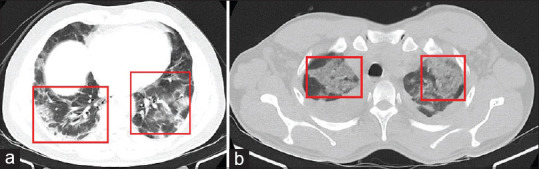
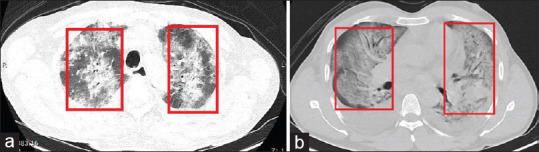
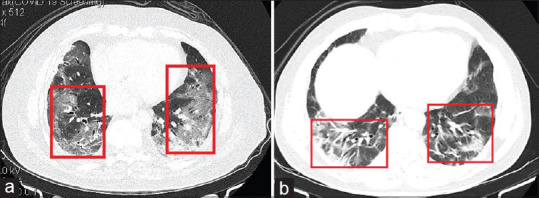
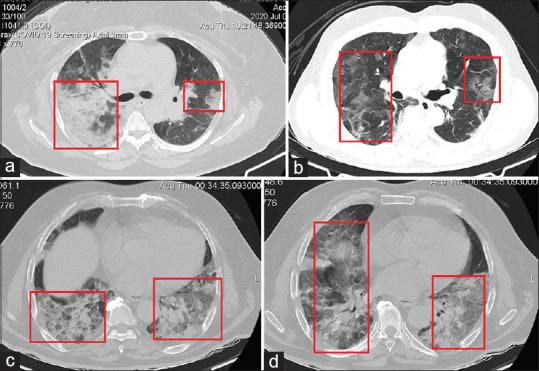
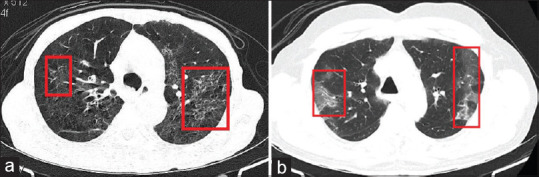
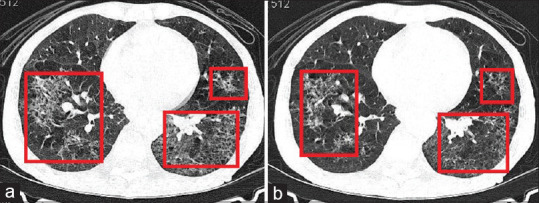
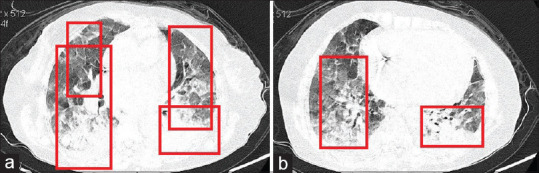
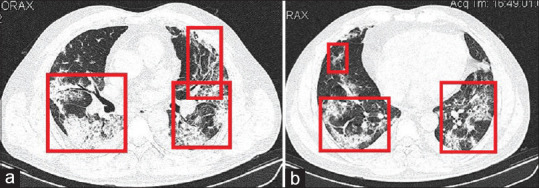
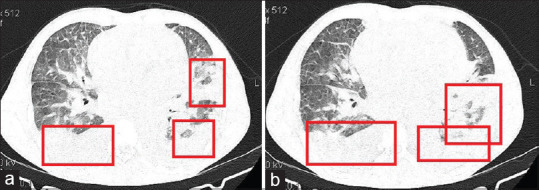
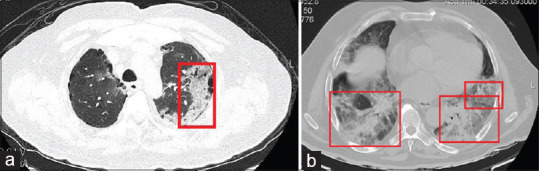
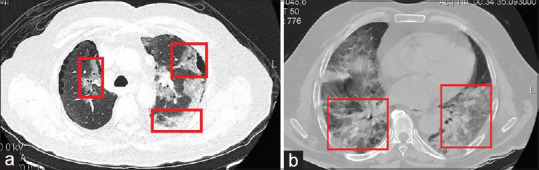
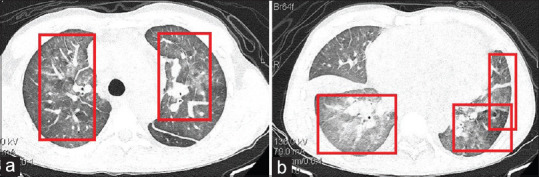
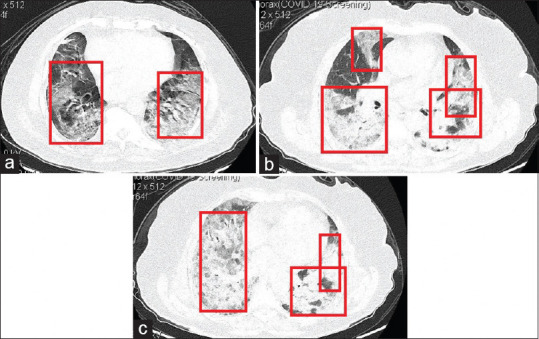
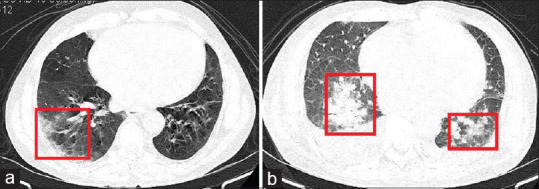
Early differentiation between emergency department (ED) patients with and without coronavirus disease 2019 (COVID-19) is very important. The diagnosis of COVID-19 depends on real-time reverse transcriptase polymerase chain reaction (RT-PCR). On imaging, computed tomography (CT) manifestations resemble those seen in viral pneumonias, with multifocal ground-glass opacities and consolidation in a peripheral distribution being the most common findings. Although these findings lack specificity for COVID-19 diagnosis on imaging grounds, CT could be used to provide objective assessment about the extension of the lung opacities, which could be used as an imaging surrogate for disease burden. We set out to investigate the diagnostic accuracy of chest CT scanning in detecting COVID-19 in a population with suspected COVID-19 patients.
In this cross-sectional single-center study performed on 348 cases with clinical suspicion of COVID-19, all adult symptomatic ED patients had both a CT scan and a PCR upon arrival at. CT results were compared with PCR test (s) and diagnostic accuracy was calculated.
Between February 15, 2020, and June 30, 2020, 348 symptomatic patients were included. In total, 62.3% of patients had a positive PCR and 69.8% had a positive CT, resulting in a sensitivity of 94.2%, specificity of 76.7%, likelihood ratio (LR) of +2.94 and (LR) -0.18. The sensitivity of the CT tended to be higher in those with acute respiratory distress syndrome (100.0%, P = 0.017) and severe COVID-19 (98.5%, P = 0.027) than in patients with mild (82.5%, P = 0.047) and moderate COVID-19 (89.3%, P = 0.039). The diagnostic ability of chest CT was found to be high with 86.3% concordance between findings of CT and PCR. In 48 (13.7%) patients, discordant findings between CT and PCR were observed. In most cases, the CT scan was considered suspicious for COVID-19, while the PCR was negative (37/48, 77.0%). In the majority of these, the diagnosis at discharge was pulmonary infection (n = 26; 54.1%).
The accuracy of chest CT in symptomatic COVID suspect patients is high, but when used as a single diagnostic test, CT cannot accurately diagnose or exclude COVID-19. Therefore, we recommend a combination of both CT and RT-PCR for future follow-up, management, and medical surveillance.
对急诊科有或没有2019冠状病毒病(COVID-19)的患者进行早期区分非常重要。COVID-19的诊断依赖于实时逆转录聚合酶链反应(RT-PCR)。在影像学方面,计算机断层扫描(CT)表现类似于病毒性肺炎,多灶性磨玻璃影及外周分布的实变是最常见的表现。尽管这些表现基于影像学依据对COVID-19诊断缺乏特异性,但CT可用于对肺部混浊范围提供客观评估,这可作为疾病负担的影像学替代指标。我们着手研究胸部CT扫描在检测疑似COVID-19患者群体中COVID-19的诊断准确性。
在这项对348例临床怀疑COVID-19的病例进行的横断面单中心研究中,所有有症状的成年急诊科患者在到达时均接受了CT扫描和PCR检测。将CT结果与PCR检测结果进行比较并计算诊断准确性。
在2020年2月15日至2020年6月30日期间,纳入了348例有症状患者。总体而言,62.3%的患者PCR检测呈阳性,69.8%的患者CT检测呈阳性,敏感性为94.2%,特异性为76.7%,阳性似然比(LR)为+2.94,阴性似然比(LR)为-0.18。与轻度(82.5%,P = 0.047)和中度COVID-19(89.3%,P = 0.039)患者相比,急性呼吸窘迫综合征患者(100.0%,P = 0.017)和重症COVID-19患者(98.5%,P = 0.027)的CT敏感性往往更高。发现胸部CT的诊断能力较高,CT与PCR结果的一致性为86.3%。在48例(13.7%)患者中,观察到CT与PCR结果不一致。在大多数情况下,CT扫描被认为疑似COVID-19,而PCR检测为阴性(37/48,77.0%)。其中大多数患者出院时的诊断为肺部感染(n = 26;54.1%)。
胸部CT对有症状的COVID疑似患者的诊断准确性较高,但作为单一诊断测试时,CT不能准确诊断或排除COVID-19。因此,我们建议在未来的随访、管理和医学监测中联合使用CT和RT-PCR。