Liu Li, Zhang Qun, Li Mingyue, Wang Nianhong, Li Ce, Song Di, Shen Xueyan, Luo Lu, Fan Yunhui, Xie Hongyu, Wu Yi
Department of Rehabilitation Medicine, Huashan Hospital, Fudan University, Shanghai, People's Republic of China.
Department of Rehabilitation Medicine, The Third Affiliated Hospital, Sun Yat-sen University, Guangzhou, People's Republic of China.
Neuropsychiatr Dis Treat. 2021 Mar 1;17:695-702. doi: 10.2147/NDT.S290148. eCollection 2021.
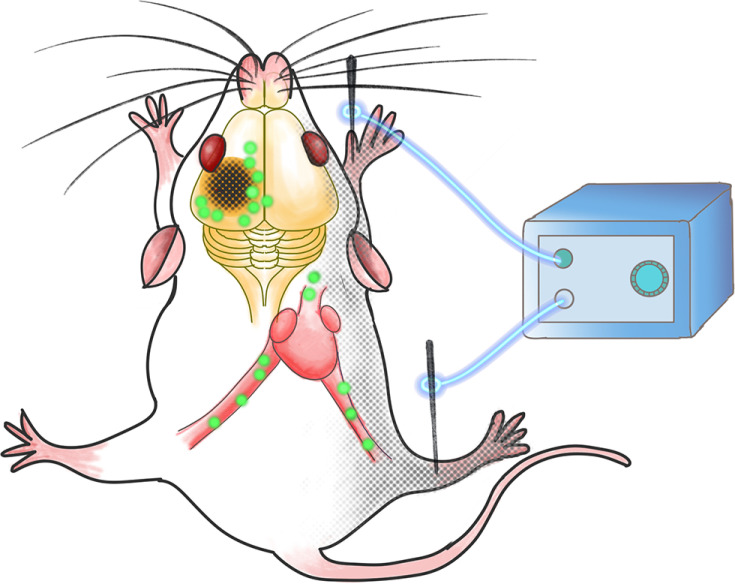
Recent studies have shown that irisin, a novel peptide hormone derived from muscles, could be used as a potential therapeutic drug against ischemic stroke. Moreover, electroacupuncture (EA) is widely used in the treatment of ischemic stroke. Yet, whether irisin is involved in the EA neuroprotection remains unclear. The following study investigated the association between serum and peri-lesional cortex irisin and EA-induced post-stroke motor recovery in rats.
The middle cerebral artery occlusion (MCAO) method was used to induce ischemic stroke in rats. Rats were randomly divided into two groups: a middle cerebral artery occlusion (MCAO) group (MCAO rats without treatment) and an electroacupuncture (EA) group (MCAO rats treated with EA). On the 3rd day post-stroke, infarct volume, behavioral deficits, surviving neurons, irisin protein expression in peri-infarction cortex, muscle tissue, and serum were evaluated to identify the neuroprotective of EA in acute ischemic stroke.
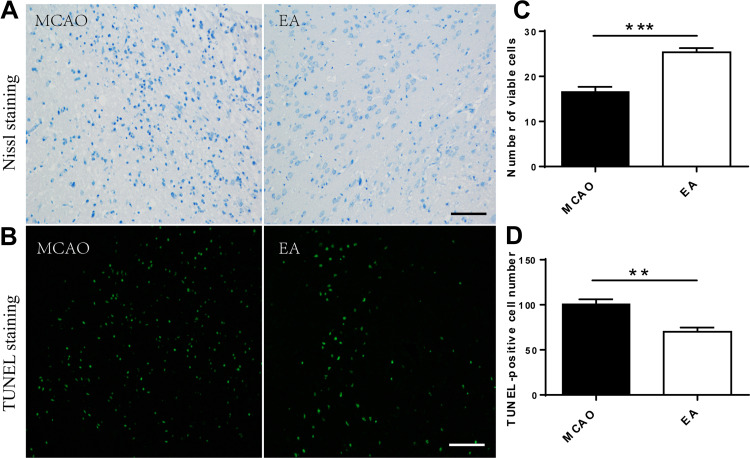
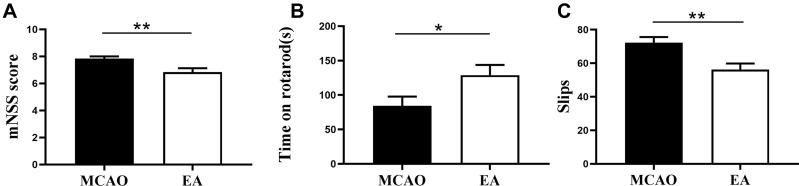
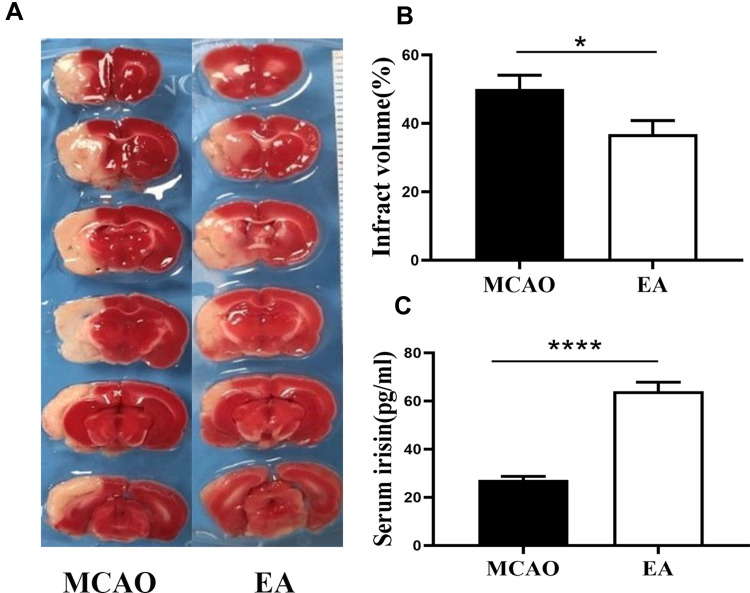
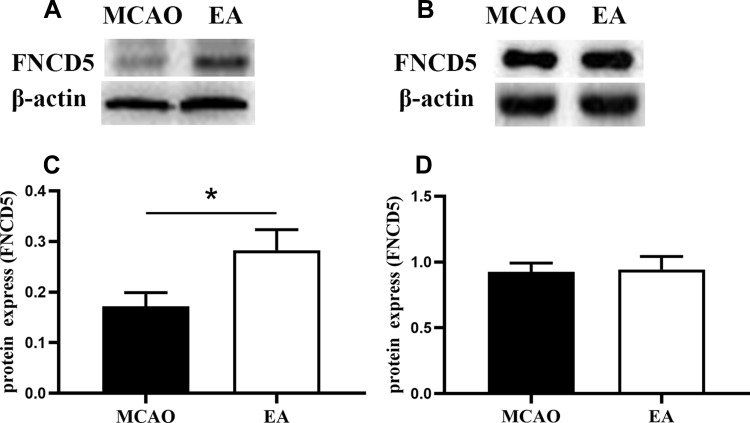
Compared with the MCAO group, the EA group showed better behavioral performance, a smaller cerebral infarct volume, more surviving neurons, and a significant increase in irisin expression in the peri-infarction cortex and serum (<0.05). However, no difference in irisin expression in the muscle tissue was found between the MCAO group and the EA group (>0.05).
EA promotes motor function recovery, reduces the volume of cerebral infarction, and alleviates neuronal death following ischemic stroke by enhancing the expression of irisin in both the blood and peri-lesional cortex.
最近的研究表明,鸢尾素是一种源自肌肉的新型肽类激素,可作为治疗缺血性中风的潜在治疗药物。此外,电针(EA)广泛用于缺血性中风的治疗。然而,鸢尾素是否参与电针神经保护作用仍不清楚。以下研究调查了大鼠血清和病灶周围皮质鸢尾素与电针诱导的中风后运动恢复之间的关联。
采用大脑中动脉闭塞(MCAO)法诱导大鼠缺血性中风。大鼠随机分为两组:大脑中动脉闭塞(MCAO)组(未治疗的MCAO大鼠)和电针(EA)组(接受电针治疗的MCAO大鼠)。在中风后第3天,评估梗死体积、行为缺陷、存活神经元、梗死周围皮质、肌肉组织和血清中鸢尾素蛋白表达,以确定电针在急性缺血性中风中的神经保护作用。
与MCAO组相比,EA组表现出更好的行为表现、更小的脑梗死体积、更多的存活神经元,梗死周围皮质和血清中鸢尾素表达显著增加(<0.05)。然而,MCAO组和EA组之间肌肉组织中鸢尾素表达没有差异(>0.05)。
电针通过增强血液和病灶周围皮质中鸢尾素的表达,促进运动功能恢复,减少脑梗死体积,并减轻缺血性中风后的神经元死亡。