Ma Haiping, Li Yongjie, Hou Tianliang, Li Jing, Yang Long, Guo Hai, Li Lili, Xin Mingxiu, Gong Zhongcheng
The First Affiliated Hospital of Xinjiang Medical University, Urumqi, China.
Front Pharmacol. 2021 Feb 22;11:624809. doi: 10.3389/fphar.2020.624809. eCollection 2020.
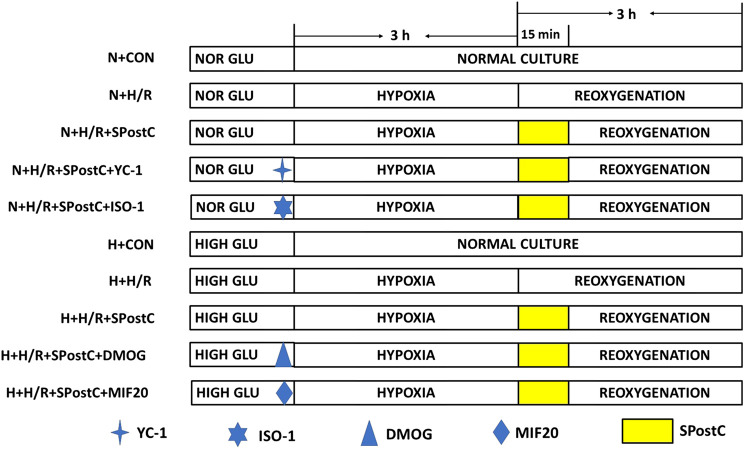
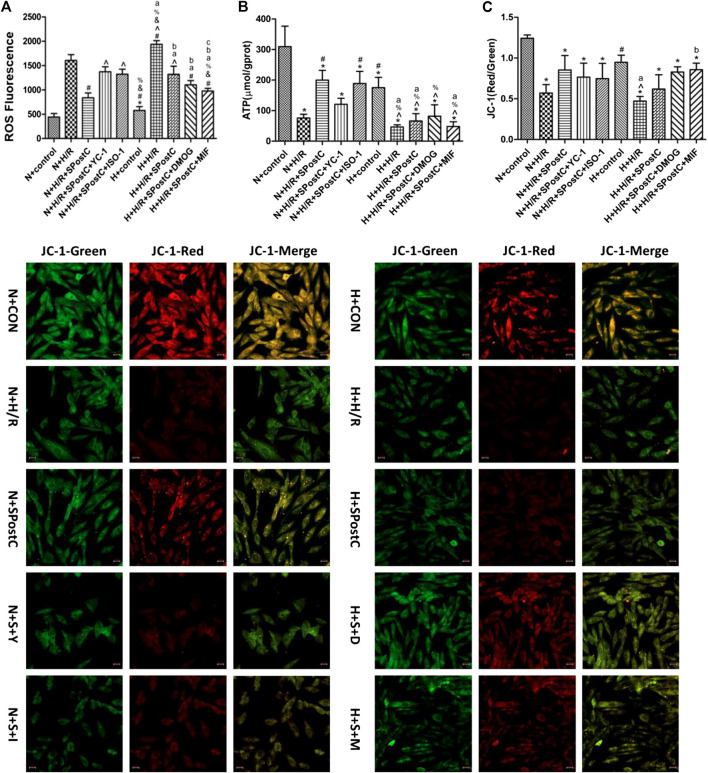
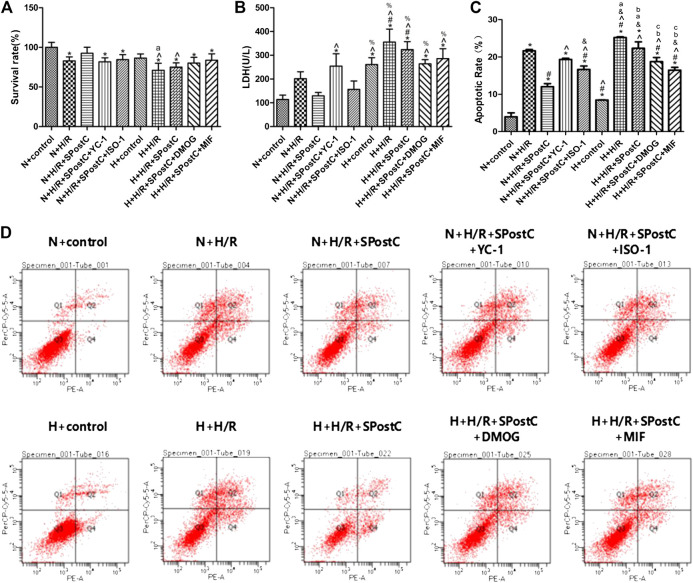
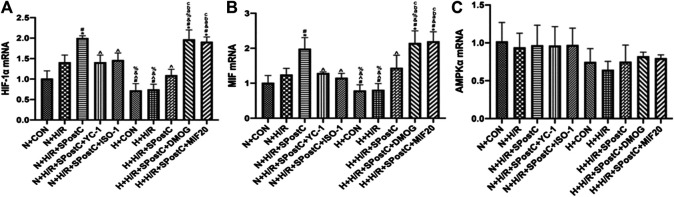
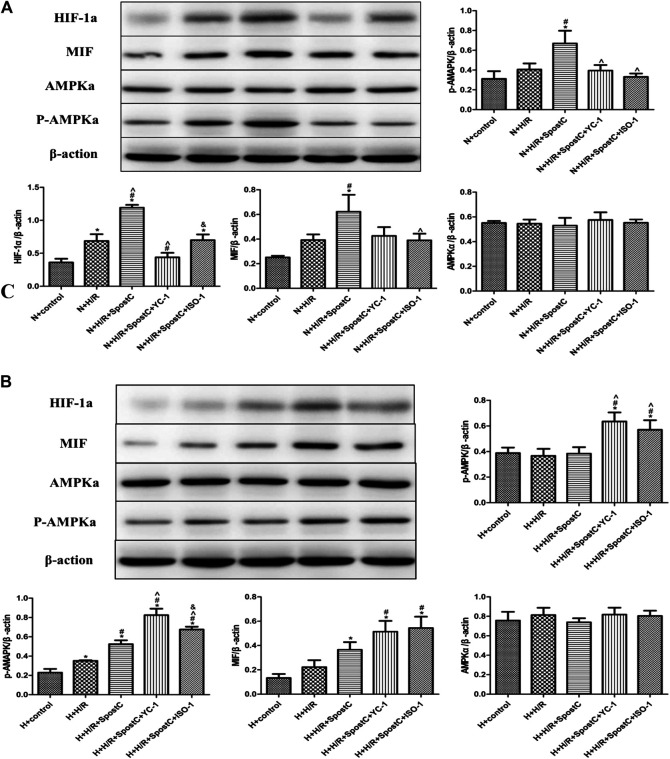
Cardiovascular disease, as a very common and serious coexisting disease in diabetic patients, and is one of the risk factors that seriously affect the prognosis and complications of surgical patients. Previous studies have shown that sevoflurane post-conditioning (SPostC) exerts a protective effect against myocardial ischemia/reperfusion injury by HIF-1α, but the protective effect is weakened or even disappeared under hyperglycemia. This study aims to explore whether regulating the HIF-1α/MIF/AMPK signaling pathway can restore the protective effect and reveal the mechanism of SPostC on cardiomyocyte hypoxia/reoxygenation injury under high glucose conditions. H9c2 cardiomyocytes were cultured in normal and high-concentration glucose medium to establish a hypoxia/reoxygenation (H/R) injury model of cardiomyocytes. SPostC was performed with 2.4% sevoflurane for 15 min before reoxygenation. Cell damage was determined by measuring cell viability, lactate dehydrogenase activity, and apoptosis; Testing cell energy metabolism by detecting reactive oxygen species (ROS) generation, ATP content and mitochondrial membrane potential; Analysis of the change of HIF-1α, MIF and AMPKα mRNA expression by RT-PCR. Western blotting was used to examine the expression of HIF-1α, MIF, AMPKα and p-AMPKα proteins. HIF-1α and MIF inhibitors and agonists were administered 40 min before hypoxia. 1) SPostC exerts a protective effect by increasing cell viability, reducing LDH levels and cell apoptosis under low glucose (5 μM) after undergoing H/R injury; 2) High glucose concentration (35 μM) eliminated the cardioprotective effect of SPostC, which is manifested by a significantly decrease in the protein and mRNA expression level of the HIF-1α/MIF/AMPK signaling pathway, accompanied by decreased cell viability, increased LDH levels and apoptosis, increased ROS production, decreased ATP synthesis, and decreased mitochondrial membrane potential; 3. Under high glucose (35 μM), the expression levels of HIF-1α and MIF were up-regulated by using agonists, which can significantly increase the level of p-AMPKα protein, and the cardioprotective effect of SPostC was restored. The signal pathway of HIF-1α/MIF/AMPK of H9c2 cardiomyocytes may be the key point of SPostC against H/R injure. The cardioprotective of SPostC could be restored by upregulating the protein expression of HIF-1α and MIF under hyperglycemia.
心血管疾病是糖尿病患者中一种非常常见且严重的并存疾病,是严重影响手术患者预后和并发症的危险因素之一。先前的研究表明,七氟醚后处理(SPostC)通过缺氧诱导因子-1α(HIF-1α)对心肌缺血/再灌注损伤发挥保护作用,但在高血糖情况下这种保护作用会减弱甚至消失。本研究旨在探讨调节HIF-1α/巨噬细胞移动抑制因子(MIF)/腺苷酸活化蛋白激酶(AMPK)信号通路是否能恢复这种保护作用,并揭示SPostC在高糖条件下对心肌细胞缺氧/复氧损伤的作用机制。将H9c2心肌细胞培养于正常和高浓度葡萄糖培养基中,建立心肌细胞缺氧/复氧(H/R)损伤模型。在复氧前用2.4%的七氟醚进行SPostC处理15分钟。通过测量细胞活力、乳酸脱氢酶活性和凋亡来确定细胞损伤;通过检测活性氧(ROS)生成、三磷酸腺苷(ATP)含量和线粒体膜电位来检测细胞能量代谢;用逆转录聚合酶链反应(RT-PCR)分析HIF-1α、MIF和AMPKα信使核糖核酸(mRNA)表达的变化。采用蛋白质免疫印迹法检测HIF-1α、MIF、AMPKα和磷酸化AMPKα(p-AMPKα)蛋白的表达。在缺氧前40分钟给予HIF-1α和MIF抑制剂及激动剂。1)SPostC通过在经历H/R损伤后增加低糖(5微摩尔)条件下的细胞活力、降低乳酸脱氢酶水平和细胞凋亡发挥保护作用;2)高糖浓度(35微摩尔)消除了SPostC的心脏保护作用,表现为HIF-1α/MIF/AMPK信号通路的蛋白质和mRNA表达水平显著降低,同时伴有细胞活力下降、乳酸脱氢酶水平升高和凋亡增加、ROS生成增加、ATP合成减少以及线粒体膜电位降低;3. 在高糖(35微摩尔)条件下,使用激动剂上调HIF-1α和MIF的表达水平,可显著增加p-AMPKα蛋白水平,恢复SPostC的心脏保护作用。H9c2心肌细胞的HIF-1α/MIF/AMPK信号通路可能是SPostC对抗H/R损伤的关键环节。在高血糖情况下上调HIF-1α和MIF的蛋白表达可恢复SPostC的心脏保护作用。