Lv Jun, Fu Xiaolong, Li Yige, Hong Guodong, Li Peipei, Lin Jing, Xun Youfang, Fang Lucheng, Weng Weibin, Yue Rongyu, Li Geng-Lin, Guan Bing, Li He, Huang Yideng, Chai Renjie
Department of Otolaryngology-Head and Neck Surgery, First Affiliated Hospital of Wenzhou Medical University, Wenzhou, China.
State Key Laboratory of Bioelectronics, School of Life Sciences and Technology, Jiangsu Province High-Tech Key Laboratory for Bio-Medical Research, Southeast University, Nanjing, China.
Front Cell Dev Biol. 2021 Feb 22;9:630361. doi: 10.3389/fcell.2021.630361. eCollection 2021.
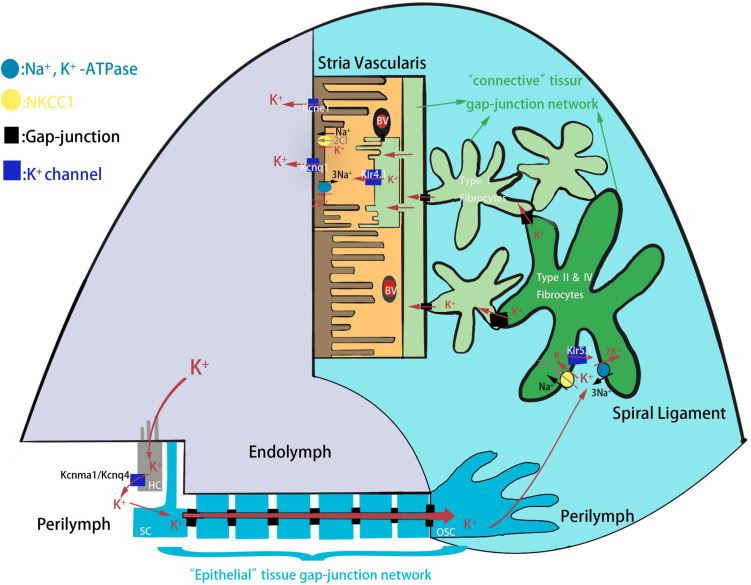
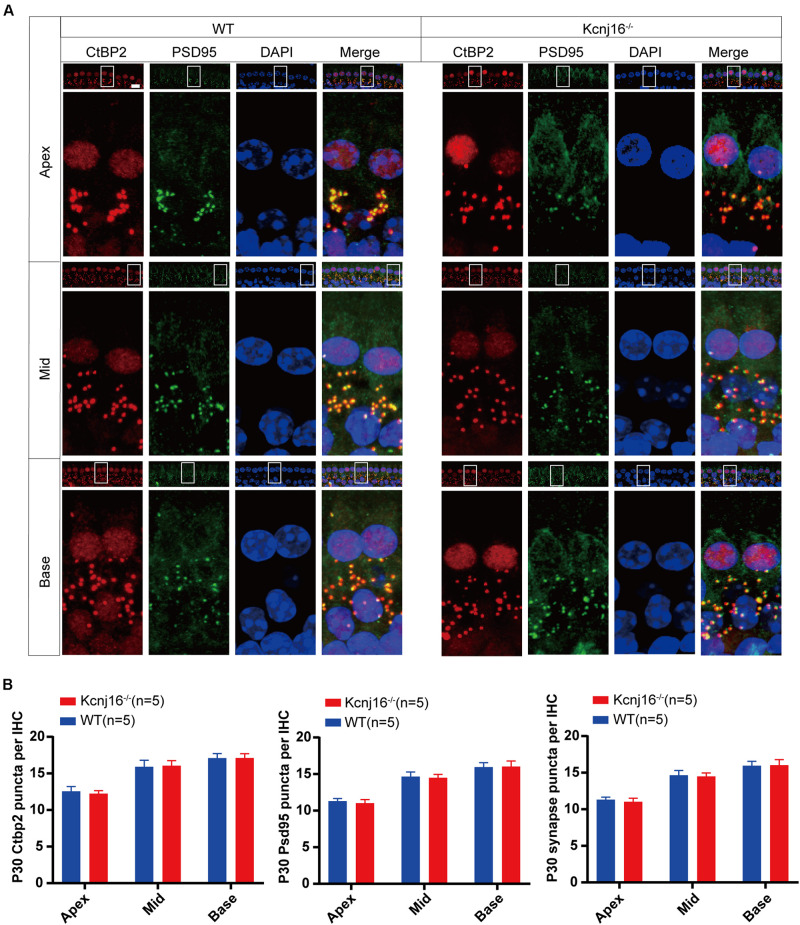
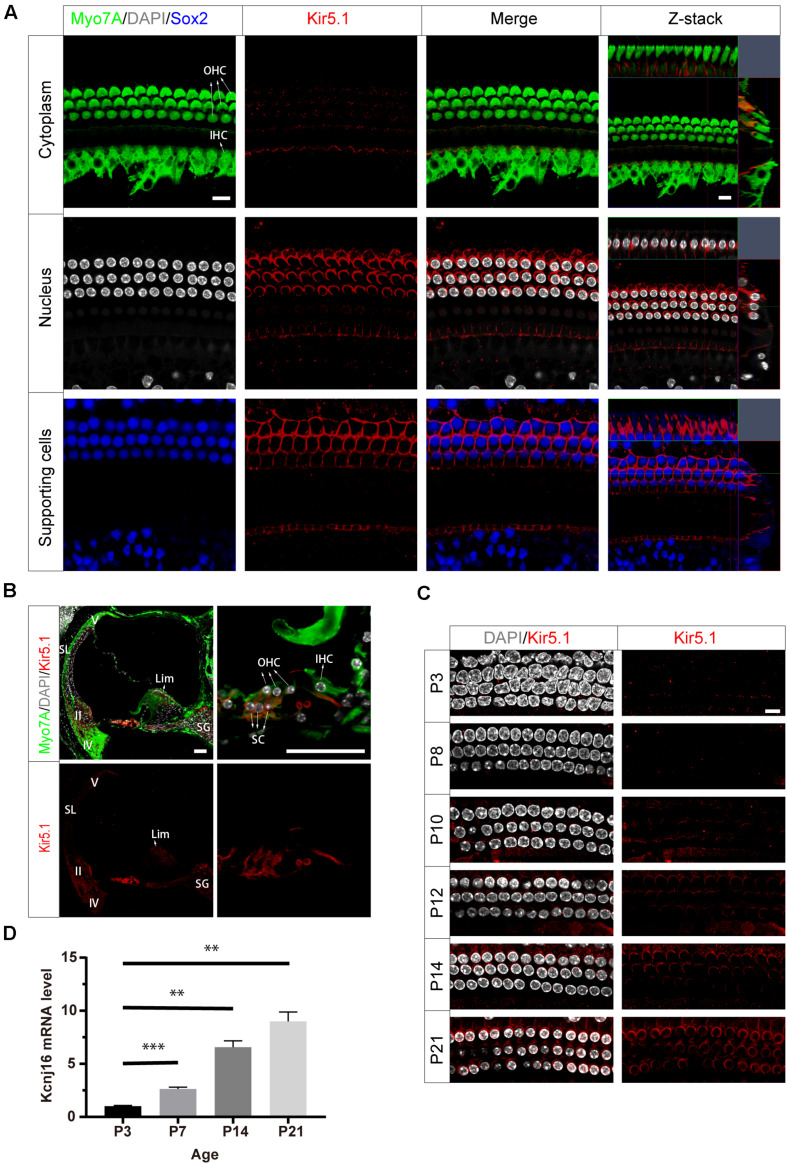
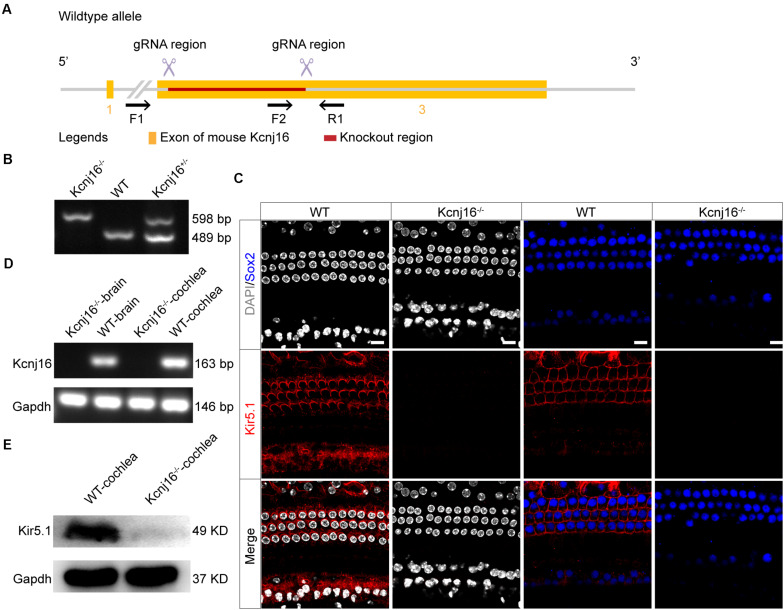
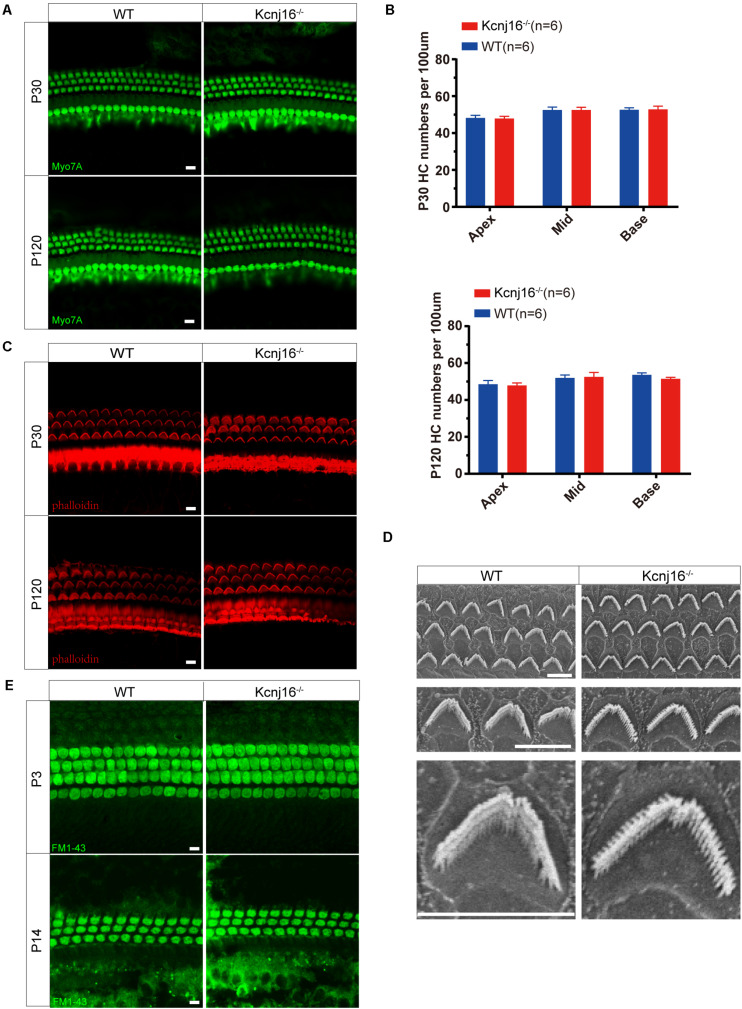
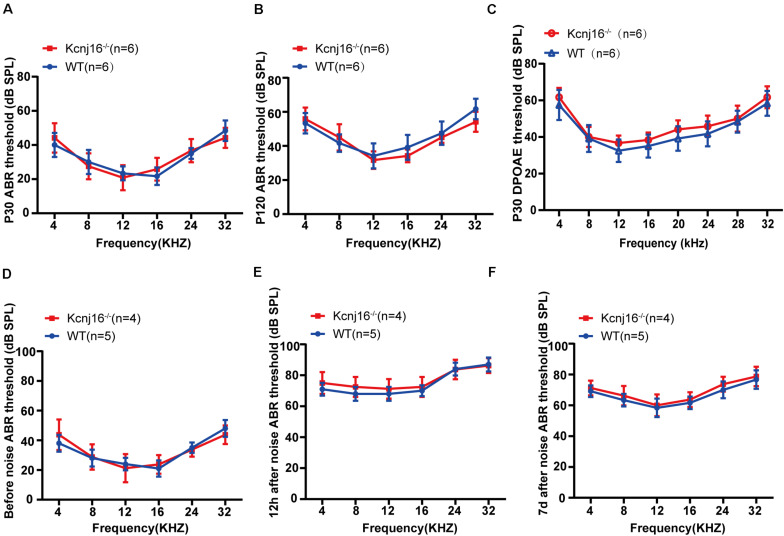
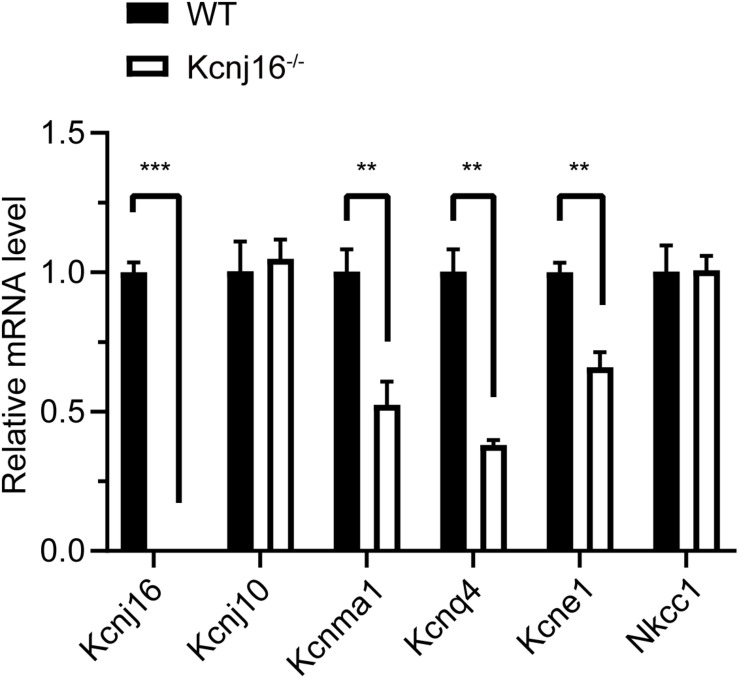
Endolymphatic potential (EP) is the main driving force behind the sensory transduction of hearing, and K is the main charge carrier. Kir5.1 is a K transporter that plays a significant role in maintaining EP homeostasis, but the expression pattern and role of Kir5.1 (which is encoded by the gene) in the mouse auditory system has remained unclear. In this study, we found that Kir5.1 was expressed in the mouse cochlea. We checked the inner ear morphology and measured auditory function in mice and found that loss of did not appear to affect the development of hair cells. There was no significant difference in auditory function between mice and wild-type littermates, although the expression of , , and were significantly decreased in the mice. Additionally, no significant differences were found in the number or distribution of ribbon synapses between the and wild-type mice. In summary, our results suggest that the gene is not essential for auditory function in mice.
内淋巴电位(EP)是听觉感觉转导背后的主要驱动力,而钾离子(K)是主要的电荷载体。Kir5.1是一种钾离子转运体,在维持EP稳态中起重要作用,但Kir5.1(由该基因编码)在小鼠听觉系统中的表达模式和作用仍不清楚。在本研究中,我们发现Kir5.1在小鼠耳蜗中表达。我们检查了基因敲除小鼠的内耳形态并测量了其听觉功能,发现基因敲除似乎并未影响毛细胞的发育。基因敲除小鼠与野生型同窝小鼠的听觉功能没有显著差异,尽管基因敲除小鼠中该基因、其他相关基因的表达显著降低。此外,基因敲除小鼠与野生型小鼠之间的带状突触数量和分布没有显著差异。总之,我们的结果表明该基因对小鼠的听觉功能并非必不可少。