Department of Medicine and Surgery, University of Perugia, Perugia, 06132, Italy.
Medical Genetics Unit, University-Hospital "Santa Maria della Misericordia", Perugia, 06132, Italy.
Hum Mol Genet. 2021 Apr 26;30(3-4):265-276. doi: 10.1093/hmg/ddab040.
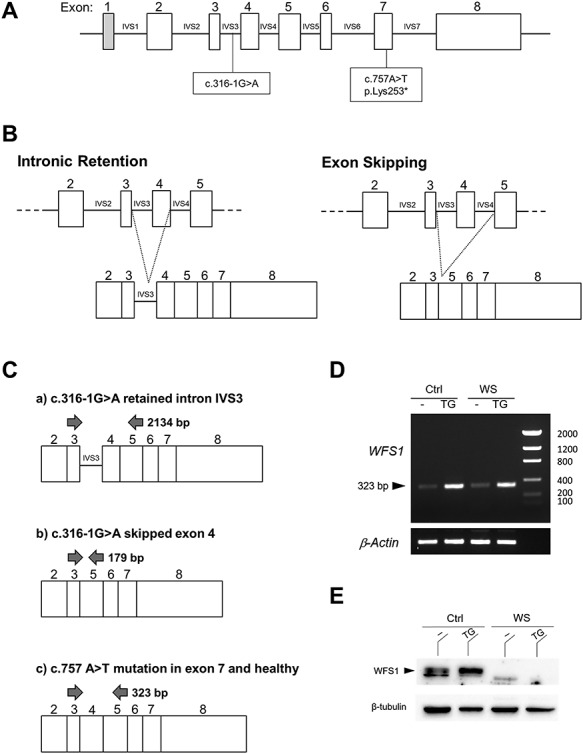
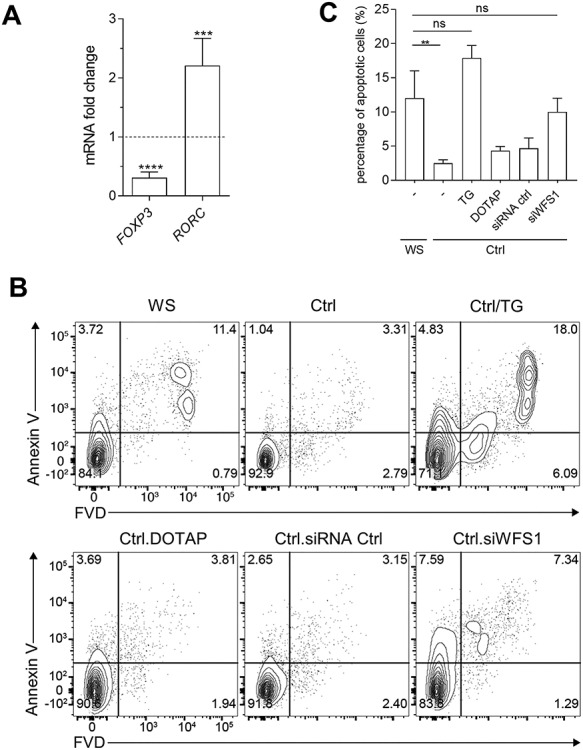
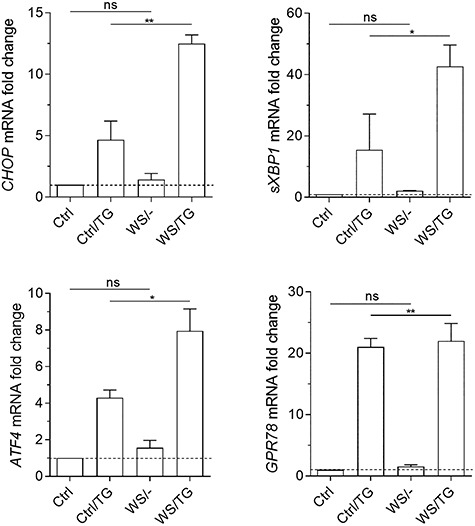
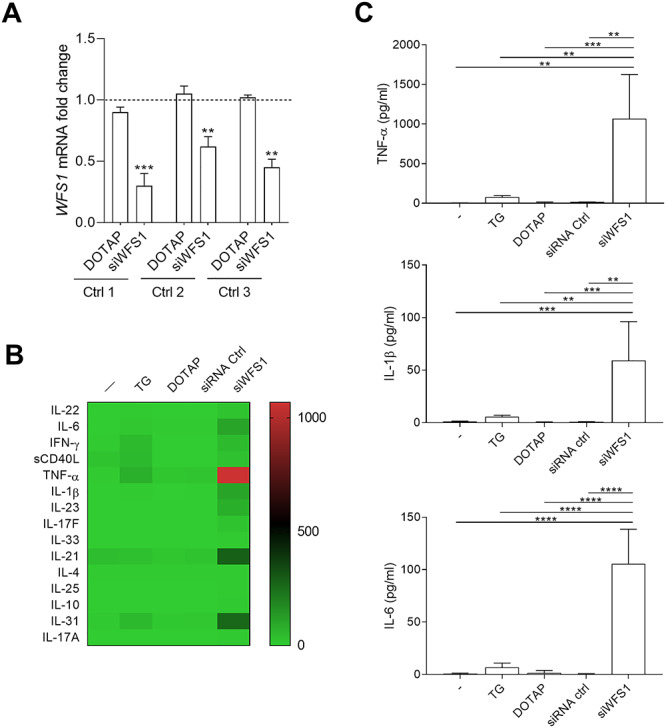
Mutations in the WFS1 gene, encoding wolframin (WFS1), cause endoplasmic reticulum (ER) stress and are associated with a rare autosomal-recessive disorder known as Wolfram syndrome (WS). WS is clinically characterized by childhood-onset diabetes mellitus, optic atrophy, deafness, diabetes insipidus and neurological signs. We identified two novel WFS1 mutations in a patient with WS, namely, c.316-1G > A (in intron 3) and c.757A > T (in exon 7). Both mutations, located in the N-terminal region of the protein, were predicted to generate a truncated and inactive form of WFS1. We found that although the WFS1 protein was not expressed in peripheral blood mononuclear cells (PBMCs) of the proband, no constitutive ER stress activation could be detected in those cells. In contrast, WS proband's PBMCs produced very high levels of proinflammatory cytokines (i.e. TNF-α, IL-1β, and IL-6) in the absence of any stimulus. WFS1 silencing in PBMCs from control subjects by means of small RNA interference also induced a pronounced proinflammatory cytokine profile. The same cytokines were also significantly higher in sera from the WS patient as compared to matched healthy controls. Moreover, the chronic inflammatory state was associated with a dominance of proinflammatory T helper 17 (Th17)-type cells over regulatory T (Treg) lymphocytes in the WS PBMCs. The identification of a state of systemic chronic inflammation associated with WFS1 deficiency may pave the way to innovative and personalized therapeutic interventions in WS.
WFS1 基因的突变,编码沃弗林(WFS1),导致内质网(ER)应激,并与一种罕见的常染色体隐性疾病称为 Wolfram 综合征(WS)相关。WS 的临床特征为儿童期发病的糖尿病、视神经萎缩、耳聋、尿崩症和神经体征。我们在一位 WS 患者中鉴定出两种新的 WFS1 突变,即 c.316-1G>A(在内含子 3 中)和 c.757A>T(在外显子 7 中)。这两种突变位于蛋白的 N 端区域,预计会产生截短和无活性的 WFS1 形式。我们发现,虽然 WFS1 蛋白在该先证者的外周血单核细胞(PBMC)中未表达,但在这些细胞中未检测到固有 ER 应激激活。相比之下,WS 先证者的 PBMC 在没有任何刺激的情况下产生非常高水平的前炎性细胞因子(即 TNF-α、IL-1β 和 IL-6)。通过小 RNA 干扰使对照个体的 PBMC 中的 WFS1 沉默也诱导了明显的前炎性细胞因子谱。与匹配的健康对照者相比,WS 患者的血清中同样的细胞因子也显著更高。此外,慢性炎症状态与 WS PBMC 中前炎性辅助性 T 细胞 17(Th17)型细胞相对于调节性 T(Treg)淋巴细胞的优势有关。与 WFS1 缺乏相关的全身性慢性炎症状态的鉴定可能为 WS 的创新性和个性化治疗干预铺平道路。