Arctic Division, National Centre for Polar and Ocean Research, Ministry of Earth Sciences, Vasco-da-Gama, Goa, India.
Antonie Van Leeuwenhoek. 2021 May;114(5):633-647. doi: 10.1007/s10482-021-01547-1. Epub 2021 Mar 10.
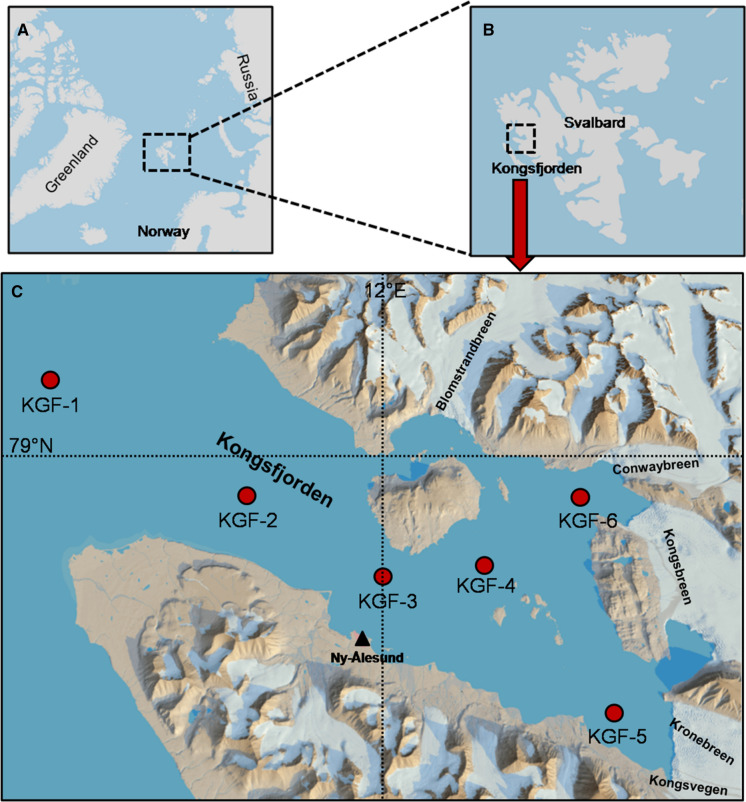
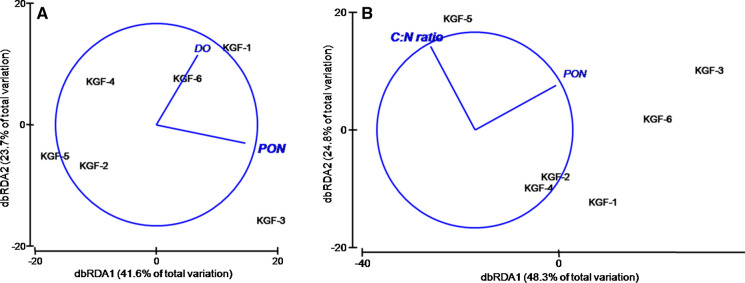
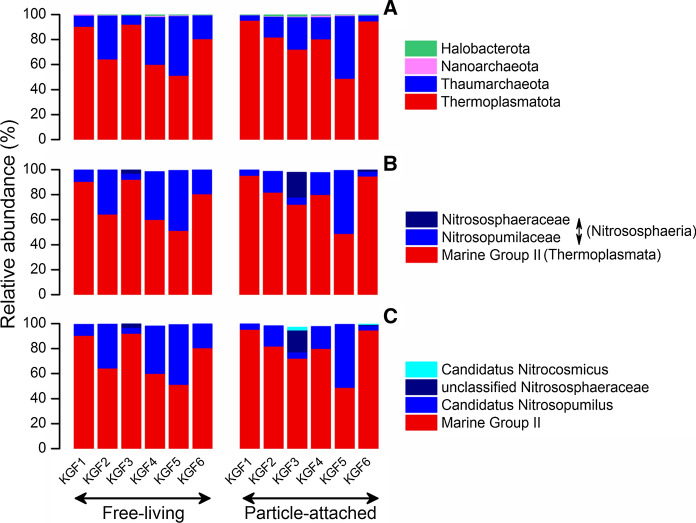
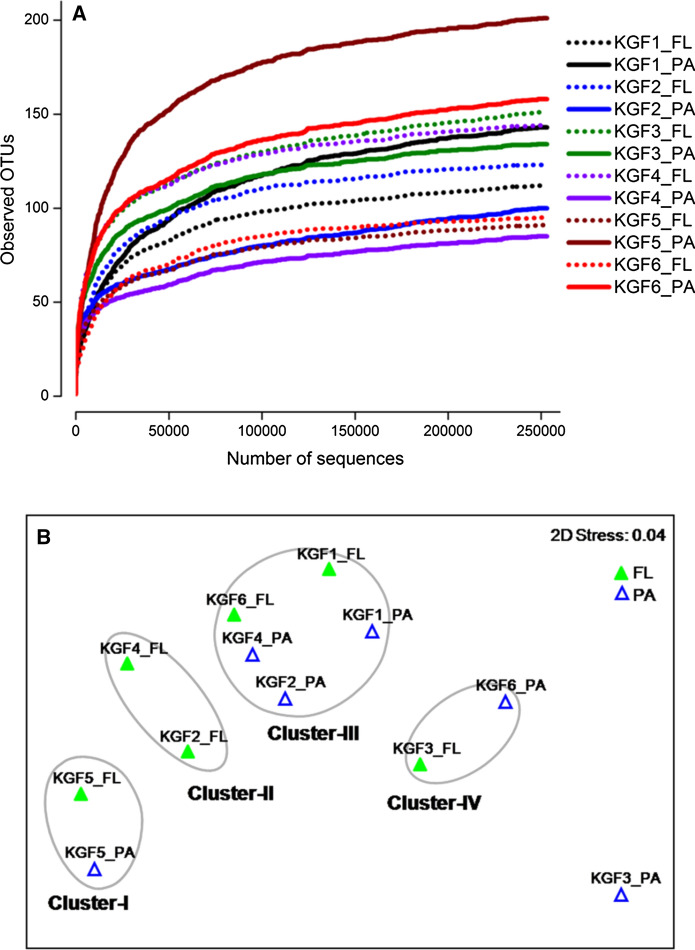
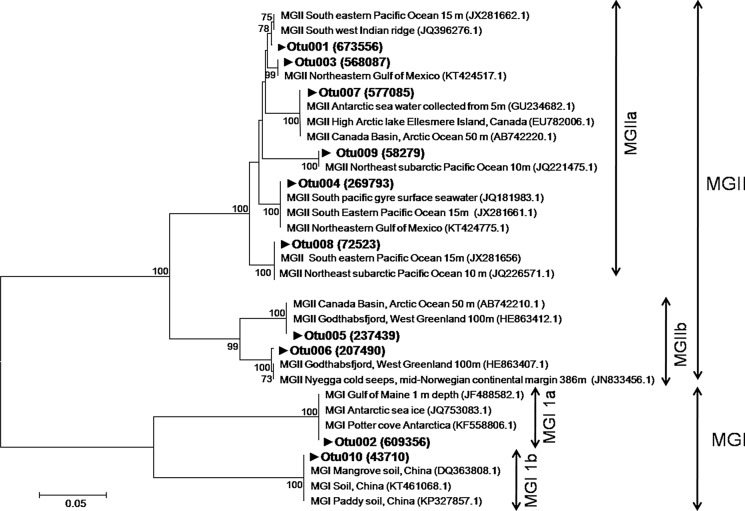
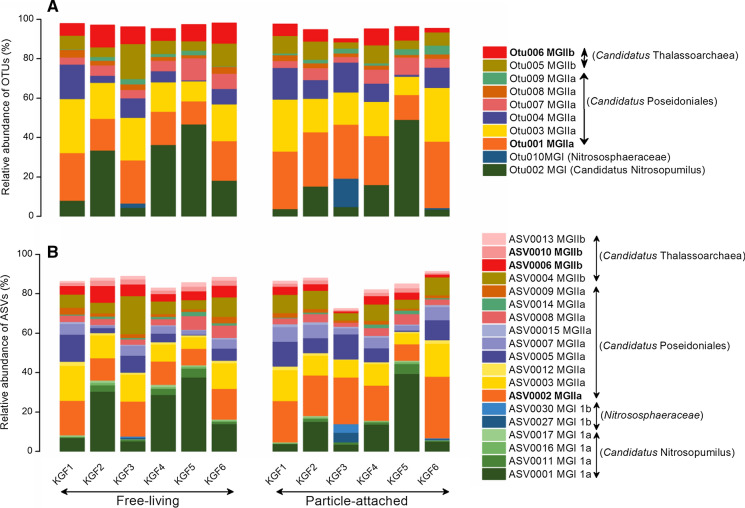
Marine archaea are a significant component of the global oceanic ecosystems, including the polar oceans. However, only a few attempts have been made to study archaea in the high Arctic fjords. Given the importance of Archaea in carbon and nitrogen cycling, it is imperative to explore their diversity and community composition in the high Arctic fjords, such as Kongsfjorden (Svalbard). In the present study, we evaluated archaeal diversity and community composition in the size-fractionated microbial population, viz-a-viz free-living (FL; 0.2-3 μm) and particle-attached (PA; > 3 μm) using archaeal V3-V4 16S rRNA gene amplicon sequencing. Our results indicate that the overall archaeal community in the surface water of Kongsfjorden was dominated by the members of the marine group-II (MGII) archaea, followed by the MGI group members, including Nitrosopumilaceae and Nitrososphaeraceae. Although a clear niche partitioning between PA and FL archaeal communities was not observed, 2 OTUs among 682 OTUs, and 3 ASVs out of 1932 ASVs were differentially abundant among the fractions. OTU001/ASV0002, classified as MGIIa, was differentially abundant in the PA fraction. OTU006/ASV0006/ASV0010 affiliated with MGIIb were differentially abundant in the FL fraction. Particulate organic nitrogen and C:N ratio were the most significant variables (P < 0.05) explaining the observed variation in the FL and PA archaeal communities, respectively. These results indicate an exchange between archaeal communities or a generalist lifestyle switching between FL and PA fractions. Besides, the particles' elemental composition (carbon and nitrogen) seems to play an essential role in shaping the PA archaeal communities in the surface waters of Kongsfjorden.
海洋古菌是全球海洋生态系统的重要组成部分,包括极地海洋。然而,人们对高北极峡湾的古菌研究甚少。鉴于古菌在碳氮循环中的重要性,探索高北极峡湾(如康斯峡湾(斯瓦尔巴群岛))古菌的多样性和群落组成至关重要。在本研究中,我们使用古菌 V3-V4 16S rRNA 基因扩增子测序评估了大小分级微生物群中古菌的多样性和群落组成,即自由生活(FL;0.2-3 μm)和颗粒附着(PA;>3 μm)。我们的研究结果表明,康斯峡湾表层水中的古菌群落主要由海洋群 II(MGII)古菌成员组成,其次是 MGI 群成员,包括硝化螺旋菌科和硝化球菌科。尽管在 PA 和 FL 古菌群落之间没有观察到明显的生态位分隔,但在 682 个 OTU 中有 2 个 OTU,在 1932 个 ASV 中有 3 个 ASV 在两个分数之间存在差异丰度。分类为 MGIIa 的 OTU001/ASV0002 在 PA 分数中差异丰度较高。OTU006/ASV0006/ASV0010 与 MGIIb 相关,在 FL 分数中差异丰度较高。颗粒有机氮和 C:N 比是解释 FL 和 PA 古菌群落观察到的变化的最重要变量(P<0.05),分别。这些结果表明,古菌群落之间存在交换或 FL 和 PA 分数之间的一般生活方式转换。此外,颗粒的元素组成(碳和氮)似乎在塑造康斯峡湾表层水中的 PA 古菌群落方面发挥着重要作用。