Southern Ocean Carbon-Climate Observatory (SOCCO), Council of Scientific & Industrial Research (CSIR), Rosebank, Cape Town, South Africa.
SARChI Chair: Marine Ecosystems and Resources, Department of Entomology & Zoology, Rhodes University (RU), Makhanda, Eastern Cape, South Africa.
mSphere. 2023 Jun 22;8(3):e0042022. doi: 10.1128/msphere.00420-22. Epub 2023 Apr 24.
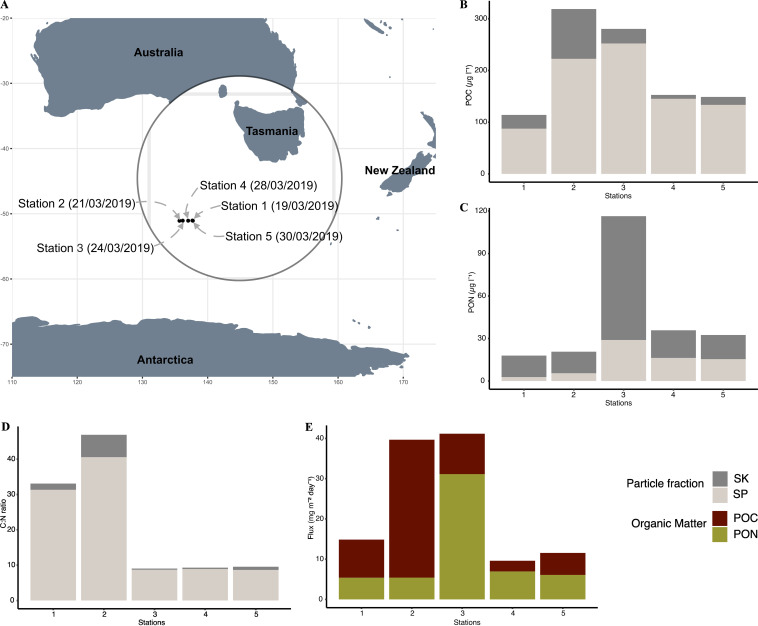
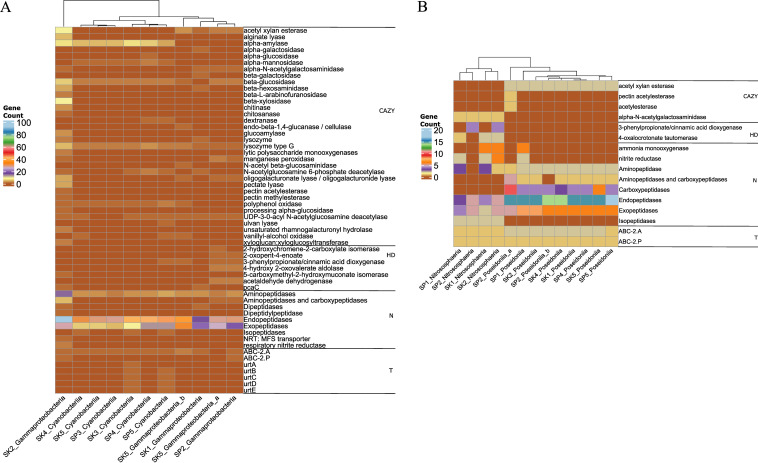
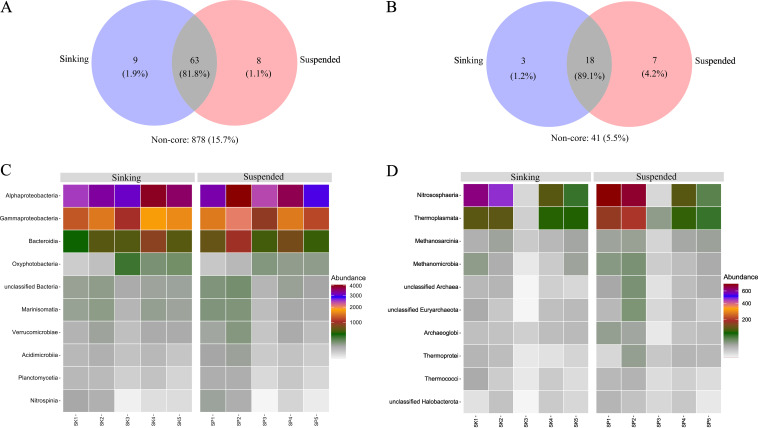
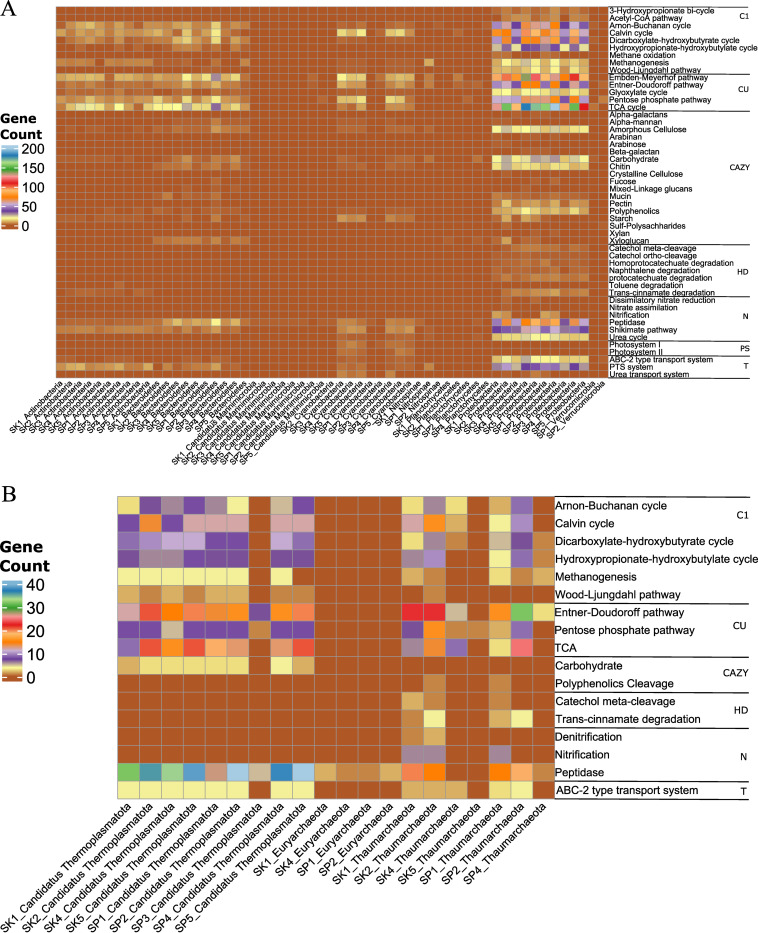
The biological carbon pump (BCP) in the Southern Ocean is driven by phytoplankton productivity and is a significant organic matter sink. However, the role of particle-attached (PA) and free-living (FL) prokaryotes (bacteria and archaea) and their diversity in influencing the efficiency of the BCP is still unclear. To investigate this, we analyzed the metagenomes linked to suspended and sinking marine particles from the Sub-Antarctic Southern Ocean Time Series (SOTS) by deploying a Marine Snow Catcher (MSC), obtaining suspended and sinking particulate material, determining organic carbon and nitrogen flux, and constructing metagenome-assembled genomes (MAGs). The suspended and sinking particle-pools were dominated by bacteria with the potential to degrade organic carbon. Bacterial communities associated with the sinking fraction had more genes related to the degradation of complex organic carbon than those in the suspended fraction. Archaea had the potential to drive nitrogen metabolism via nitrite and ammonia oxidation, altering organic nitrogen concentration. The data revealed several pathways for chemoautotrophy and the secretion of recalcitrant dissolved organic carbon (RDOC) from CO, with bacteria and archaea potentially sequestering particulate organic matter (POM) via the production of RDOC. These findings provide insights into the diversity and function of prokaryotes in suspended and sinking particles and their role in organic carbon/nitrogen export in the Southern Ocean. The biological carbon pump is crucial for the export of particulate organic matter in the ocean. Recent studies on marine microbes have shown the profound influence of bacteria and archaea as regulators of particulate organic matter export. Yet, despite the importance of the Southern Ocean as a carbon sink, we lack comparable insights regarding microbial contributions. This study provides the first insights regarding prokaryotic contributions to particulate organic matter export in the Southern Ocean. We reveal evidence that prokaryotic communities in suspended and sinking particle fractions harbor widespread genomic potential for mediating particulate organic matter export. The results substantially enhance our understanding of the role played by microorganisms in regulating particulate organic matter export in suspended and sinking marine fractions in the Southern Ocean.
南大洋的生物碳泵(BCP)由浮游植物生产力驱动,是一个重要的有机质汇。然而,颗粒附着(PA)和自由生活(FL)原核生物(细菌和古菌)及其多样性在影响 BCP 效率方面的作用仍不清楚。为了研究这一点,我们通过部署海洋雪收集器(MSC)分析了与南大洋亚热带海洋时间序列(SOTS)中的悬浮和沉降海洋颗粒相关的宏基因组,获得了悬浮和沉降颗粒物质,测定了有机碳和氮通量,并构建了宏基因组组装基因组(MAGs)。悬浮和沉降颗粒库主要由有潜力降解有机碳的细菌组成。与沉降部分相关的细菌群落比悬浮部分具有更多与复杂有机碳降解相关的基因。古菌有可能通过亚硝酸盐和氨氧化来驱动氮代谢,从而改变有机氮浓度。数据揭示了几种化能自养途径和从 CO 中分泌难降解溶解有机碳(RDOC)的途径,细菌和古菌可能通过产生 RDOC 来固定颗粒有机物质(POM)。这些发现为我们提供了有关南大洋悬浮和沉降颗粒中原核生物多样性和功能及其在海洋有机碳/氮输出中的作用的深入了解。生物碳泵对于海洋中颗粒有机物质的输出至关重要。最近对海洋微生物的研究表明,细菌和古菌作为颗粒有机物质输出调节剂的影响深远。然而,尽管南大洋作为碳汇的重要性不言而喻,但我们缺乏有关微生物贡献的可比见解。本研究首次提供了有关南大洋颗粒有机物质输出中原核生物贡献的见解。我们的研究结果表明,悬浮和沉降颗粒部分的原核生物群落具有广泛的介导颗粒有机物质输出的基因组潜力。这些结果极大地增强了我们对微生物在调节南大洋悬浮和沉降海洋部分颗粒有机物质输出中的作用的理解。