Lung Repair and Regeneration Unit, Helmholtz-Zentrum Munich, Ludwig-Maximilians-University, University Hospital Grosshadern, Member of the German Center of Lung Research (DZL), Munich 81377, Germany; Division of Pulmonary Sciences and Critical Care Medicine, School of Medicine, University of Colorado, Aurora, CO 80045, USA.
Lung Repair and Regeneration Unit, Helmholtz-Zentrum Munich, Ludwig-Maximilians-University, University Hospital Grosshadern, Member of the German Center of Lung Research (DZL), Munich 81377, Germany.
Cell Signal. 2020 Jun;70:109588. doi: 10.1016/j.cellsig.2020.109588. Epub 2020 Feb 26.
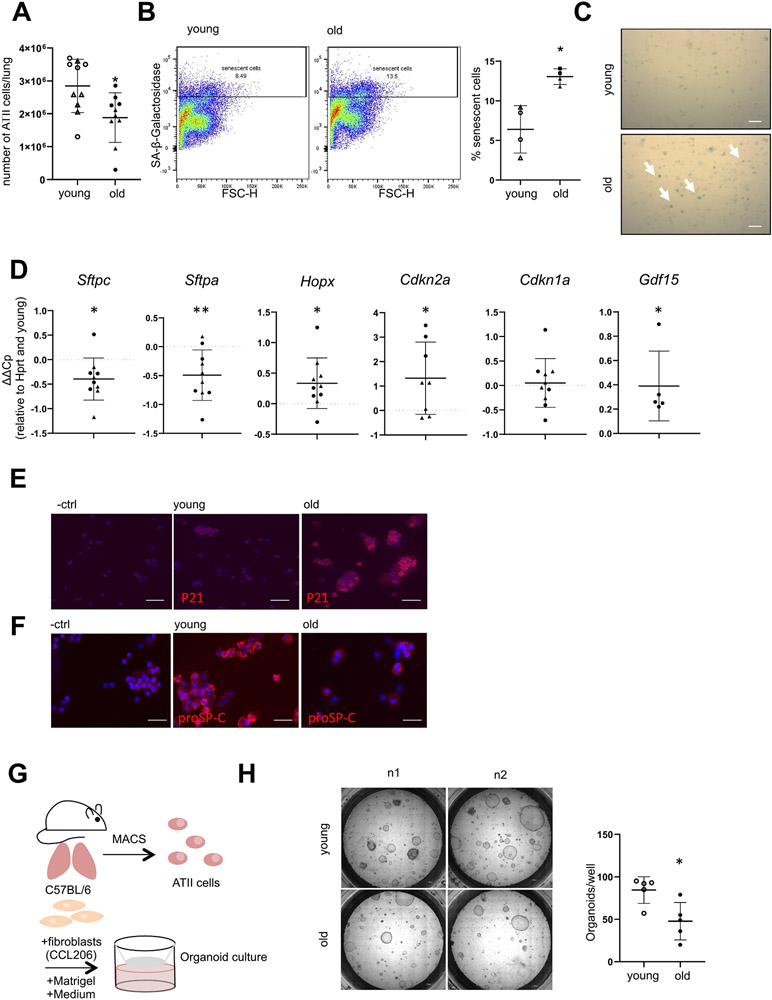
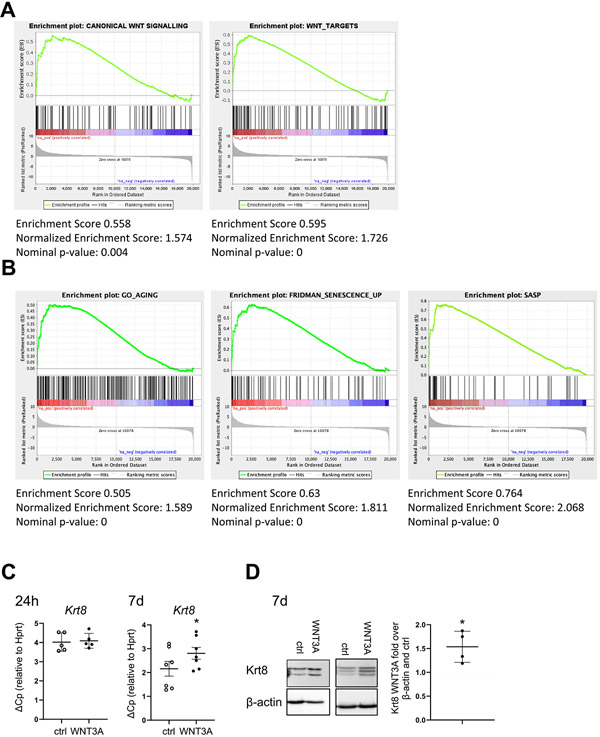
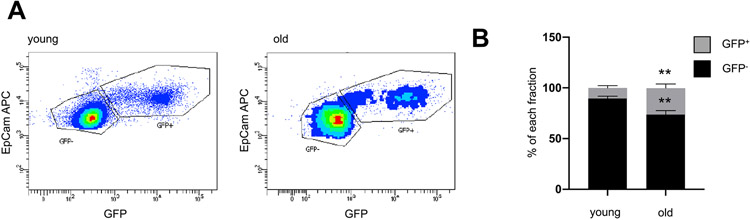
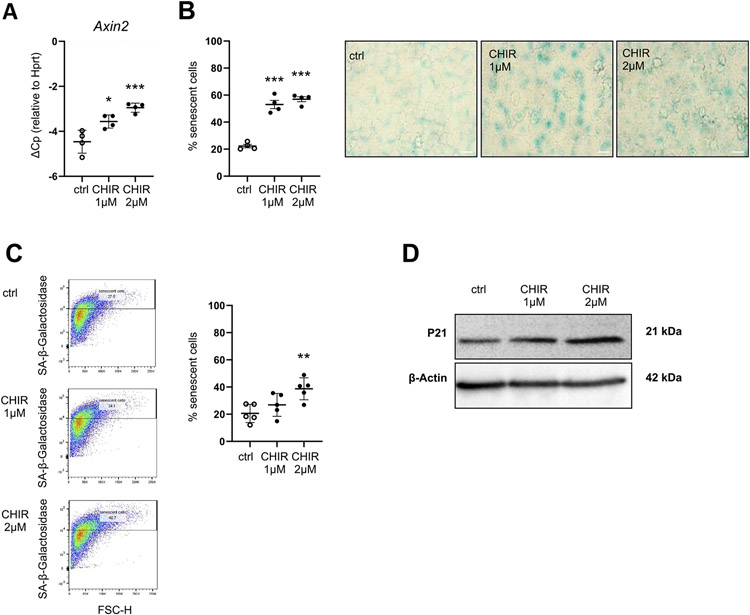
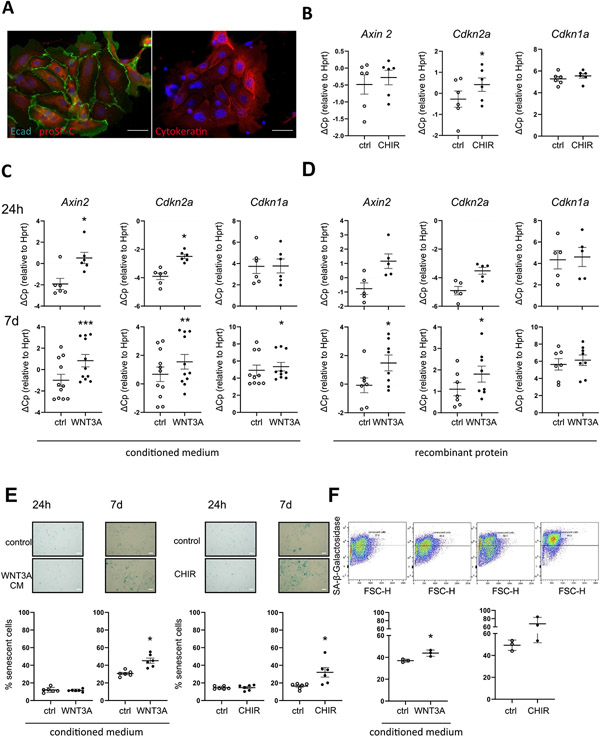
The rapid expansion of the elderly population has led to the recent epidemic of age-related diseases, including increased incidence and mortality of chronic lung diseases, such as Idiopathic Pulmonary Fibrosis (IPF). Cellular senescence is a major hallmark of aging and has a higher occurrence in IPF. The lung epithelium represents a major site of tissue injury, cellular senescence and aberrant activity of developmental pathways such as the WNT/β-catenin pathway in IPF. The potential impact of WNT/β-catenin signaling on alveolar epithelial senescence in general as well as in IPF, however, remains elusive. Here, we characterized alveolar epithelial cells of aged mice and assessed the contribution of chronic WNT/β-catenin signaling on alveolar epithelial type (AT) II cell senescence. Whole lungs from old (16-24 months) versus young (3 months) mice had relatively less epithelial (EpCAM) but more inflammatory (CD45) cells, as assessed by flow cytometry. Compared to young ATII cells, old ATII cells showed decreased expression of the ATII cell marker Surfactant Protein C along with increased expression of the ATI cell marker Hopx, accompanied by increased WNT/β-catenin activity. Notably, when placed in an organoid assay, old ATII cells exhibited decreased progenitor cell potential. Chronic canonical WNT/β-catenin activation for up to 7 days in primary ATII cells as well as alveolar epithelial cell lines induced a robust cellular senescence, whereas the non-canonical ligand WNT5A was not able to induce cellular senescence. Moreover, chronic WNT3A treatment of precision-cut lung slices (PCLS) further confirmed ATII cell senescence. Simultaneously, chronic but not acute WNT/β-catenin activation induced a profibrotic state with increased expression of the impaired ATII cell marker Keratin 8. These results suggest that chronic WNT/β-catenin activity in the IPF lung contributes to increased ATII cell senescence and reprogramming. In the fibrotic environment, WNT/β-catenin signaling thus might lead to further progenitor cell dysfunction and impaired lung repair.
人口老龄化的迅速扩张导致了与年龄相关疾病的最近流行,包括慢性肺部疾病(如特发性肺纤维化(IPF))的发病率和死亡率增加。细胞衰老(cellular senescence)是衰老的一个主要标志,在 IPF 中更为常见。肺上皮细胞是组织损伤、细胞衰老和发育途径(如 WNT/β-catenin 途径)异常活跃的主要部位,在 IPF 中也是如此。然而,WNT/β-catenin 信号传导对肺泡上皮细胞衰老的潜在影响,以及在 IPF 中的影响,仍然难以捉摸。在这里,我们对老年小鼠的肺泡上皮细胞进行了表征,并评估了慢性 WNT/β-catenin 信号传导对肺泡上皮细胞类型(AT)II 细胞衰老的贡献。通过流式细胞术评估,与年轻(3 个月)相比,来自老年(16-24 个月)小鼠的整个肺部上皮(EpCAM)细胞较少,但炎症(CD45)细胞较多。与年轻 ATII 细胞相比,老年 ATII 细胞显示出表面活性蛋白 C 的 ATII 细胞标记物表达减少,同时 ATI 细胞标记物 Hopx 的表达增加,伴随 WNT/β-catenin 活性增加。值得注意的是,当置于类器官测定中时,老年 ATII 细胞显示出减少的祖细胞潜力。在原代 ATII 细胞和肺泡上皮细胞系中,持续长达 7 天的慢性经典 WNT/β-catenin 激活诱导了强烈的细胞衰老,而非经典配体 WNT5A 则不能诱导细胞衰老。此外,慢性 WNT3A 处理精密切割肺切片(PCLS)进一步证实了 ATII 细胞衰老。同时,慢性而非急性 WNT/β-catenin 激活诱导了一个成纤维状态,表现为受损的 ATII 细胞标记物角蛋白 8 的表达增加。这些结果表明,IPF 肺中的慢性 WNT/β-catenin 活性导致 ATII 细胞衰老和重编程增加。在纤维化环境中,WNT/β-catenin 信号可能导致祖细胞功能进一步受损和肺修复受损。