Zhang Changyi, Wang Hongwu, Li Jilin, Ma Lian
Departments of Cardiology, Second Affiliated Hospital of Shantou University Medical College, Shantou, China.
Departments of Pediatrics, Second Affiliated Hospital of Shantou University Medical College, Shantou, China.
Front Cardiovasc Med. 2021 Feb 23;8:626878. doi: 10.3389/fcvm.2021.626878. eCollection 2021.
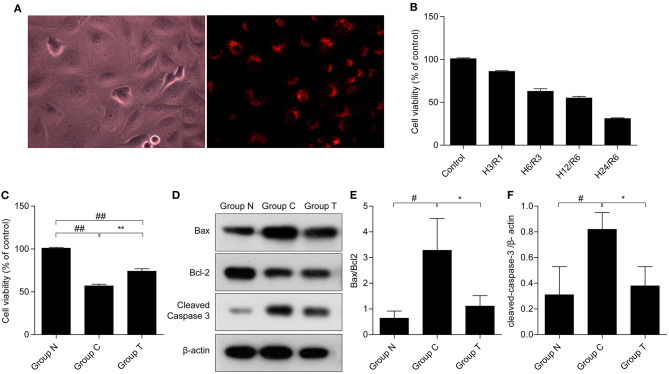
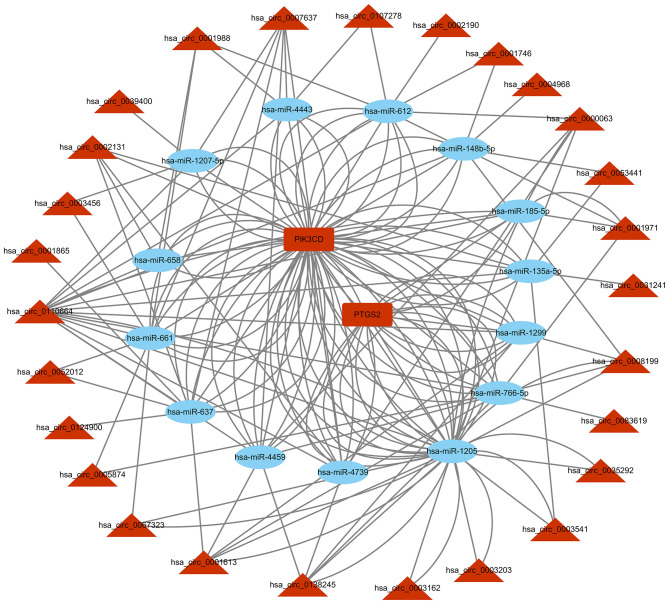
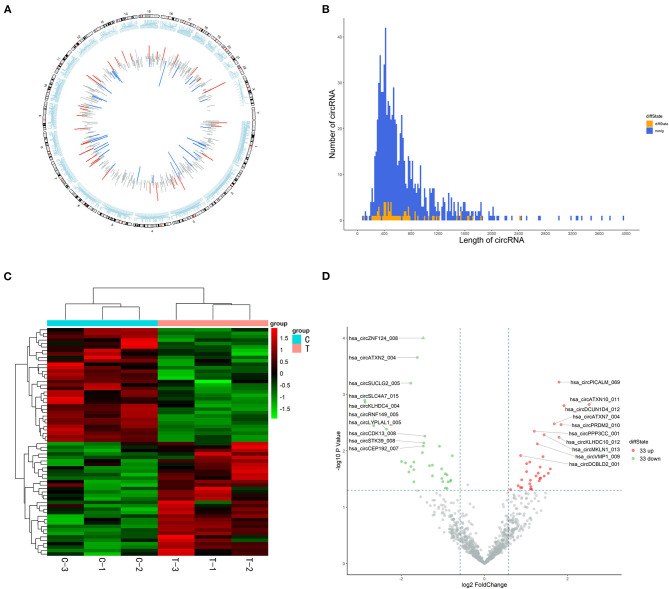
Human umbilical cord mesenchymal stromal cell-derived extracellular vesicles (HuMSC-EVs) can repair damaged tissues. The expression profile of circular RNAs (circRNAs) provides valuable insights into the regulation of the repair process and the exploration of the repair mechanism. AC16 cardiomyocytes were exposed to hypoxia/reoxygenation (H/R) injury and subsequently cultured with or without HuMSC-EVs (Group T and Group C, respectively). High-throughput RNA sequencing was implemented for the two groups. On the basis of the transcriptome data, gene ontology (GO), Kyoto Encyclopedia of Genes and Genomes (KEGG) pathway, and network analyses were carried out to determine the differential gene expression profiles between the two groups. After screening the circRNA database, the results were proved by quantitative real-time polymerase chain reaction. The survival rate of cardiomyocytes exposed to H/R was increased by treatment with HuMSC-EVs. RNA-seq analysis showed that 66 circRNAs were differentially expressed in cardiomyocytes in the co-cultured group. The cellular responses to hypoxia and to decreased oxygen levels were at the top of the GO upregulated list for the two groups, while the vascular endothelial growth factor signaling pathway, long-term potentiation, and the glucagon signaling pathway were at the top of the KEGG pathway upregulated list for the two groups. In the same samples, the 10 most aberrantly upregulated circRNAs were chosen for further verification of their RNA sequences. Seven of the 10 most aberrant circRNAs were significantly upregulated in the co-cultured group and in the HuMSC-EVs. Our results revealed that upregulated circRNAs were abundant during the repair of damaged cardiomyocytes by HuMSC-EVs, which provides a new perspective for the repair of H/R by HuMSC-EVs.
人脐带间充质基质细胞衍生的细胞外囊泡(HuMSC-EVs)可修复受损组织。环状RNA(circRNAs)的表达谱为修复过程的调控及修复机制的探索提供了有价值的见解。将AC16心肌细胞暴露于缺氧/复氧(H/R)损伤,随后分别在有或无HuMSC-EVs的情况下进行培养(分别为T组和C组)。对两组进行高通量RNA测序。基于转录组数据,进行基因本体(GO)、京都基因与基因组百科全书(KEGG)通路及网络分析,以确定两组之间的差异基因表达谱。筛选circRNA数据库后,通过定量实时聚合酶链反应验证结果。用HuMSC-EVs处理可提高暴露于H/R的心肌细胞的存活率。RNA测序分析表明,共培养组心肌细胞中有66种circRNAs差异表达。两组GO上调列表中,细胞对缺氧和低氧水平的反应位居前列,而两组KEGG通路上调列表中,血管内皮生长因子信号通路、长时程增强和胰高血糖素信号通路位居前列。在相同样本中,选择10种上调最为异常的circRNAs进一步验证其RNA序列。10种上调最为异常的circRNAs中有7种在共培养组和HuMSC-EVs中显著上调。我们的结果显示,在HuMSC-EVs修复受损心肌细胞的过程中上调的circRNAs丰富,这为HuMSC-EVs修复H/R提供了新的视角。