Nephrology and Kidney Transplantation Unit, Department of Translational Medicine, University of Piemonte Orientale (UPO), Novara, Italy.
Center for Autoimmune and Allergic Diseases (CAAD), University of Piemonte Orientale (UPO), Novara, Italy.
Front Immunol. 2020 Feb 27;11:74. doi: 10.3389/fimmu.2020.00074. eCollection 2020.
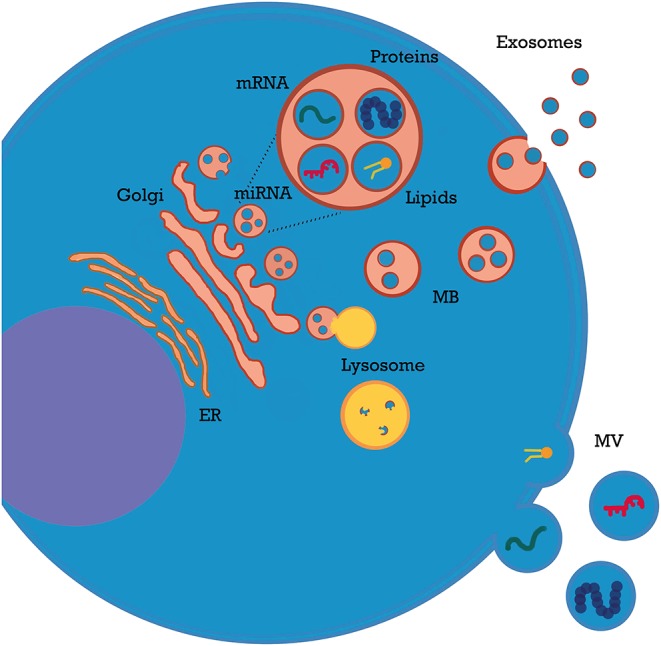
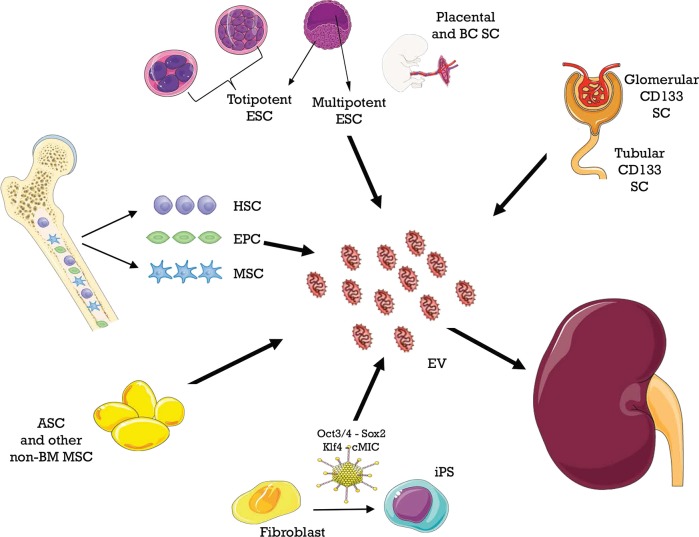
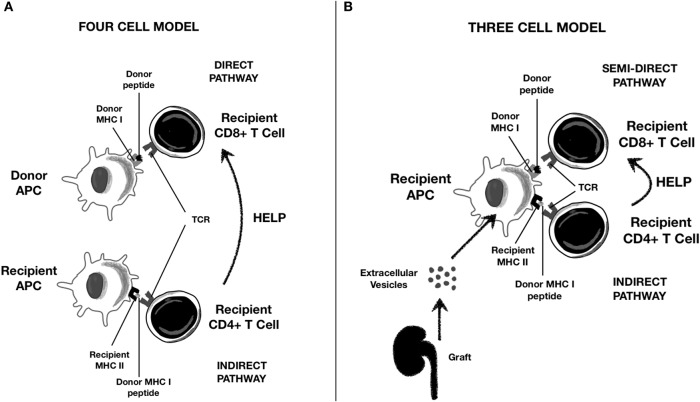
Extracellular vesicles (EVs) are known immune-modulators exerting a critical role in kidney transplantation (KT). EV bioactive cargo includes graft antigens, costimulatory/inhibitory molecules, cytokines, growth factors, and functional microRNAs (miRNAs) that may modulate expression of recipient cell genes. As paracrine factors, neutrophil- and macrophage-derived EVs exert immunosuppressive and immune-stimulating effects on dendritic cells, respectively. Dendritic cell-derived EVs mediate alloantigen spreading and modulate antigen presentation to T lymphocytes. At systemic level, EVs exert pleiotropic effects on complement and coagulation. Depending on their biogenesis, they can amplify complement activation or shed complement inhibitors and prevent cell lysis. Likewise, endothelial- and platelet-derived EVs can exert procoagulant/prothrombotic effects and also promote endothelial survival and angiogenesis after ischemic injury. Kidney endothelial- and tubular-derived EVs play a key role in ischemia-reperfusion injury (IRI) and during the healing process; additionally, they can trigger rejection by inducing both alloimmune and autoimmune responses. Endothelial EVs have procoagulant/pro-inflammatory effects and can release sequestered self-antigens, generating a tissue-specific autoimmunity. Renal tubule-derived EVs shuttle pro-fibrotic mediators (TGF-β and miR-21) to interstitial fibroblasts and modulate neutrophil and T-lymphocyte influx. These processes can lead to peritubular capillary rarefaction and interstitial fibrosis-tubular atrophy. Different EVs, including those from mesenchymal stromal cells (MSCs), have been employed as a therapeutic tool in experimental models of rejection and IRI. These particles protect tubular and endothelial cells (by inhibition of apoptosis and inflammation-fibrogenesis or by inducing autophagy) and stimulate tissue regeneration (by triggering angiogenesis, cell proliferation, and migration). Finally, urinary and serum EVs represent potential biomarkers for delayed graft function (DGF) and acute rejection. In conclusion, EVs sustain an intricate crosstalk between graft tissue and innate/adaptive immune systems. EVs play a major role in allorecognition, IRI, autoimmunity, and alloimmunity and are promising as biomarkers and therapeutic tools in KT.
细胞外囊泡 (EVs) 是已知的免疫调节剂,在肾移植 (KT) 中发挥关键作用。EV 生物活性货物包括移植物抗原、共刺激/抑制分子、细胞因子、生长因子和功能性 microRNAs (miRNAs),它们可能调节受体细胞基因的表达。作为旁分泌因子,中性粒细胞和巨噬细胞衍生的 EV 分别对树突状细胞发挥免疫抑制和免疫刺激作用。树突状细胞衍生的 EV 介导同种抗原的扩散,并调节抗原呈递给 T 淋巴细胞。在系统水平上,EV 对补体和凝血产生多效性影响。根据其生物发生,它们可以放大补体激活或脱落补体抑制剂并防止细胞裂解。同样,内皮细胞和血小板衍生的 EV 可以发挥促凝/血栓形成作用,并在缺血性损伤后促进内皮细胞存活和血管生成。肾内皮细胞和肾小管衍生的 EV 在缺血再灌注损伤 (IRI) 和愈合过程中发挥关键作用;此外,它们可以通过诱导同种免疫和自身免疫反应来触发排斥反应。内皮细胞 EV 具有促凝/促炎作用,并可以释放被隔离的自身抗原,产生组织特异性自身免疫。肾小管衍生的 EV 转运促纤维化介质(TGF-β和 miR-21)到间质成纤维细胞,并调节中性粒细胞和 T 淋巴细胞的流入。这些过程可导致肾小管周围毛细血管稀疏和间质纤维化-肾小管萎缩。包括间充质基质细胞 (MSCs) 衍生的 EV 在内的不同 EV 已被用作排斥反应和 IRI 实验模型中的治疗工具。这些颗粒保护肾小管和内皮细胞(通过抑制细胞凋亡和炎症-纤维化或诱导自噬)并刺激组织再生(通过触发血管生成、细胞增殖和迁移)。最后,尿和血清 EV 是延迟移植物功能 (DGF) 和急性排斥反应的潜在生物标志物。总之,EV 维持移植物组织与固有/适应性免疫系统之间的复杂串扰。EV 在同种异体识别、IRI、自身免疫和同种免疫中起主要作用,并作为 KT 的生物标志物和治疗工具具有广阔的前景。