Wolf-Jäckel Godelind Alma, Strube Mikael Lenz, Schou Kirstine Klitgaard, Schnee Christiane, Agerholm Jørgen S, Jensen Tim Kåre
National Veterinary Institute, Technical University of Denmark, Kongens Lyngby, Denmark.
Department of Biotechnology and Biomedicine, Technical University of Denmark, Kongens Lyngby, Denmark.
Front Vet Sci. 2021 Feb 23;8:623666. doi: 10.3389/fvets.2021.623666. eCollection 2021.
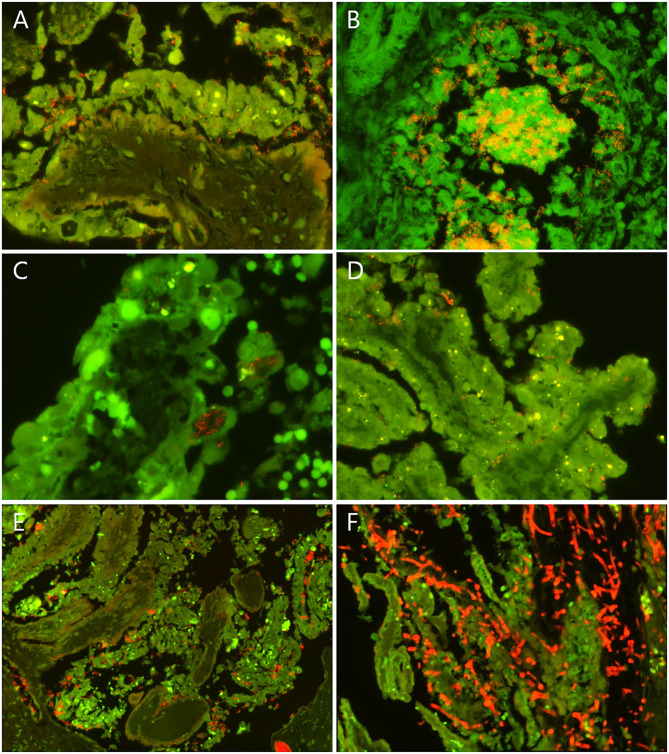
Abortion in cattle causes significant economic losses for cattle farmers worldwide. The diversity of abortifacients makes abortion diagnostics a complex and challenging discipline that additionally is restrained by time and economy. Microbial culture has traditionally been an important method for the identification of bacterial and mycotic abortifacients. However, it comes with the inherent bias of favoring the easy-to-culture species, e.g., those that do not require cell culture, pre-enrichment, a variety of selective growth media, or different oxygen levels for growth. Molecular methods such as polymerase chain reaction (PCR) and next-generation sequencing have been established as alternatives to traditional microbial culturing methods in several diagnostic fields including abortion diagnostics. Fluorescence hybridization (FISH), a bridging microscopy technique that combines molecular accuracy with culture independence, and spatial resolution of the pathogen-lesion relation, is also gaining influence in several diagnostic fields. In this study, real-time quantitative PCR (qPCR), 16S rDNA amplicon sequencing, and FISH were applied separately and in combination in order to (i) identify potentially abortifacient bacteria without the bias of culturability, (ii) increase the diagnostic rate using combined molecular methods, (iii) investigate the presence of the difficult-to-culture zoonotic agents spp., and spp. in bovine abortions in Denmark. Tissues from 162 aborted or stillborn bovine fetuses and placentas submitted for routine diagnostics were screened for pathogenic bacteria using 16S rDNA amplicon sequencing. Lesion association of fungal elements, as well as of selection of bacterial abortifacients, was assessed using specific FISH assays. The presence of spp. and chlamydia-like organisms was assessed using qPCR. The study focused on bacterial and fungal abortifacients, because Danish cattle is free from most viral abortifacients. The 16S rDNA amplicon sequencing-guided FISH approach was suitable for enhancing abortion diagnostics, i.e., the diagnostic rate for cases with tissue lesions ( = 115) was increased from 46 to 53% when compared to routine diagnostic methods. Identification of , and accounted for the majority of additional cases with an established etiology. No evidence for emerging or epizootic bacterial pathogens was found. The difficult-to-culture abortifacients were either not detected or not identified as abortifacients.
牛流产给全球养牛户造成了巨大的经济损失。流产因素的多样性使得流产诊断成为一门复杂且具有挑战性的学科,而且还受到时间和经济的限制。传统上,微生物培养一直是鉴定细菌性和霉菌性流产因素的重要方法。然而,它存在固有的偏差,倾向于易于培养的物种,例如那些不需要细胞培养、预富集、多种选择性生长培养基或不同氧气水平即可生长的物种。在包括流产诊断在内的多个诊断领域,聚合酶链反应(PCR)和下一代测序等分子方法已被确立为传统微生物培养方法的替代方法。荧光杂交(FISH)是一种将分子准确性与非培养依赖性以及病原体与病变关系的空间分辨率相结合的桥接显微镜技术,在多个诊断领域也越来越有影响力。在本研究中,实时定量PCR(qPCR)、16S rDNA扩增子测序和FISH被单独或联合应用,目的是:(i)鉴定潜在的流产细菌,而不受可培养性偏差的影响;(ii)使用联合分子方法提高诊断率;(iii)调查丹麦牛流产中难以培养的人畜共患病原体 spp. 和 spp. 的存在情况。对162例提交进行常规诊断的流产或死产牛胎儿及胎盘组织进行16S rDNA扩增子测序,以筛查病原菌。使用特异性FISH检测评估真菌成分的病变关联以及细菌性流产因素的选择。使用qPCR评估 spp. 和衣原体样生物体的存在情况。该研究聚焦于细菌性和霉菌性流产因素,因为丹麦牛没有大多数病毒性流产因素。16S rDNA扩增子测序引导的FISH方法适用于加强流产诊断,即与常规诊断方法相比,组织有病变的病例(n = 115)的诊断率从46%提高到了53%。在已确定病因的额外病例中, spp.、 spp. 和 spp. 的鉴定占了大多数。未发现新出现或流行的细菌性病原体的证据。难以培养的流产因素要么未被检测到,要么未被鉴定为流产因素。