Wang Chenggong, Li Yusheng, Hu Yihe, Liu Hua, Wang Long, Xie Jie, Xiao Han, Su Shilong, Gao Fawei, Zhong Da
Department of Orthopedics, Xiangya Hospital Central South University, Changsha, China.
Digital Research Institute of Orthopedics, Xiangya Hospital Central South University, Changsha, China.
Ann Transl Med. 2021 Feb;9(3):212. doi: 10.21037/atm-20-3488.
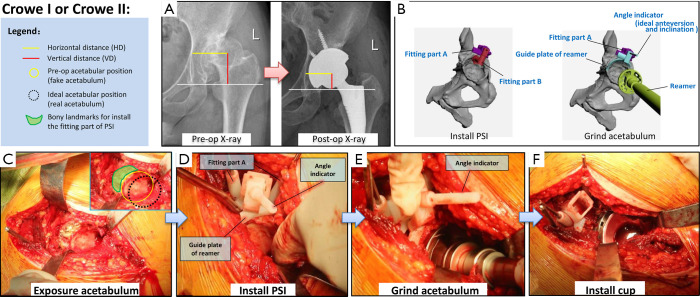
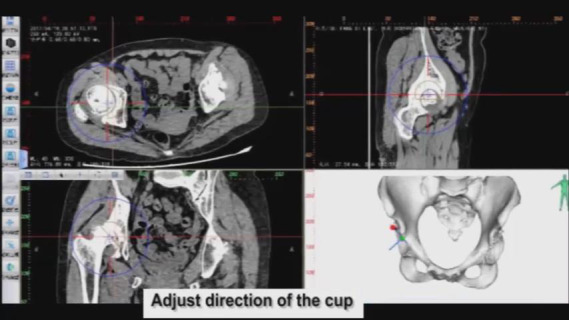
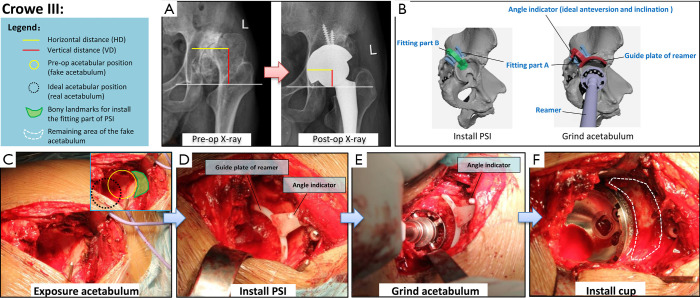
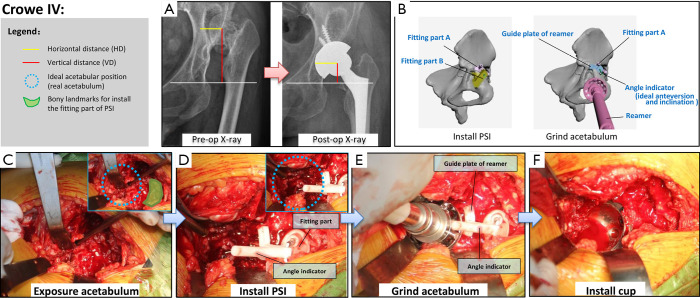
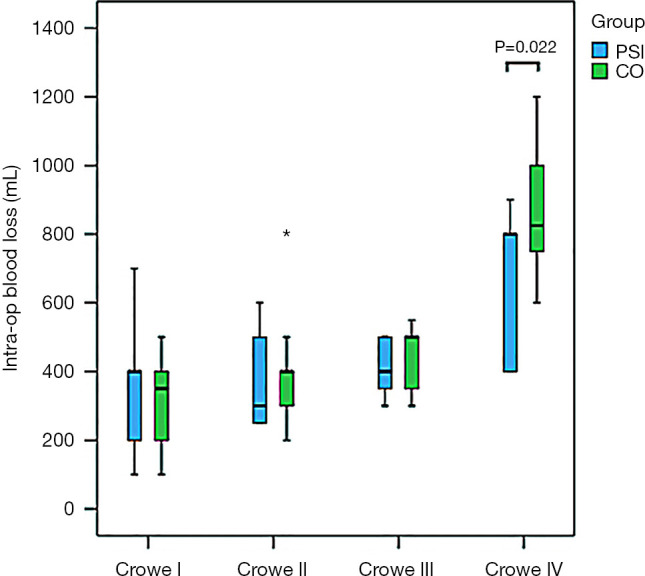
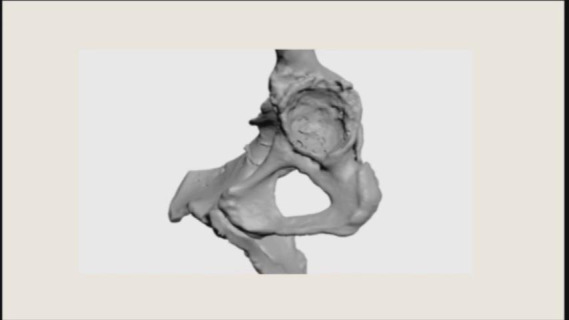
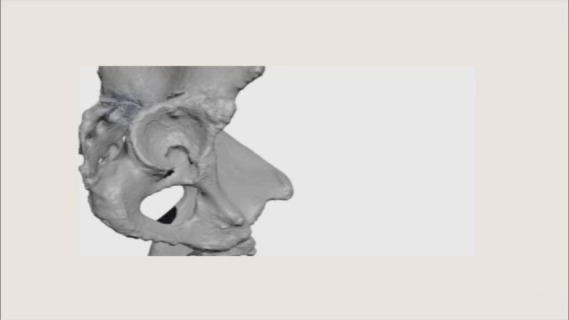
Restoration of the acetabulum during total hip arthroplasty in adults with developmental dysplasia of the hip (DDH-THA) and resumption of hip function remain major challenges. Herein, a new patient-specific instrument (PSI) was developed that uses the superolateral rim of the acetabulum as a positioning marker to assist surgeons in adult DDH-THA.
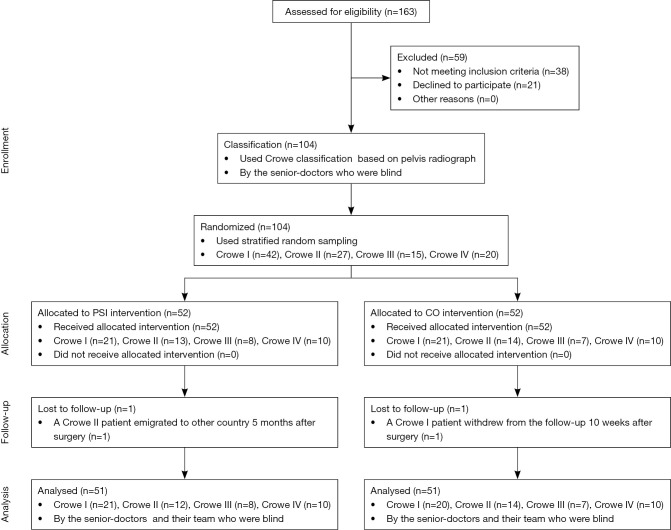
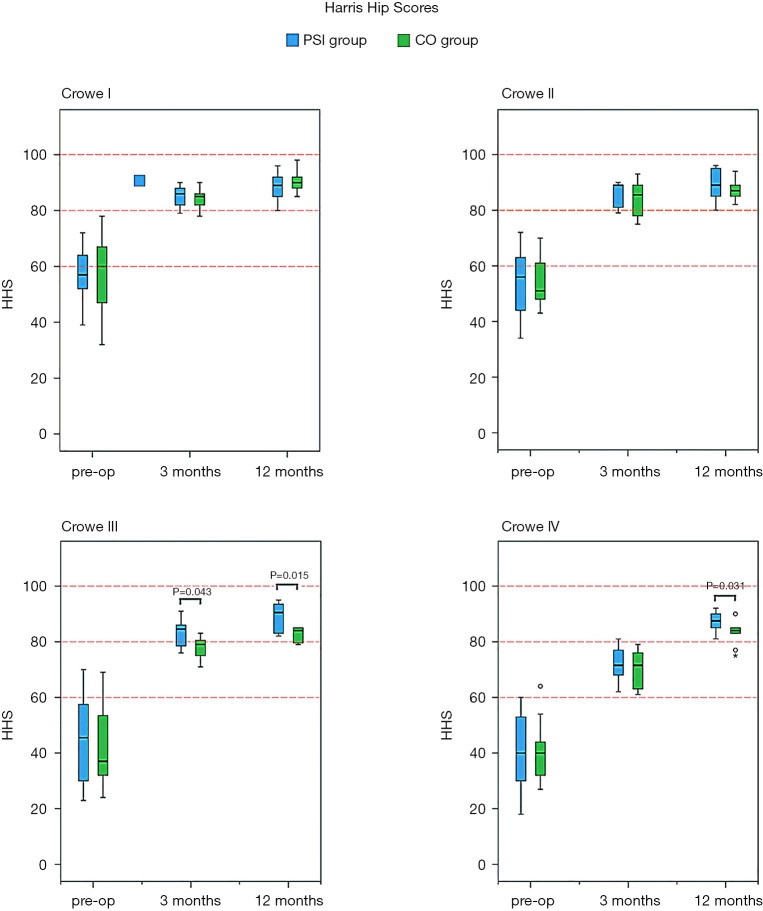
From January 2017 to October 2018, 104 adult DDH patients were randomized to either the PSI group or conventional operation (CO) group, and further divided into eight subgroups by stratified random sampling using Crowe's classification. Complications, Harris hip scores (HHS), and X-ray results were recorded at 3 and 12 months after surgery.
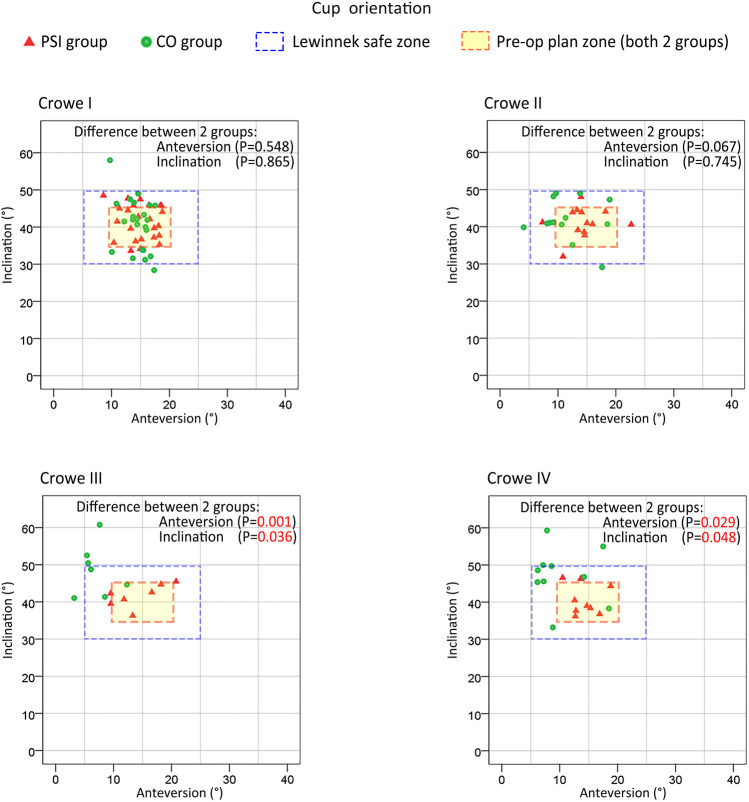
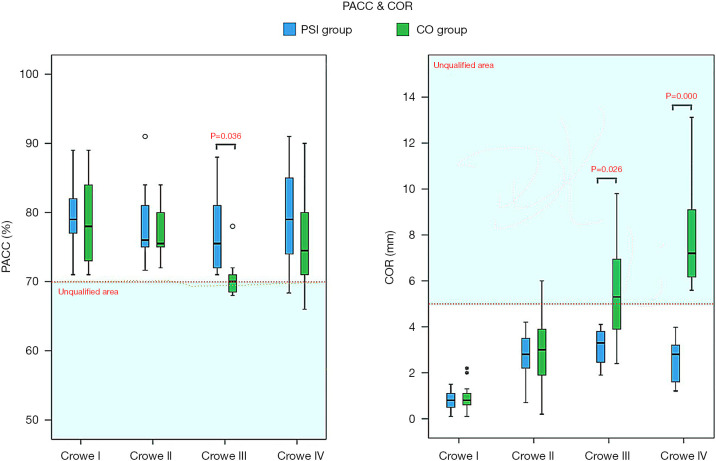
With the exception of anteversion in CO-Crowe II group patients, there was no difference in the accuracy of cup placement and orientation between the PSI and CO groups in Crowe I and II DDH patients. With the exception of percentage of acetabular cup coverage (PACC) and the qualification rate of Crowe IV PACC patients, among all Crowe III and IV DDH groups, all postoperative indexes of cup orientation and positioning exhibited significant differences between the PSI and CO groups; however, no significant differences were observed in Crowe I and II DDH patients.
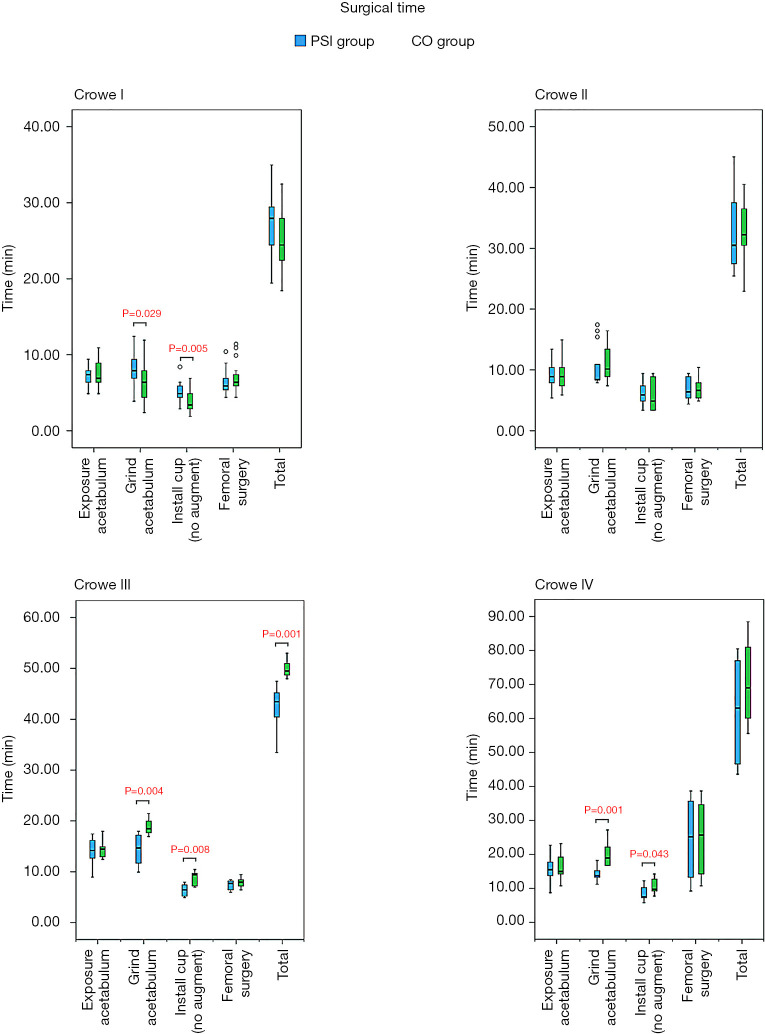
Compared with conventional methods, the new PSI-assisted surgical method improved the accuracy of placement and orientation of the acetabulum and cup prosthesis, optimized the surgical process, reduced complications, and contributed to quicker recovery of hip function after surgery in adults with Crowe III and IV DDH-THA, but little difference was noted for those with Crowe I and II DDH.
在发育性髋关节发育不良的成人患者进行全髋关节置换术(DDH - THA)时,髋臼的重建以及髋关节功能的恢复仍然是主要挑战。在此,开发了一种新型的患者特异性器械(PSI),其利用髋臼的上外侧边缘作为定位标记,以辅助成人DDH - THA手术的外科医生。
从2017年1月至2018年10月,104例成人DDH患者被随机分为PSI组或传统手术(CO)组,并使用Crowe分类法通过分层随机抽样进一步分为八个亚组。记录术后3个月和12个月时的并发症、Harris髋关节评分(HHS)以及X线结果。
除了CO - Crowe II组患者的前倾角外,在Crowe I和II型DDH患者中,PSI组和CO组之间髋臼杯放置和定向的准确性没有差异。除了髋臼杯覆盖百分比(PACC)以及Crowe IV型PACC患者的合格率外,在所有Crowe III和IV型DDH组中,髋臼杯定向和定位的所有术后指标在PSI组和CO组之间均表现出显著差异;然而,在Crowe I和II型DDH患者中未观察到显著差异。
与传统方法相比,新型PSI辅助手术方法提高了髋臼和髋臼杯假体放置和定向的准确性,优化了手术过程,减少了并发症,并有助于Crowe III和IV型DDH - THA成人患者术后髋关节功能更快恢复,但对于Crowe I和II型DDH患者差异不大。