Division of Paediatric Endocrinology, Sheikh Shakhbout Medical City, Abu Dhabi, UAE.
Division of Paediatric Rheumatology, Sheikh Shakhbout Medical City, Abu Dhabi, UAE.
Biomed Res Int. 2021 Mar 1;2021:6695707. doi: 10.1155/2021/6695707. eCollection 2021.
The UAE reported its first cluster of COVID 2019 in a group of returned travellers from Wuhan in January 2020. Various comorbidities are associated with worse disease prognosis. Understanding the impact of ethnicity on the disease outcome is an important public health issue but data from our region is lacking.
We aim to identify comorbidities among patients hospitalized for COVID-19 that are associated with inhospital death. Also, to assess if ethnicity is correlated with increased risk of death. . The study is a single-centre, observational study in Shaikh Shakhbout Medical City, Abu Dhabi. Patients admitted with COVID-19, between 1 of March and the end of May, were enrolled. Records were studied for demography, comorbidity, and ethnicity. Ethnicity was divided into Arabs (Gulf, North Africa, and the Levant), South Asia (India, Pakistan, Bangladesh, Nepal, and Afghanistan), Africans, the Philippines, and others. The study was approved by the Department of Health of Abu Dhabi.
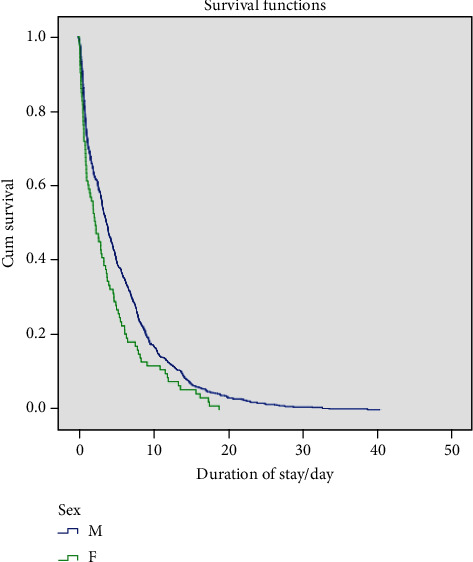
1075 patients (972 males) were enrolled. There were 24 nationalities under 5 ethnicity groups. Mean (average) age was 51 years (20-81). 101 (9.4%) died with deceased patients being significantly older. Death risk was not significantly influenced by sex. Duration of hospitalization among survivors was 6.2 days (0.2-40.4) with older patients and men staying longer ( < 0.01). Comorbidities of diabetes, hypertension, cardiovascular disease, chronic renal disease, liver disease, and malignancy were associated with higher risk of mortality univariate, but only liver disease reached statistical significance after adjustment for age. The highest percentage of death was seen in Arab Levant (21.2) followed by the Asian Afghan (18.8); however, differences among ethnicities did not reach statistical significance ( = 0.086).
COVID-19 outcome was worse in older people and those with comorbidities. Men and older patients required longer hospitalization. Ethnicity is not seen to impact the risk of mortality.
2020 年 1 月,阿联酋报告了首例由从武汉返回的旅行者组成的 COVID-19 聚集性病例。各种合并症与更差的疾病预后相关。了解种族对疾病结局的影响是一个重要的公共卫生问题,但我们地区的数据缺乏。
我们旨在确定因 COVID-19 住院的患者中的合并症与住院死亡相关。并评估种族是否与死亡风险增加相关。这项研究是在阿布扎比谢赫沙赫布特医学城进行的一项单中心观察性研究。在 3 月 1 日至 5 月底期间,招募了因 COVID-19 住院的患者。对人口统计学、合并症和种族进行了记录研究。种族分为阿拉伯人(海湾、北非和黎凡特)、南亚(印度、巴基斯坦、孟加拉国、尼泊尔和阿富汗)、非洲人、菲律宾人和其他种族。该研究得到了阿布扎比卫生部的批准。
共纳入 1075 名患者(972 名男性)。在 5 个种族群体下有 24 个国籍。平均(平均)年龄为 51 岁(20-81)。有 101 人(9.4%)死亡,死亡患者明显年龄较大。死亡风险不受性别影响。幸存者的住院时间为 6.2 天(0.2-40.4),年龄较大的患者和男性停留时间更长(<0.01)。糖尿病、高血压、心血管疾病、慢性肾病、肝病和恶性肿瘤等合并症在单变量分析中与更高的死亡率相关,但在调整年龄后只有肝病达到统计学意义。阿拉伯黎凡特(21.2%)的死亡率最高,其次是亚洲阿富汗(18.8%);然而,不同种族之间的差异没有达到统计学意义(=0.086)。
老年人和合并症患者的 COVID-19 结局更差。男性和老年患者需要更长的住院时间。种族似乎不会影响死亡率风险。