Lee Jinhwa, Li Yonghai, Li Yuhao, Cino-Ozuna A Giselle, Duff Michael, Lang Yuekun, Ma Jingjiao, Sunwoo Sunyoung, Richt Juergen A, Ma Wenjun
Department of Diagnostic Medicine/Pathobiology, College of Veterinary Medicine, Kansas State University, Manhattan, KS, USA.
Department of Diagnostic Medicine/Pathobiology, College of Veterinary Medicine, Kansas State University, Manhattan, KS, USA; Department of Veterinary Pathobiology, College of Veterinary Medicine, University of Missouri, Columbia, MO, USA; Department of Molecular Microbiology & Immunology, School of Medicine, University of Missouri, Columbia, MO, USA.
Vaccine. 2021 Apr 1;39(14):1943-1950. doi: 10.1016/j.vaccine.2021.02.077. Epub 2021 Mar 11.
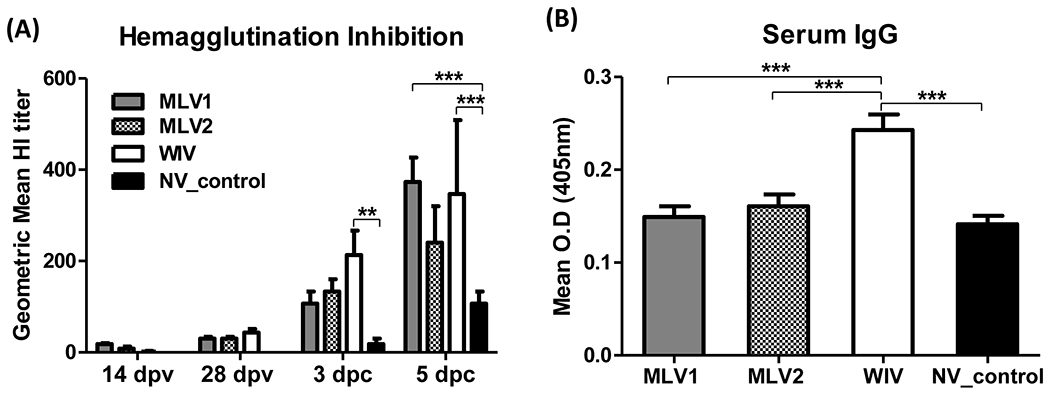
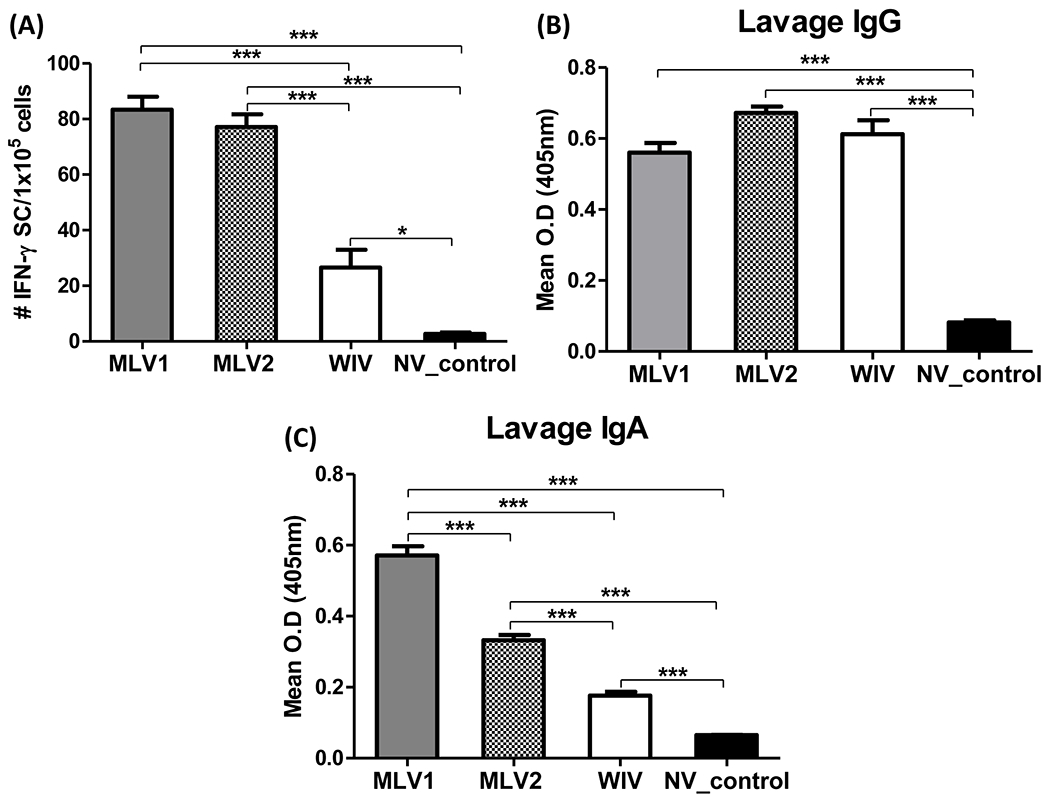
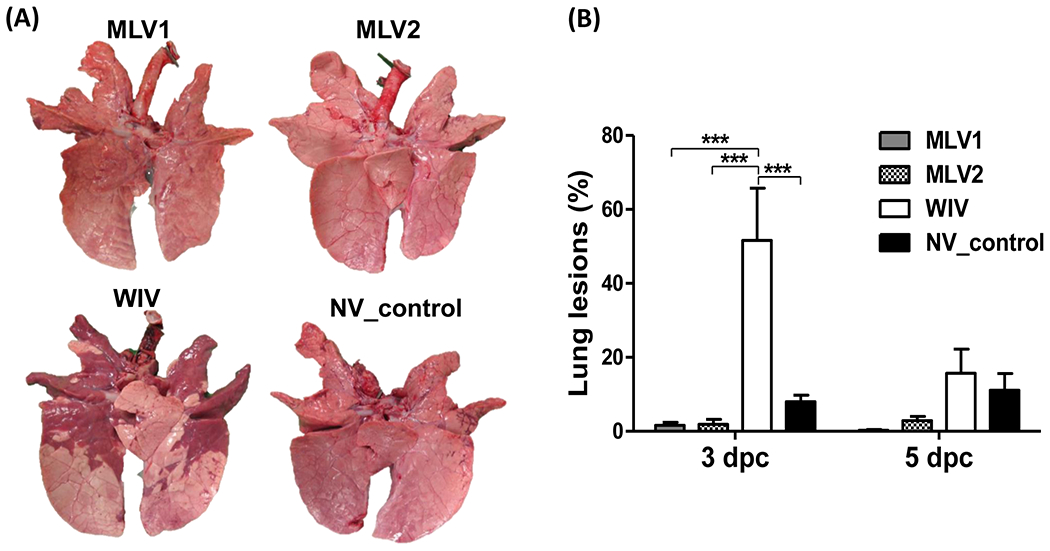
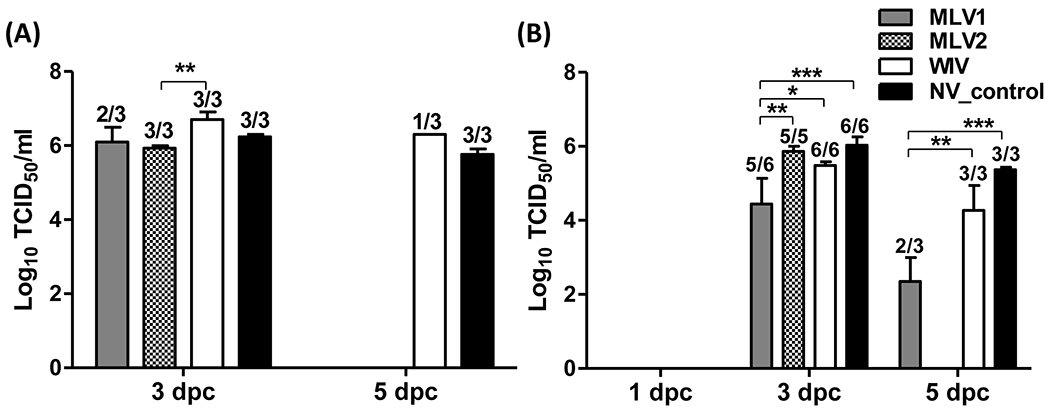
Swine influenza is an important disease for the swine industry. Currently used whole inactivated virus (WIV) vaccines can induce vaccine-associated enhanced respiratory disease (VAERD) in pigs when the vaccine strains mismatch with the infected viruses. Live attenuated influenza virus vaccine (LAIV) is effective to protect pigs against homologous and heterologous swine influenza virus infections without inducing VAERD but has safety concerns due to potential reassortment with circulating viruses. Herein, we used a chimeric bat influenza Bat09:mH3mN2 virus, which contains both surface HA and NA gene open reading frames of the A/swine/Texas/4199-2/1998 (H3N2) and six internal genes from the novel bat H17N10 virus, to develop modified live-attenuated viruses (MLVs) as vaccine candidates which cannot reassort with canonical influenza A viruses by co-infection. Two attenuated MLV vaccine candidates including the virus that expresses a truncated NS1 (Bat09:mH3mN2-NS1-128, MLV1) or expresses both a truncated NS1 and the swine IL-18 (Bat09:mH3mN2-NS1-128-IL-18, MLV2) were generated and evaluated in pigs against a heterologous H3N2 virus using the WIV vaccine as a control. Compared to the WIV vaccine, both MLV vaccines were able to reduce lesions and virus replication in lungs and limit nasal virus shedding without VAERD, also induced significantly higher levels of mucosal IgA response in lungs and significantly increased numbers of antigen-specific IFN-γ secreting cells against the challenge virus. However, no significant difference was observed in efficacy between the MLV1 and MLV2. These results indicate that bat influenza vectored MLV vaccines can be used as a safe live vaccine to prevent swine influenza.
猪流感是养猪业的一种重要疾病。目前使用的全灭活病毒(WIV)疫苗,当疫苗毒株与感染病毒不匹配时,会在猪身上诱发疫苗相关的增强型呼吸道疾病(VAERD)。减毒活流感病毒疫苗(LAIV)可有效保护猪免受同源和异源猪流感病毒感染,且不会诱发VAERD,但由于可能与流行病毒发生重配,存在安全隐患。在此,我们使用了一种嵌合蝙蝠流感病毒Bat09:mH3mN2,它包含A/猪/得克萨斯/4199-2/1998(H3N2)的表面HA和NA基因开放阅读框以及新型蝙蝠H17N10病毒的六个内部基因,来开发改良的减毒活病毒(MLV)作为候选疫苗,该疫苗不会通过共感染与典型甲型流感病毒发生重配。我们构建了两种减毒MLV候选疫苗,包括表达截短型NS1的病毒(Bat09:mH3mN2-NS1-128,MLV1)或同时表达截短型NS1和猪IL-18的病毒(Bat09:mH3mN2-NS1-128-IL-18,MLV2),并在猪身上进行评估,以WIV疫苗作为对照,对抗异源H3N2病毒。与WIV疫苗相比,两种MLV疫苗均能减少肺部病变和病毒复制,限制鼻腔病毒排出,且不会诱发VAERD,还能在肺部诱导显著更高水平的黏膜IgA反应,并显著增加针对攻击病毒的抗原特异性IFN-γ分泌细胞数量。然而,MLV1和MLV2之间在效力上未观察到显著差异。这些结果表明,蝙蝠流感病毒载体的MLV疫苗可作为一种安全的活疫苗用于预防猪流感。