Tan Jin, Xing Huifang, Sha Sha, Li Jinwen, Miao Yuyang, Zhang Qiang
Department of Geriatrics, Tianjin Medical University General Hospital, Tianjin Geriatrics Institute, Tianjin, China.
Tianjin Medical University, Tianjin, China.
Front Aging Neurosci. 2021 Feb 24;13:609282. doi: 10.3389/fnagi.2021.609282. eCollection 2021.
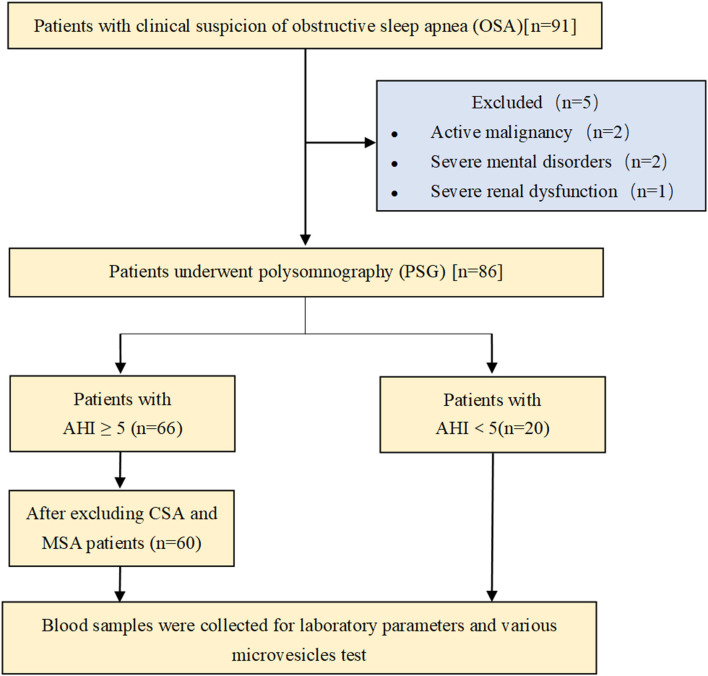
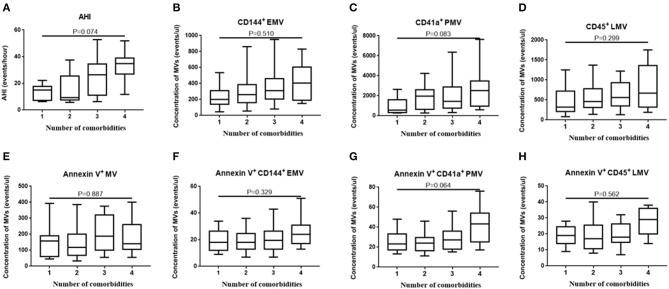
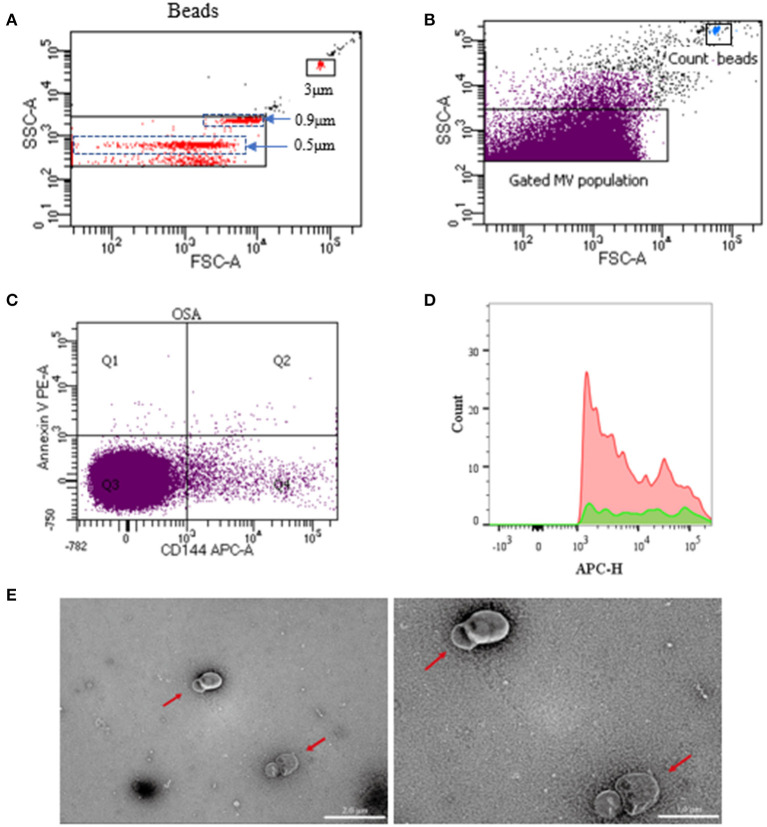
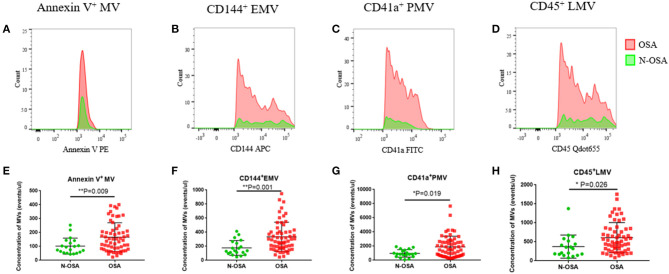
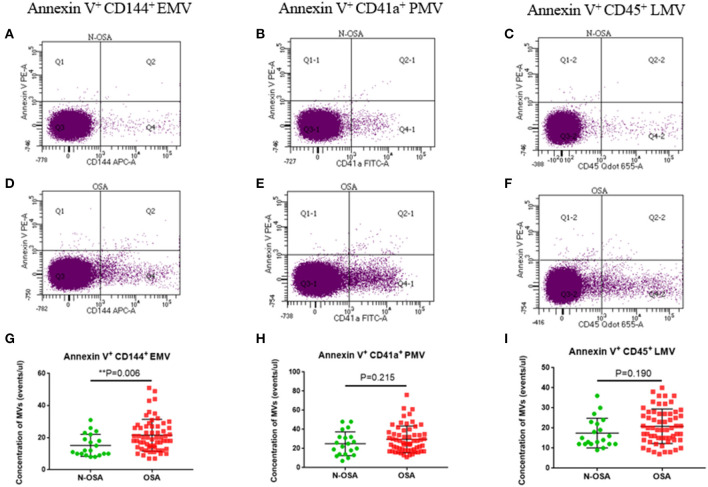
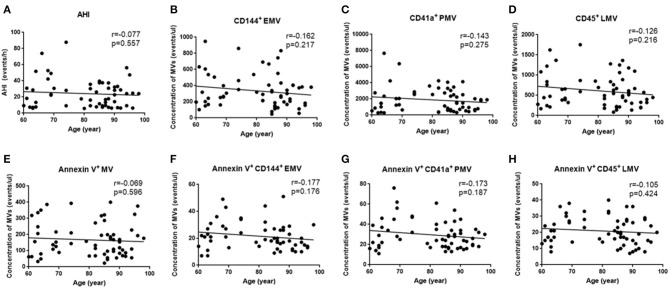
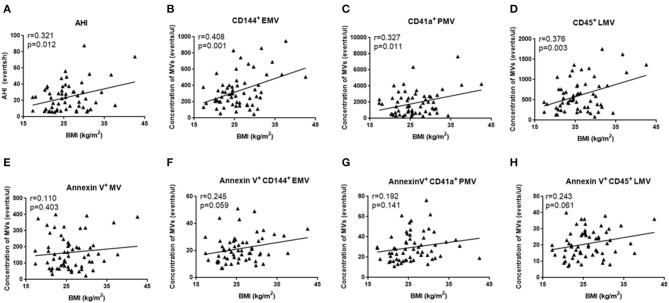
The incidence of obstructive sleep apnea (OSA) in the elderly is high, and the disorder is associated with a variety of chronic diseases. Microvesicles (MVs) are extracellular vesicles secreted by various cells during stimulation or apoptosis that play an important role in the pathogenesis of OSA. However, concentrations of circulating MVs in elderly patients with OSA remain unclear. Patients aged >60 years old were recruited and underwent polysomnography. Circulating plasma MV concentrations, including annexin VMVs, endothelial MVs (EMVs), platelet MVs (PMVs), and leukocyte MVs (LMVs) levels, were measured using a flow cytometer with different labeling methods. Potential factors affecting the concentration of circulating MVs in elderly patients with OSA were determined Spearman's correlation and multiple linear regression analysis. Levels of circulating MVs, including both single- (annexin VMVs, CD144EMVs, CD41aPMVs, and CD45LMVs) and dual-labeled MVs (annexin VCD144EMVs), were elevated in elderly patients with OSA. Circulating MVs were positively correlated with OSA severity (AHI, ODI, and SPO). To some extent, obesity affected the MV concentrations in elderly patients with OSA. In addition, age and comorbidities may be associated with MV levels, but the correlations between the MV levels and age or comorbidities were not significant. Concentrations of circulating MVs in elderly patients with OSA are associated with the labeling method used, OSA severity, and obesity. The effects of age and comorbidities on circulating MV levels require further verification using a larger sample size.
老年人阻塞性睡眠呼吸暂停(OSA)的发病率很高,且该病症与多种慢性疾病相关。微泡(MVs)是各种细胞在受到刺激或凋亡过程中分泌的细胞外囊泡,在OSA的发病机制中起重要作用。然而,老年OSA患者循环微泡的浓度仍不清楚。招募了年龄>60岁的患者并进行了多导睡眠图检查。使用具有不同标记方法的流式细胞仪测量循环血浆微泡浓度,包括膜联蛋白V微泡、内皮微泡(EMVs)、血小板微泡(PMVs)和白细胞微泡(LMVs)水平。通过Spearman相关性分析和多元线性回归分析确定影响老年OSA患者循环微泡浓度的潜在因素。老年OSA患者循环微泡水平升高,包括单标记微泡(膜联蛋白V微泡、CD144EMVs、CD41aPMVs和CD45LMVs)和双标记微泡(膜联蛋白VCD144EMVs)。循环微泡与OSA严重程度(呼吸暂停低通气指数、氧减指数和血氧饱和度)呈正相关。肥胖在一定程度上影响老年OSA患者的微泡浓度。此外,年龄和合并症可能与微泡水平有关,但微泡水平与年龄或合并症之间的相关性不显著。老年OSA患者循环微泡的浓度与所用标记方法、OSA严重程度和肥胖有关。年龄和合并症对循环微泡水平的影响需要使用更大样本量进一步验证。