Paulsson Magnus, Kragh Kasper Nørskov, Su Yu-Ching, Sandblad Linda, Singh Birendra, Bjarnsholt Thomas, Riesbeck Kristian
Clinical Microbiology, Department of Translational Medicine, Faculty of Medicine, Lund University, Malmö, Sweden.
Division for Infectious Diseases, Skåne University Hospital, Lund, Sweden.
Front Microbiol. 2021 Feb 25;12:639582. doi: 10.3389/fmicb.2021.639582. eCollection 2021.
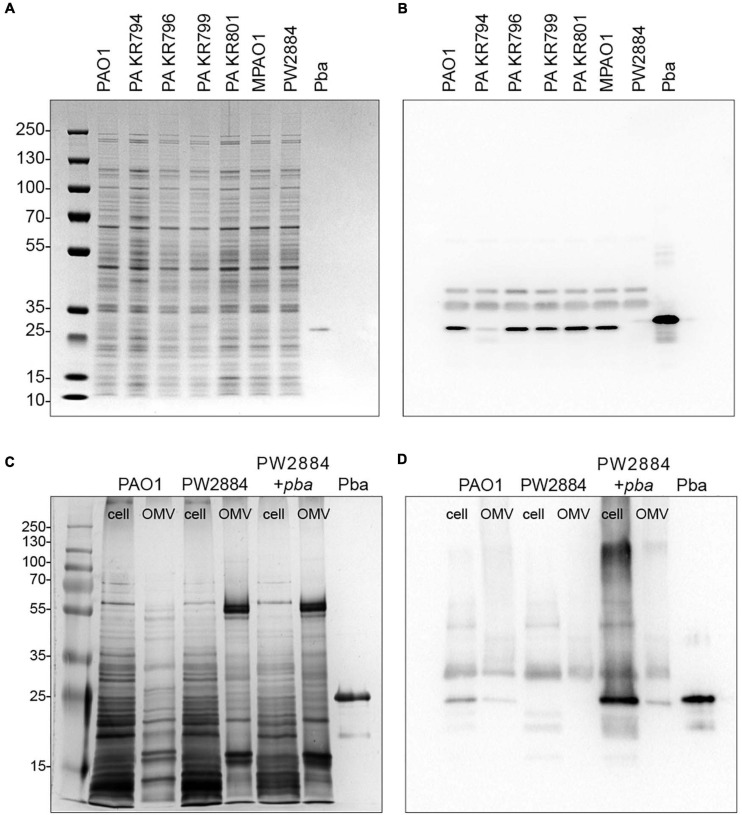
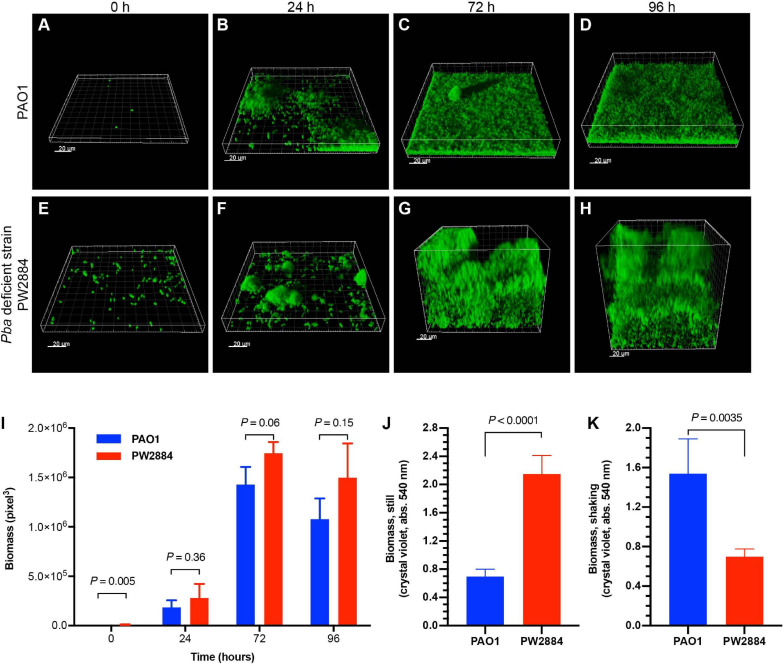
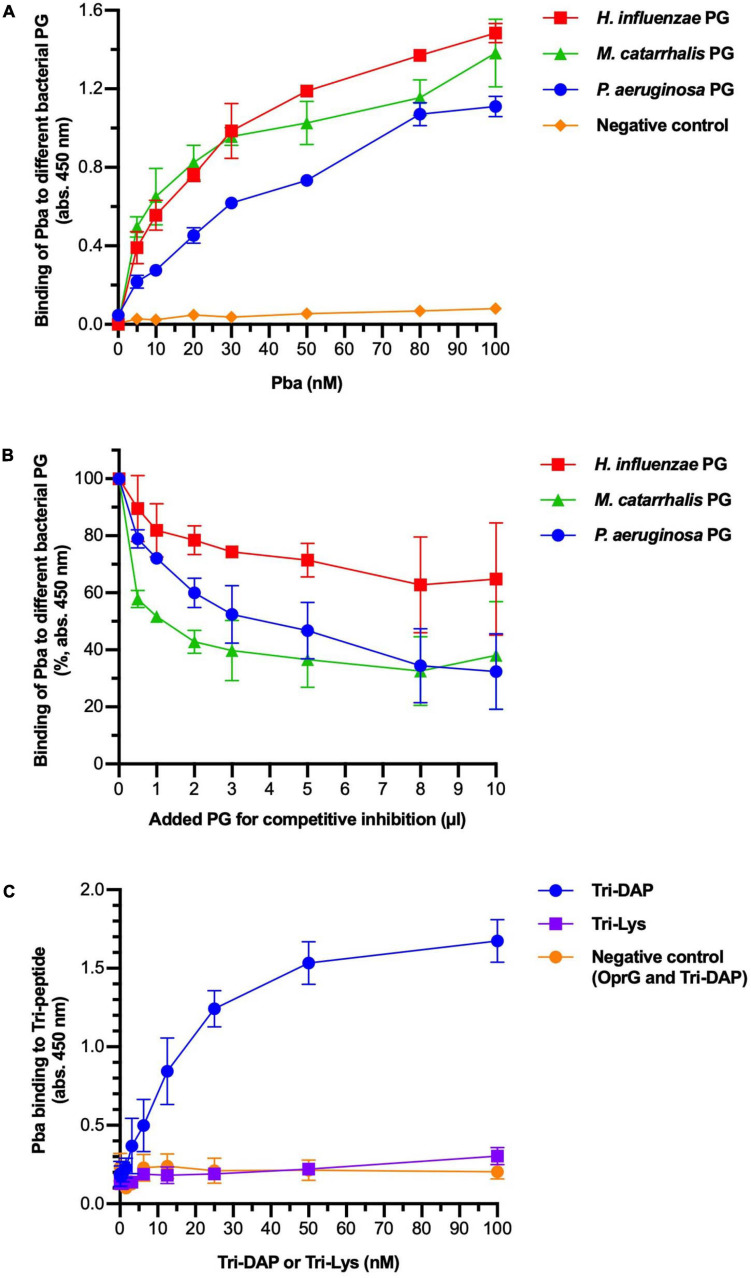
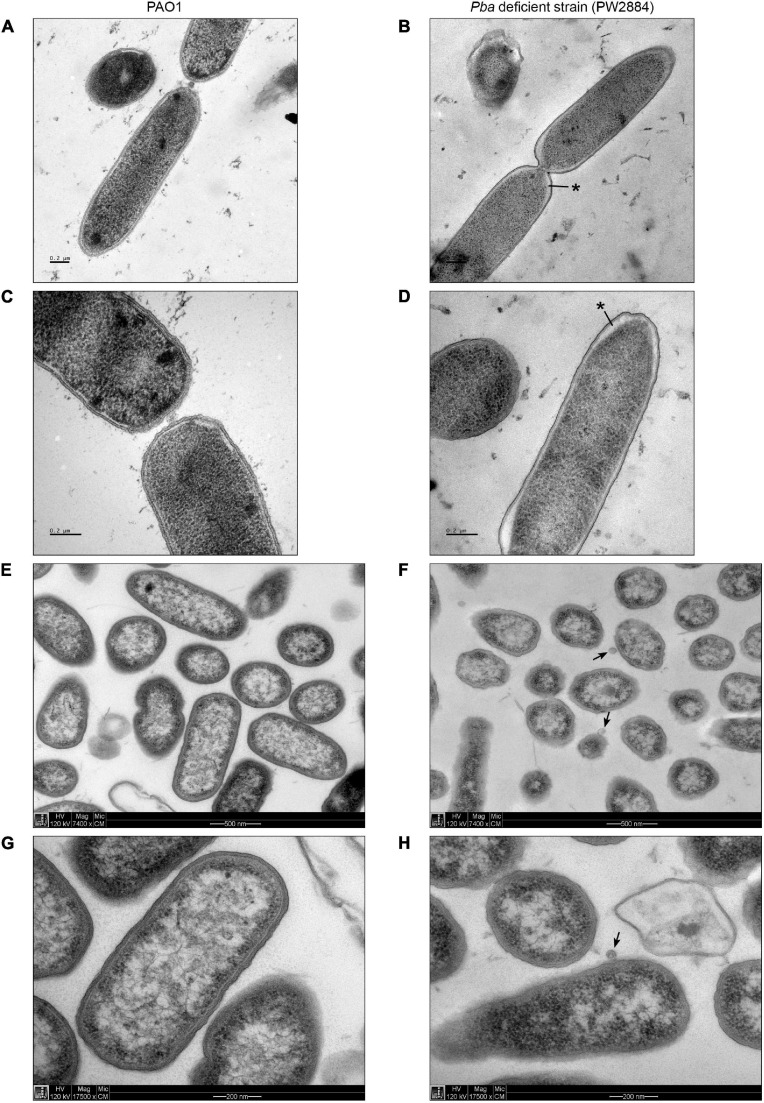
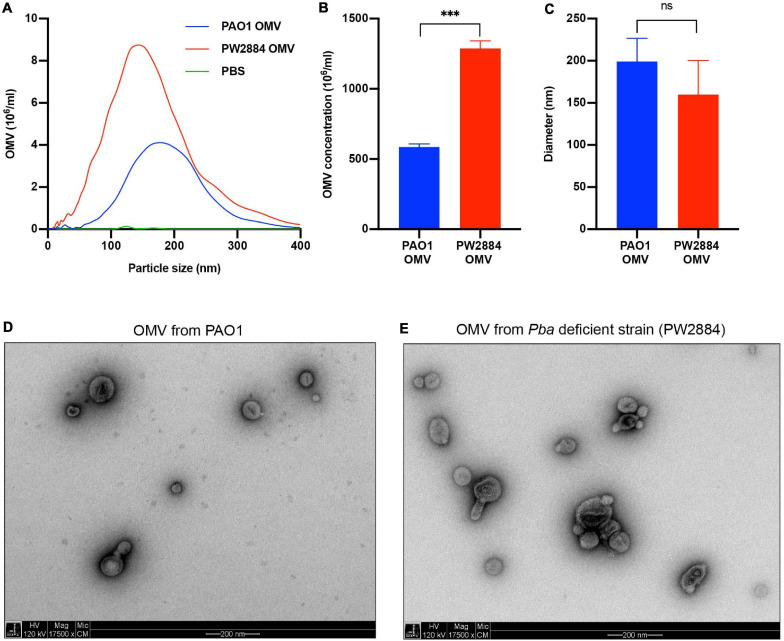
The outer membrane protein A (OmpA) family contains an evolutionary conserved domain that links the outer membrane in Gram-negative bacteria to the semi-rigid peptidoglycan (PG) layer. The clinically significant pathogen carries several OmpA family proteins (OprF, OprL, PA0833, and PA1048) that share the PG-binding domain. These proteins are important for cell morphology, membrane stability, and biofilm and outer membrane vesicle (OMV) formation. In addition to other OmpAs, analysis revealed that the putative outer membrane protein (OMP) with gene locus PA1041 is a lipoprotein with an OmpA domain and, hence, is a potential virulence factor. This study aimed to evaluate PA1041 as a PG-binding protein and describe its effect on the phenotype. Clinical strains were confirmed to contain the lipoprotein resulting from PA1041 expression with Western blot, and PG binding was verified in enzyme-linked immunosorbent assay (ELISA). By using a Sepharose bead-based ELISA, we found that the lipoprotein binds to -diaminopimelic acid (mDAP), an amino acid in the pentapeptide portion of PGs. The reference strain PAO1 and the corresponding transposon mutant PW2884 devoid of the lipoprotein were examined for phenotypic changes. Transmission electron microscopy revealed enlarged periplasm spaces near the cellular poles in the mutant. In addition, we observed an increased release of OMV, which could be confirmed by nanoparticle tracking analysis. Importantly, mutants without the lipoprotein produced a thick, but loose and unorganized, biofilm in flow cells. In conclusion, the lipoprotein from gene locus PA1041 tethers the outer membrane to the PG layer, and mutants are viable, but display severe phenotypic changes including disordered biofilm formation. Based upon the phenotype of the PW2884 mutant and the function of the protein, we designate the lipoprotein with locus tag PA1041 as "peptidoglycan-binding anchor" (Pba).
外膜蛋白A(OmpA)家族包含一个进化保守结构域,该结构域将革兰氏阴性菌的外膜与半刚性肽聚糖(PG)层相连。临床上具有重要意义的病原体携带几种具有PG结合结构域的OmpA家族蛋白(OprF、OprL、PA0833和PA1048)。这些蛋白对于细胞形态、膜稳定性以及生物膜和外膜囊泡(OMV)的形成很重要。除了其他OmpA蛋白外,分析表明,基因座为PA1041的假定外膜蛋白(OMP)是一种具有OmpA结构域的脂蛋白,因此是一种潜在的毒力因子。本研究旨在评估PA1041作为一种PG结合蛋白,并描述其对表型的影响。通过蛋白质印迹法确认临床菌株含有由PA1041表达产生的脂蛋白,并在酶联免疫吸附测定(ELISA)中验证PG结合。通过基于琼脂糖珠的ELISA,我们发现该脂蛋白与m-DAP(PG五肽部分中的一种氨基酸)结合。对参考菌株PAO1和缺乏该脂蛋白的相应转座子突变体PW2884进行了表型变化检测。透射电子显微镜显示突变体细胞极附近的周质空间扩大。此外,我们观察到OMV的释放增加,这可以通过纳米颗粒跟踪分析得到证实。重要的是,缺乏该脂蛋白的突变体在流动小室中产生了厚但松散且无组织的生物膜。总之, 基因座PA1041的脂蛋白将外膜与PG层相连,突变体是存活的,但表现出严重的表型变化,包括生物膜形成紊乱。基于PW2884突变体的表型和该蛋白的功能,我们将基因座标签为PA1041的脂蛋白命名为“肽聚糖结合锚定蛋白”(Pba)。