College of Pulmonary and Critical Care Medicine, Chinese People's Liberation Army (PLA) General Hospital, Beijing, China.
Institute of Microbiology, Chinese Academy of Sciences, Beijing, China.
Front Immunol. 2021 Feb 25;12:627435. doi: 10.3389/fimmu.2021.627435. eCollection 2021.
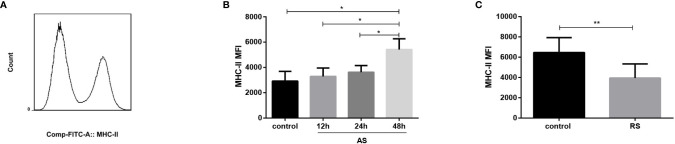
Sepsis is a life-threatening organ dysfunction caused by a dysregulated host response to an infection. It is a disease with a high incidence, mortality, and recurrence rate and frequently results in its survivors requiring readmission into hospitals. The readmission is mainly due to recurrent sepsis. Patients with recurrent sepsis are more susceptible to secondary infections partly due to immune dysfunction, leading to a higher mortality in the long term. However, there remains a gap in the understanding of immunological characteristics and underlying mechanisms of recurrent sepsis. In this study, we used mouse models of acute and recurrent sepsis to investigate their different immunological characteristics. And then we subjected the two mouse models to a secondary influenza A virus (H1N1) infection and characterized the different immune responses. Here, we demonstrated that CD4 T cells present an exacerbated exhaustion phenotype in response to recurrent sepsis as illustrated by the decreased frequency of CD4 T cells, reduced co-stimulatory CD28 and increased inhibitory PD-1 and Tim-3 expression on CD4 T cells, increased frequency of regulatory T cells, and reduced MHC-II expression on antigen-presenting cells. Moreover, we showed that antiviral immune responses decrease in the recurrent sepsis mouse model subjected to a secondary infection as illustrated by the reduced pathogen clearance and inflammatory response. This may be a consequence of the exacerbated CD4 T cell exhaustion. In summary, recurrent sepsis exacerbates CD4 T cell exhaustion and decreases antiviral immune responses, contributing to significant morbidity, increased late mortality, and increased health care burden in recurrent sepsis patients.
脓毒症是一种危及生命的器官功能障碍,由宿主对感染的失调反应引起。它是一种发病率、死亡率和复发率都很高的疾病,经常导致其幸存者需要再次入院。再次入院主要是由于反复发生的脓毒症。反复发生脓毒症的患者更容易发生继发感染,部分原因是免疫功能障碍,导致长期死亡率更高。然而,人们对反复发生的脓毒症的免疫特征和潜在机制仍存在认识上的差距。在这项研究中,我们使用急性和反复性脓毒症的小鼠模型来研究它们不同的免疫特征。然后,我们对这两种小鼠模型进行了二次流感 A 病毒(H1N1)感染,并对不同的免疫反应进行了特征描述。在这里,我们证明 CD4 T 细胞在反复发生的脓毒症中表现出加剧的衰竭表型,这表现为 CD4 T 细胞的频率降低、共刺激 CD28 减少以及 CD4 T 细胞上的抑制性 PD-1 和 Tim-3 表达增加、调节性 T 细胞频率增加以及抗原呈递细胞上 MHC-II 表达减少。此外,我们还表明,在反复发生的脓毒症小鼠模型中,二次感染导致抗病毒免疫反应下降,表现为病原体清除和炎症反应减少。这可能是 CD4 T 细胞衰竭加剧的结果。总之,反复发生的脓毒症加剧了 CD4 T 细胞衰竭,降低了抗病毒免疫反应,导致反复发生的脓毒症患者发病率显著增加、晚期死亡率增加和医疗保健负担增加。