Luo Jialiu, Zhang Cong, Chen Deng, Chang Teding, Chen Shunyao, Lin Zhiqiang, Yi Chengla, Tang Zhao-Hui
Department of Trauma Surgery, Emergency Surgery & Surgical Critical, Tongji Trauma Center, Tongji Hospital, Tongji Medical College, Huazhong University of Science and Technology, Wuhan, China.
Eur J Med Res. 2024 Dec 18;29(1):583. doi: 10.1186/s40001-024-02203-w.
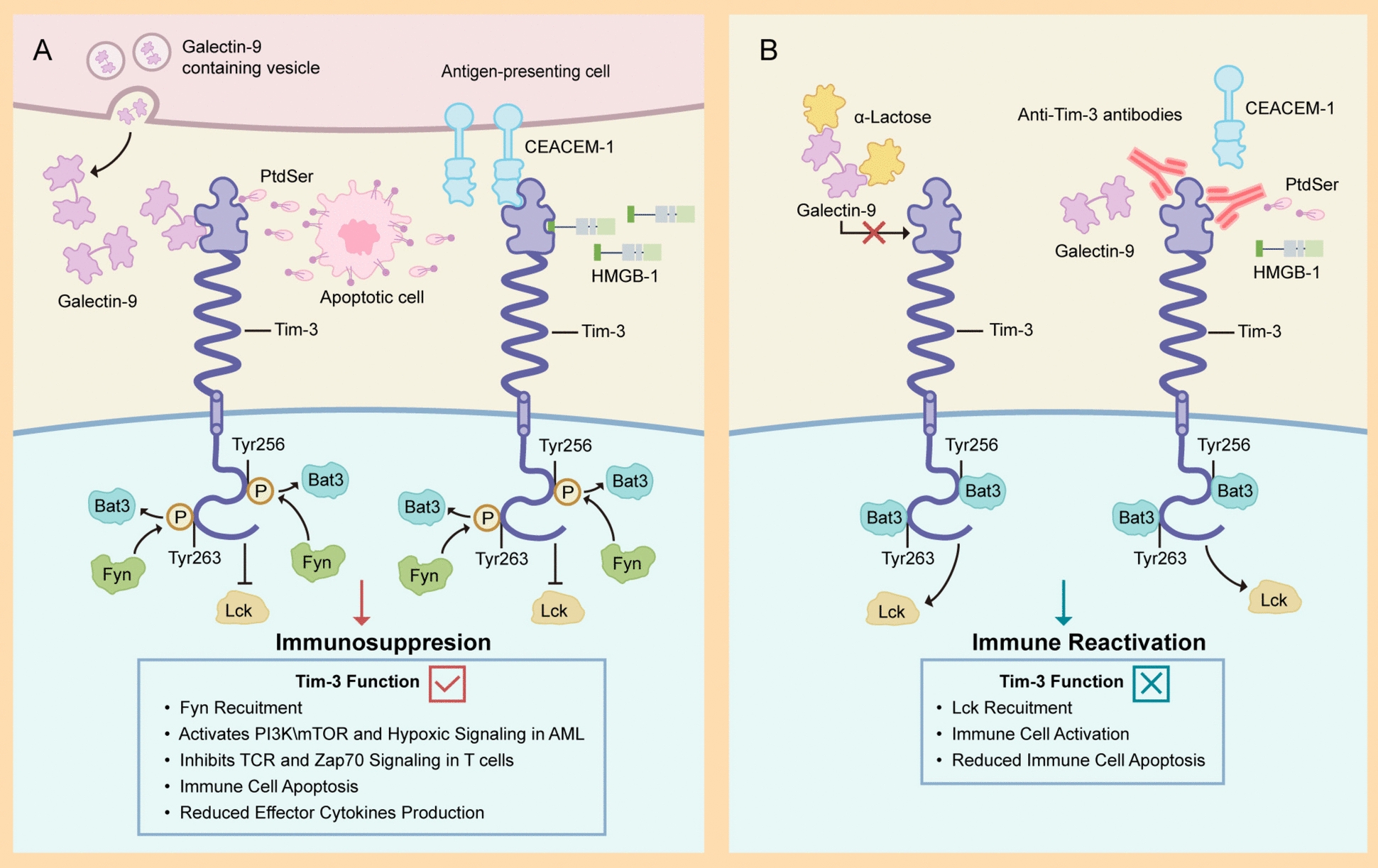
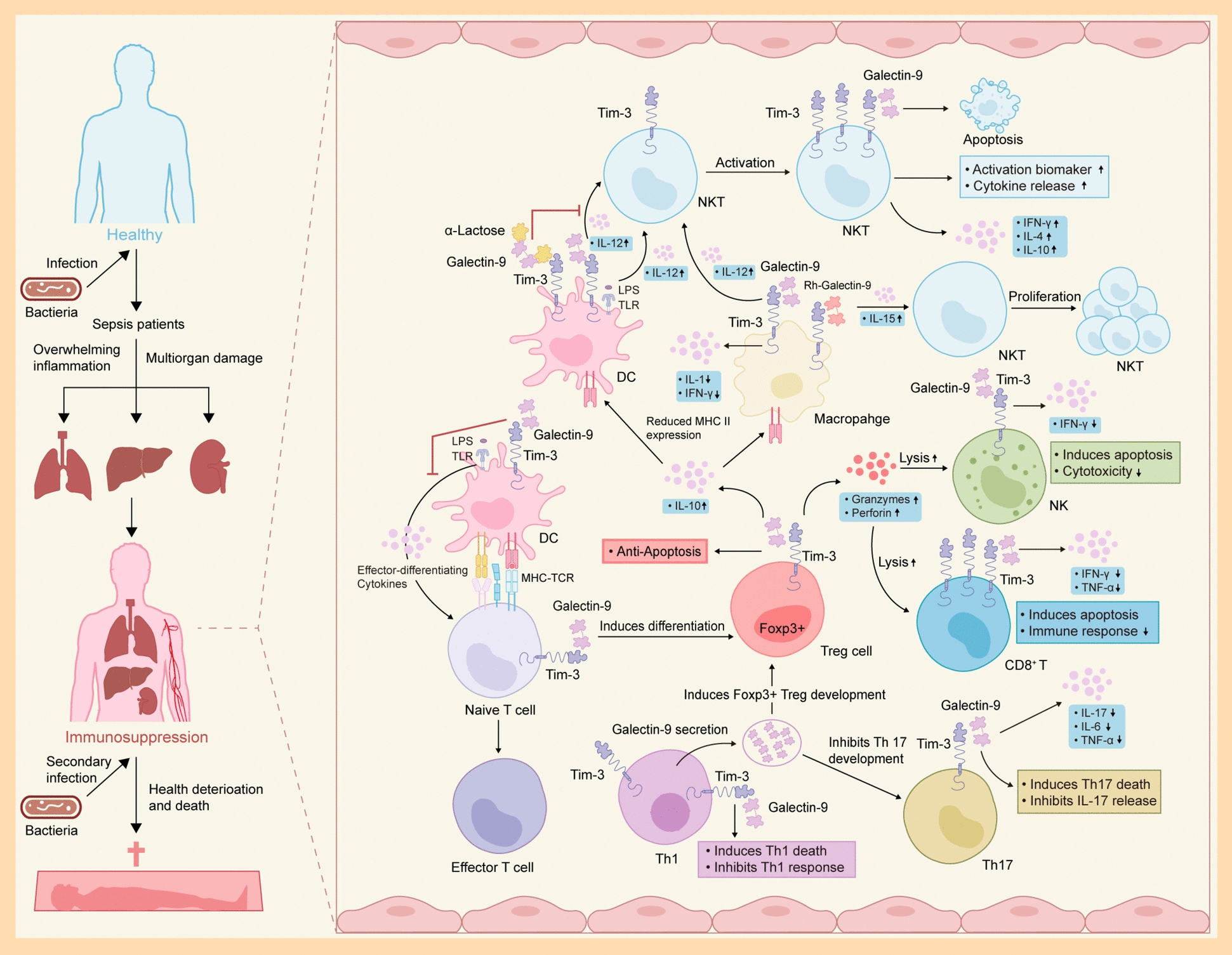
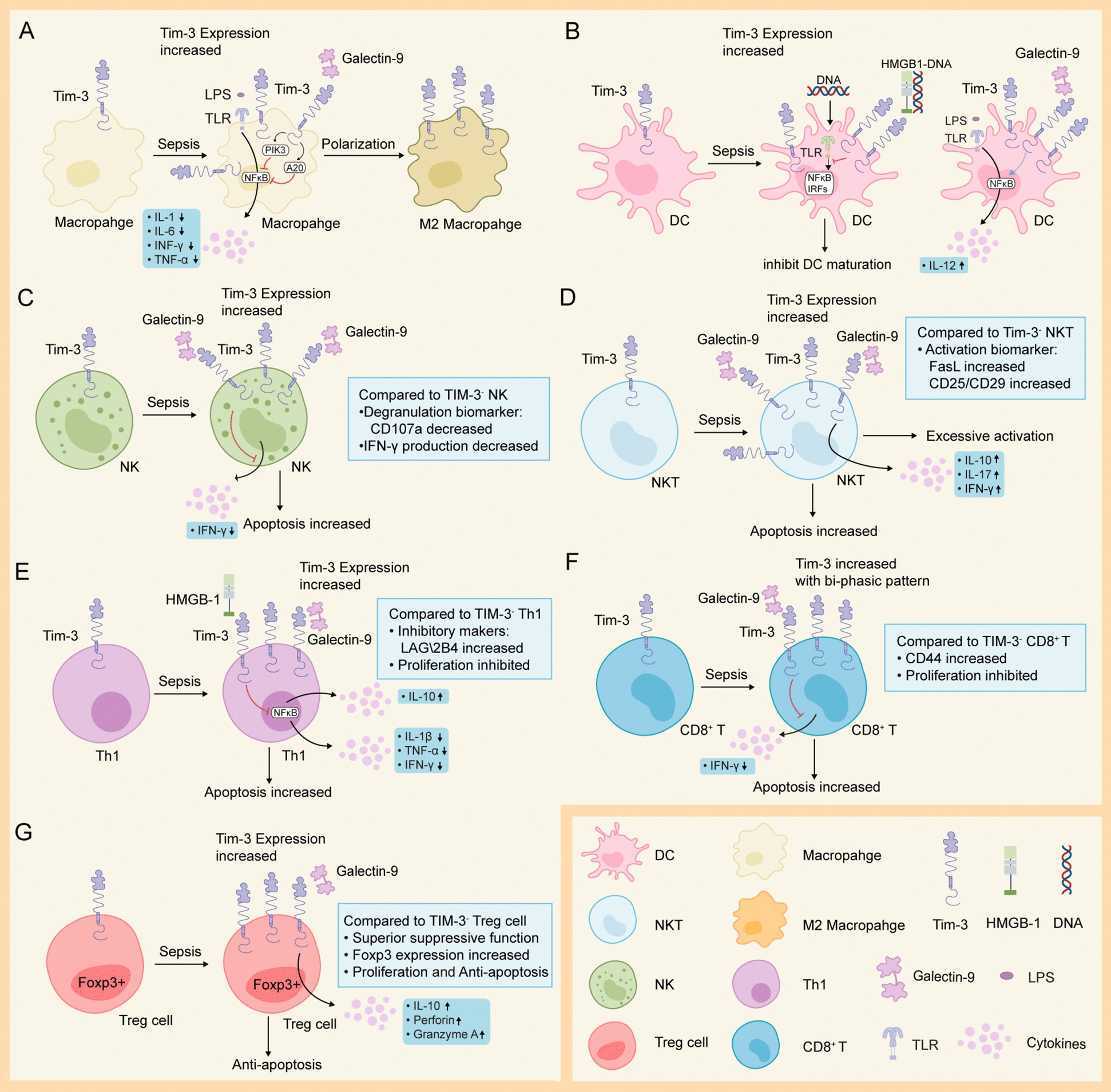
Sepsis is a major medical problem which causes millions of deaths worldwide every year. The host immune response in sepsis is characterized by acute inflammation and a simultaneous state of immunosuppression. In the later stage of sepsis, immunosuppression is a crucial factor that increases the susceptibility of septic patients to secondary infection and mortality. It is characterized by T cell exhaustion, excessive production of anti-inflammatory cytokines, hyperproliferation of immune suppressor cells and aberrant expression of immune checkpoint molecules. T cell immunoglobulin and mucin domain 3 (Tim-3), an immune checkpoint molecule, is found on the surface of various cells, including macrophages, NK cells, NKT cells, and T cells. There are four different ligands for Tim-3, and accumulating evidence indicates that Tim-3 and its ligands play a crucial role in regulating immune cell dysfunction during sepsis. Anti-Tim-3 antibodies have been applied in the field of cancer immunotherapy and have achieved positive therapeutic effects in some clinical trials. However, the therapeutic efficacy of Tim-3 blockade is still controversial in animal models of sepsis. These challenges highlight the need for a deeper understanding of Tim-3 signaling in sepsis. This review examines the comprehensive effect of Tim-3 signaling in the development of sepsis-induced immunosuppression and the therapeutic efficacy of Tim-3 blockade.
脓毒症是一个重大的医学问题,每年在全球导致数百万人死亡。脓毒症中的宿主免疫反应以急性炎症和同时存在的免疫抑制状态为特征。在脓毒症后期,免疫抑制是增加脓毒症患者继发感染易感性和死亡率的关键因素。其特征为T细胞耗竭、抗炎细胞因子过度产生、免疫抑制细胞过度增殖以及免疫检查点分子的异常表达。T细胞免疫球蛋白和粘蛋白结构域3(Tim-3)是一种免疫检查点分子,存在于包括巨噬细胞、自然杀伤细胞、自然杀伤T细胞和T细胞在内的各种细胞表面。Tim-3有四种不同的配体,越来越多的证据表明Tim-3及其配体在脓毒症期间调节免疫细胞功能障碍中起关键作用。抗Tim-3抗体已应用于癌症免疫治疗领域,并在一些临床试验中取得了积极的治疗效果。然而,在脓毒症动物模型中,Tim-3阻断的治疗效果仍存在争议。这些挑战凸显了深入了解脓毒症中Tim-3信号传导的必要性。本综述探讨了Tim-3信号传导在脓毒症诱导的免疫抑制发展中的综合作用以及Tim-3阻断的治疗效果。