He Wanxue, Yao Chen, Wang Kaifei, Duan Zhimei, Wang Shuo, Xie Lixin
Department of Pulmonary and Critical Care Medicine, Xuanwu Hospital Capital Medical University, Beijing, China.
College of Pulmonary and Critical Care Medicine, The Eighth Medical Center, Chinese PLA General Hospital, Beijing, China.
Immun Ageing. 2024 Jun 22;21(1):40. doi: 10.1186/s12979-024-00446-z.
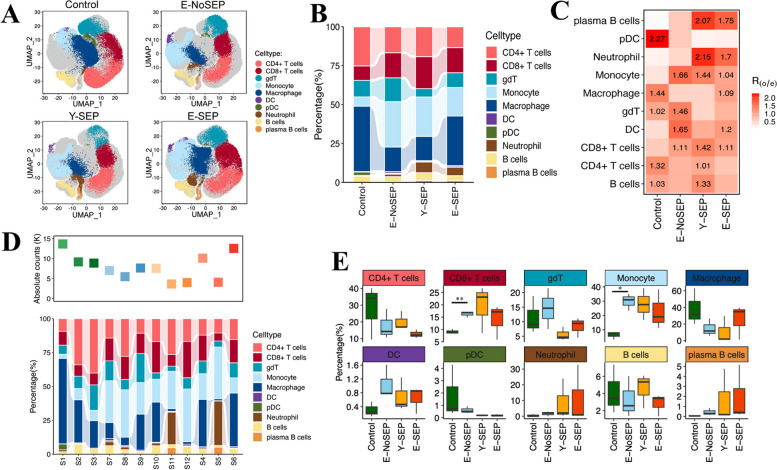
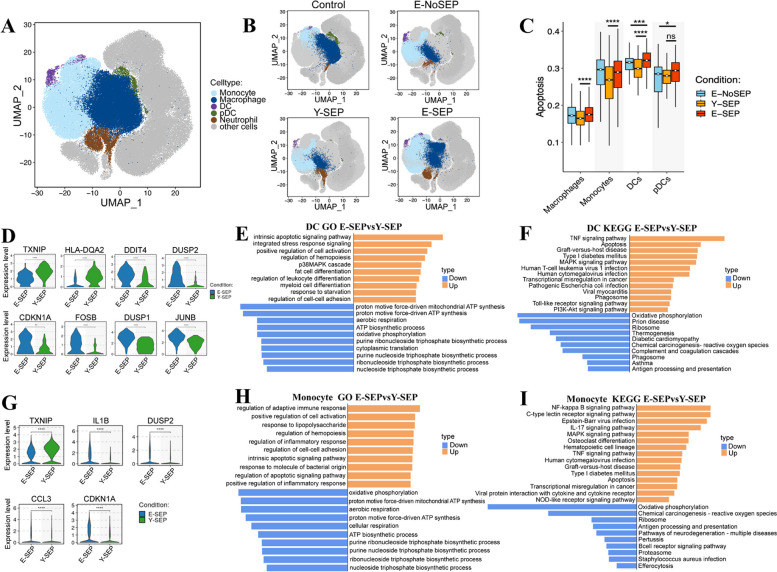
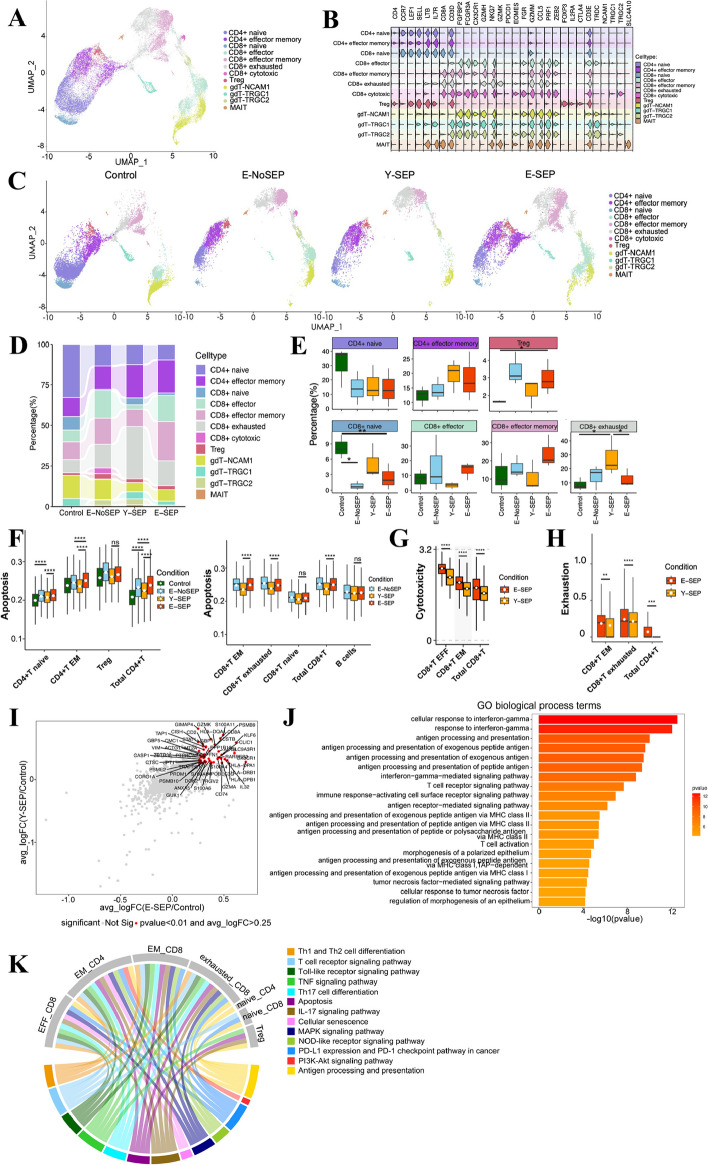
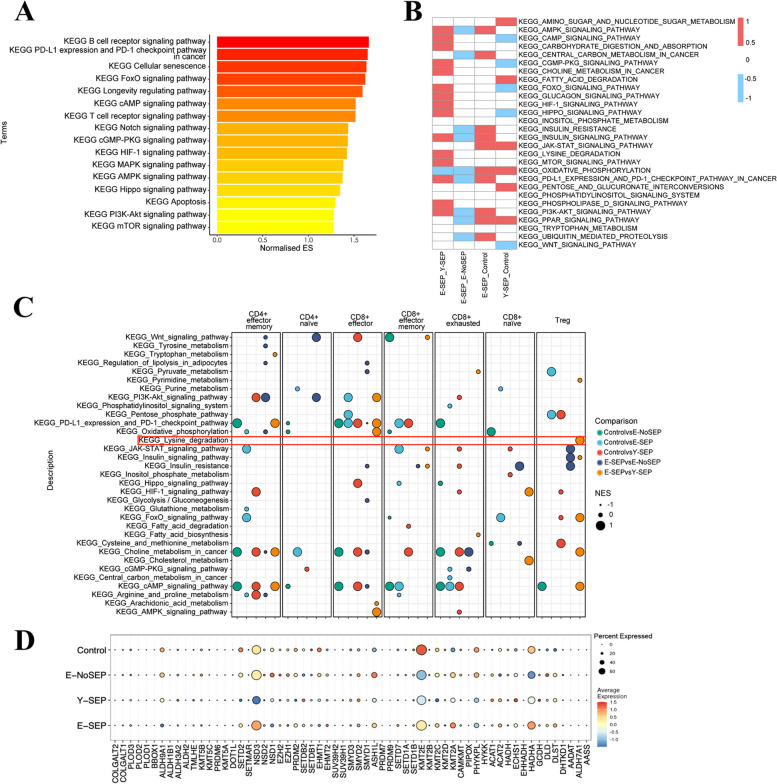
Sepsis is a dysregulated host response to severe infections, and immune dysfunction plays a crucial role in its pathogenesis. Elderly patients, a special population influenced by immunosenescence, are more susceptible to sepsis and have a worse prognosis. However, the immunopathogenic mechanisms underlying sepsis in elderly patients remain unclear. Here, we performed single-cell RNA sequencing of peripheral blood samples from young and old subjects and patients with sepsis. By exploring the transcriptional profiles of immune cells, we analyzed immune cell compositions, phenotype shifts, expression heterogeneities, and intercellular communication. In elderly patients with sepsis, innate immune cells (e.g., monocytes and DCs) exhibit decreased antigen presentation, presenting an overactive inflammatory and senescent phenotype. However, the immunophenotype of T cells shifted to characterize effector, memory, and exhaustion. Moreover, we identified strong interferon-γ responses of T cells in both aging and sepsis groups and a deranged inflammaging status in elderly sepsis patients. Tregs in elderly patients with sepsis showed increased abundance and enhanced immunosuppressive effects. In addition, metabolism-associated pathways were upregulated in T cells in elderly patients with sepsis, and the lysine metabolism pathway was enriched in Tregs. Cell-cell interaction analysis showed that the expression profile of ligand-receptor pairs was probably associated with aggravated immune dysfunction in elderly patients with sepsis. A novel HLA-KIR interaction was observed between Tregs and CD8 + T cells. These findings illustrate the immunological hallmarks of sepsis in elderly patients, and highlight that immunosuppressive and metabolic regulatory pathways may undergo important alterations in elderly patients with sepsis.
脓毒症是宿主对严重感染的失调反应,免疫功能障碍在其发病机制中起关键作用。老年患者作为受免疫衰老影响的特殊人群,更容易发生脓毒症且预后较差。然而,老年患者脓毒症的免疫致病机制仍不清楚。在此,我们对年轻和老年受试者以及脓毒症患者的外周血样本进行了单细胞RNA测序。通过探索免疫细胞的转录谱,我们分析了免疫细胞组成、表型转变、表达异质性和细胞间通讯。在老年脓毒症患者中,固有免疫细胞(如单核细胞和树突状细胞)表现出抗原呈递减少,呈现出过度活跃的炎症和衰老表型。然而,T细胞的免疫表型转变为具有效应、记忆和耗竭特征。此外,我们在衰老和脓毒症组中均发现T细胞有强烈的干扰素-γ反应,且老年脓毒症患者存在紊乱的炎性衰老状态。老年脓毒症患者的调节性T细胞(Tregs)丰度增加且免疫抑制作用增强。此外,老年脓毒症患者T细胞中与代谢相关的途径上调,赖氨酸代谢途径在Tregs中富集。细胞间相互作用分析表明,配体-受体对的表达谱可能与老年脓毒症患者免疫功能障碍加重有关。在Tregs和CD8 + T细胞之间观察到一种新的HLA-KIR相互作用。这些发现阐明了老年患者脓毒症的免疫学特征,并强调免疫抑制和代谢调节途径在老年脓毒症患者中可能发生重要改变。