Research Programs Unit, Translational Immunology Program, University of Helsinki, Helsinki, Finland.
Research and Development, Finnish Red Cross Blood Service, Helsinki, Finland.
Front Immunol. 2021 Feb 25;12:629059. doi: 10.3389/fimmu.2021.629059. eCollection 2021.
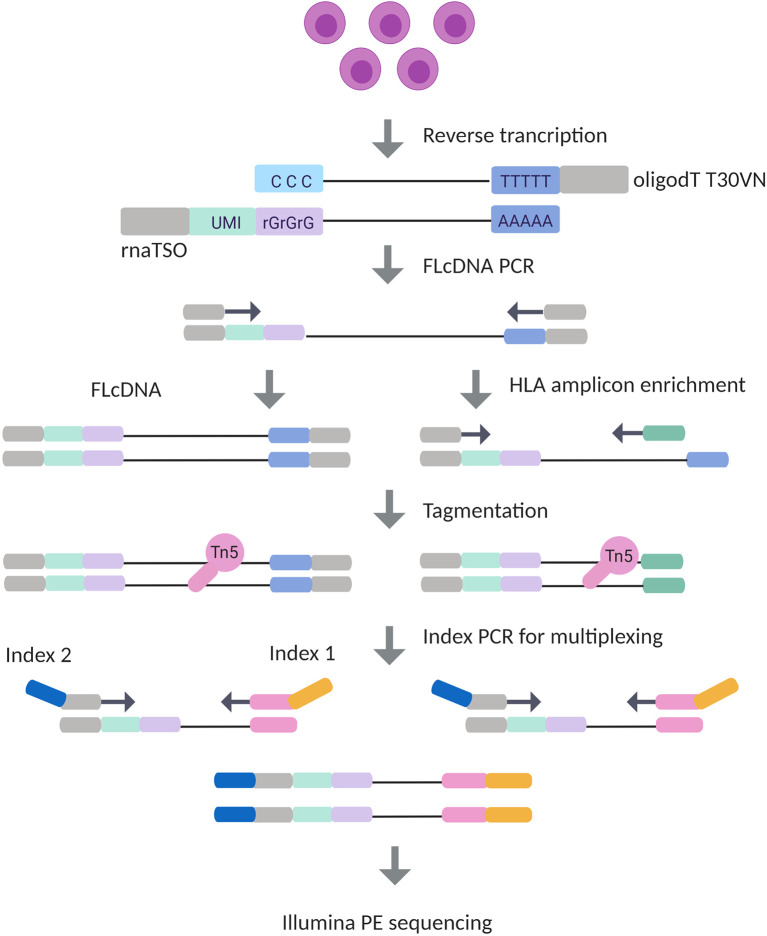
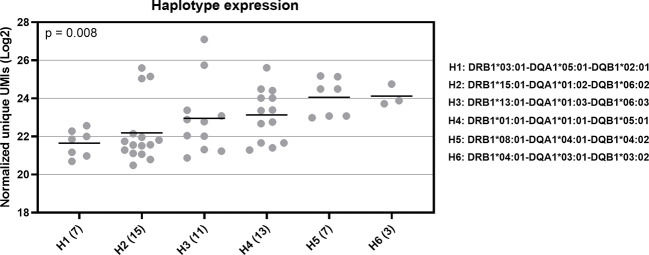
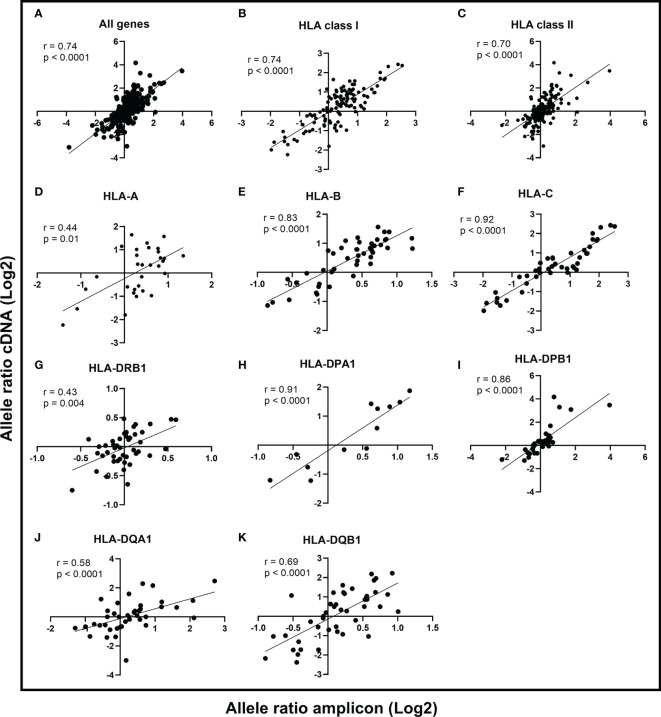
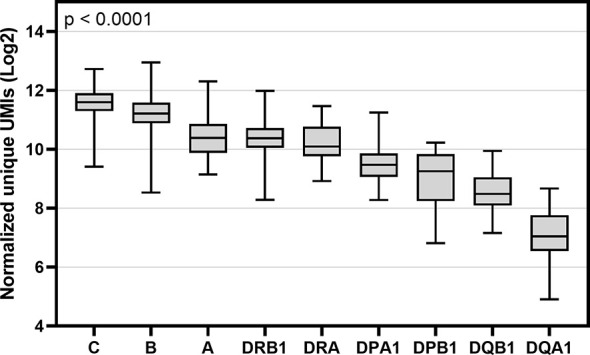
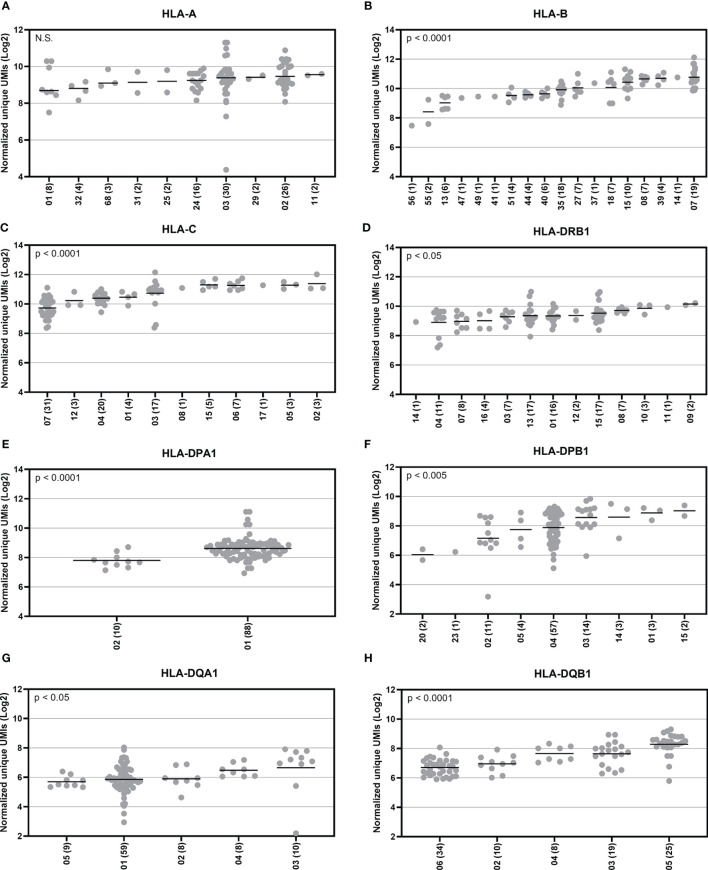
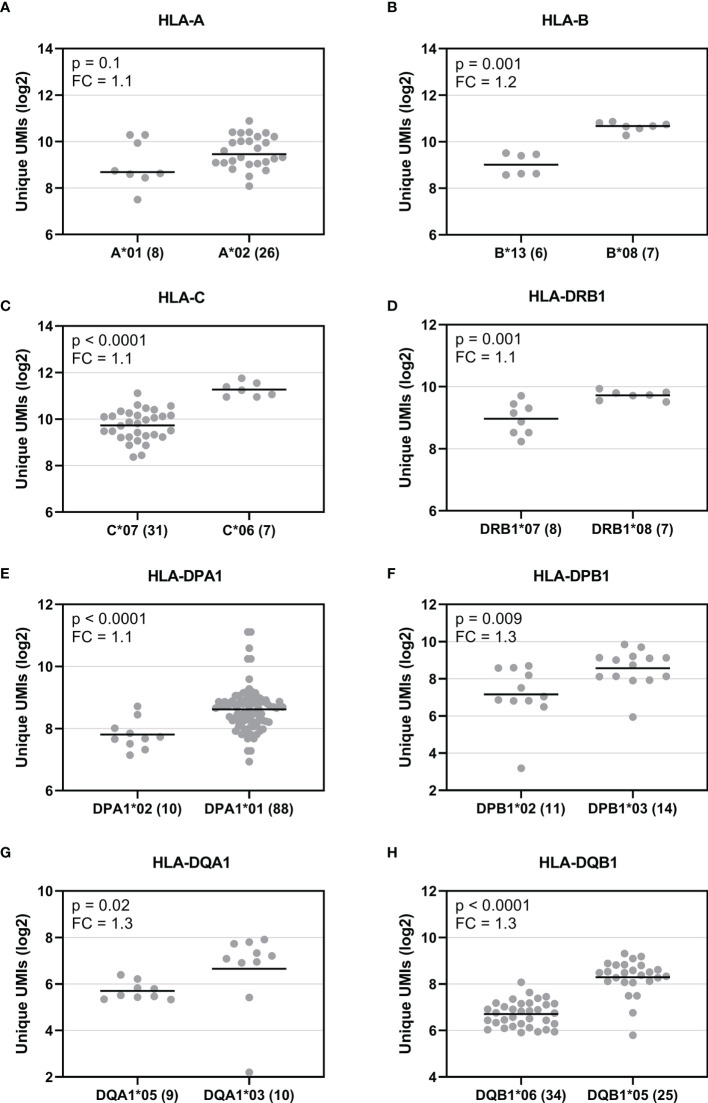
The HLA gene complex is the most important single genetic factor in susceptibility to most diseases with autoimmune or autoinflammatory origin and in transplantation matching. Most studies have focused on the vast allelic variation in these genes; only a few studies have explored differences in the expression levels of HLA alleles. In this study, we quantified mRNA expression levels of HLA class I and II genes from peripheral blood samples of 50 healthy individuals. The gene- and allele-specific mRNA expression was assessed using unique molecular identifiers, which enabled PCR bias removal and calculation of the number of original mRNA transcripts. We identified differences in mRNA expression between different HLA genes and alleles. Our results suggest that HLA alleles are differentially expressed and these differences in expression levels are quantifiable using RNA sequencing technology. Our method provides novel insights into HLA research, and it can be applied to quantify expression differences of HLA alleles in various tissues and to evaluate the role of this type of variation in transplantation matching and susceptibility to autoimmune diseases.
HLA 基因复合体是大多数自身免疫或自身炎症性疾病以及移植配型中易感性的最重要的单一遗传因素。大多数研究都集中在这些基因的大量等位基因变异上;只有少数研究探索了 HLA 等位基因表达水平的差异。在这项研究中,我们定量分析了 50 名健康个体外周血样本中 HLA Ⅰ类和Ⅱ类基因的 mRNA 表达水平。使用独特的分子标识符评估了基因和等位基因特异性 mRNA 表达,这使得能够去除 PCR 偏倚并计算原始 mRNA 转录本的数量。我们发现了不同 HLA 基因和等位基因之间的 mRNA 表达差异。我们的结果表明,HLA 等位基因的表达存在差异,并且可以使用 RNA 测序技术对这些表达水平的差异进行定量。我们的方法为 HLA 研究提供了新的见解,并且可以应用于定量分析各种组织中 HLA 等位基因的表达差异,并评估这种变异在移植配型和自身免疫性疾病易感性中的作用。