Departments of Physiology, Faculty of Medicine, University of Debrecen, Debrecen, Hungary.
Doctoral School of Molecular Cellular and Immune Biology, Faculty of Medicine, University of Debrecen, Debrecen, Hungary.
Front Immunol. 2021 Feb 26;12:630569. doi: 10.3389/fimmu.2021.630569. eCollection 2021.
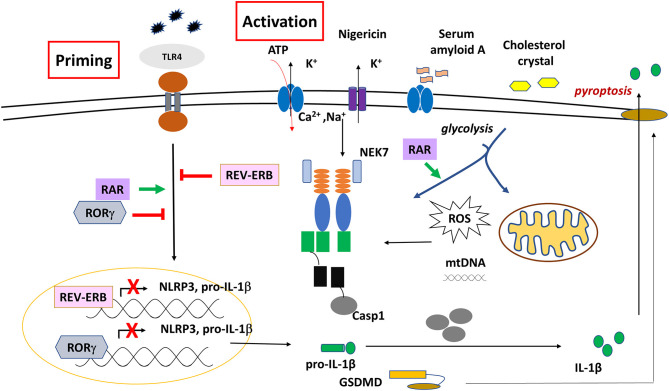
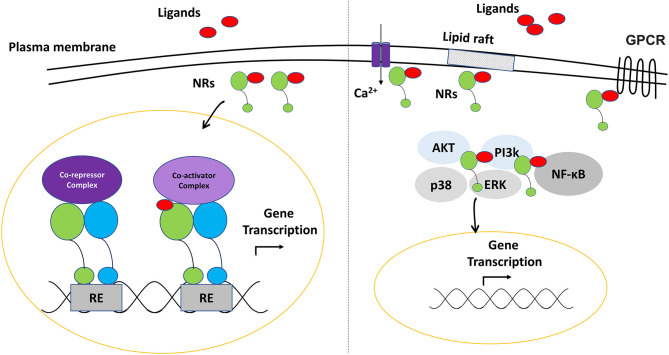
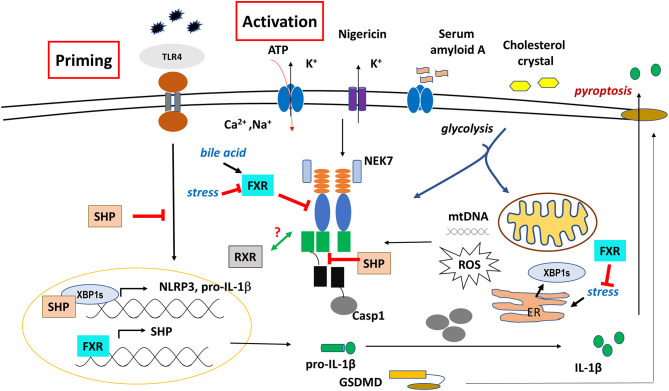
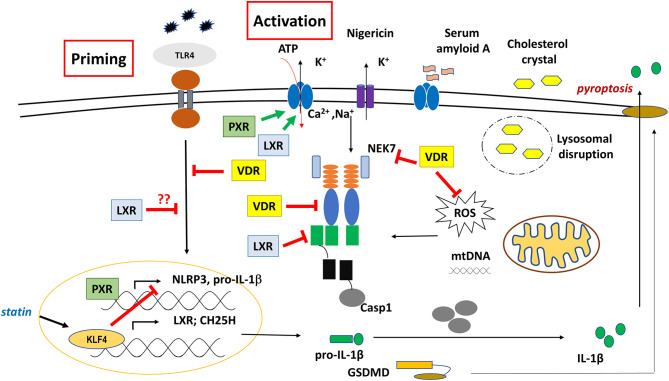
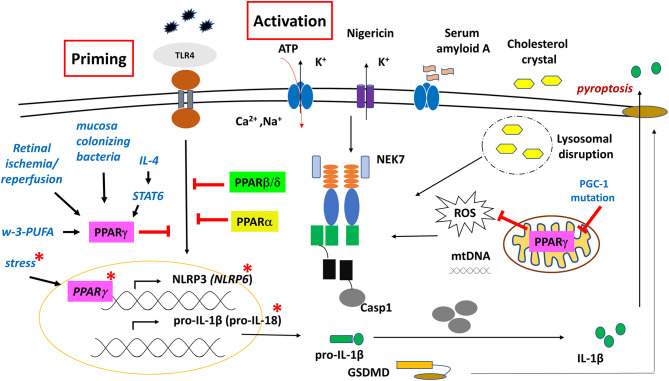
Nuclear receptors are important bridges between lipid signaling molecules and transcription responses. Beside their role in several developmental and physiological processes, many of these receptors have been shown to regulate and determine the fate of immune cells, and the outcome of immune responses under physiological and pathological conditions. While NLRP3 inflammasome is assumed as key regulator for innate and adaptive immune responses, and has been associated with various pathological events, the precise impact of the nuclear receptors on the function of inflammasome is hardly investigated. A wide variety of factors and conditions have been identified as modulators of NLRP3 inflammasome activation, and at the same time, many of the nuclear receptors are known to regulate, and interact with these factors, including cellular metabolism and various signaling pathways. Nuclear receptors are in the focus of many researches, as these receptors are easy to manipulate by lipid soluble molecules. Importantly, nuclear receptors mediate regulatory mechanisms at multiple levels: not only at transcription level, but also in the cytosol via non-genomic effects. Their importance is also reflected by the numerous approved drugs that have been developed in the past decade to specifically target nuclear receptors subtypes. Researches aiming to delineate mechanisms that regulate NLRP3 inflammasome activation draw a wide range of attention due to their unquestionable importance in infectious and sterile inflammatory conditions. In this review, we provide an overview of current reports and knowledge about NLRP3 inflammasome regulation from the perspective of nuclear receptors, in order to bring new insight to the potentially therapeutic aspect in targeting NLRP3 inflammasome and NLRP3 inflammasome-associated diseases.
核受体是脂质信号分子与转录反应之间的重要桥梁。除了在许多发育和生理过程中发挥作用外,许多这些受体已被证明可以调节和决定免疫细胞的命运,以及生理和病理条件下免疫反应的结果。虽然 NLRP3 炎性小体被认为是先天和适应性免疫反应的关键调节剂,并与各种病理事件相关,但核受体对炎性小体功能的确切影响几乎没有被研究过。已经确定了多种因素和条件作为 NLRP3 炎性小体激活的调节剂,同时,许多核受体被认为可以调节和与这些因素相互作用,包括细胞代谢和各种信号通路。核受体是许多研究的焦点,因为这些受体很容易被脂溶性分子操纵。重要的是,核受体通过非基因组效应在多个水平上介导调节机制:不仅在转录水平上,而且在细胞质中。过去十年中,为了专门针对核受体亚型开发了许多批准的药物,这反映了它们的重要性。由于 NLRP3 炎性小体在感染和无菌性炎症条件下的重要性,旨在阐明调节 NLRP3 炎性小体激活的机制的研究引起了广泛的关注。在这篇综述中,我们从核受体的角度概述了当前关于 NLRP3 炎性小体调节的报告和知识,以期为靶向 NLRP3 炎性小体和 NLRP3 炎性小体相关疾病的潜在治疗方法提供新的见解。