Pan Tao, Yu Zhenjia, Jin Zhijian, Wu Xiongyan, Wu Airong, Hou Junyi, Chang Xinyu, Fan Zhiyuan, Li Jianfang, Yu Beiqin, Li Fangyuan, Yan Chao, Yang Zhongyin, Zhu Zhenggang, Liu Bingya, Su Liping
Department of General Surgery, Shanghai Key Laboratory of Gastric Neoplasms, Shanghai Institute of Digestive Surgery, Ruijin Hospital, Shanghai Jiao Tong University School of Medicine, Shanghai, China.
Department of Gastroenterology, The First Affiliated Hospital of Soochow University, Soochow University, Suzhou, Jiangsu, China.
Mol Ther Nucleic Acids. 2021 Feb 10;23:1288-1303. doi: 10.1016/j.omtn.2021.02.003. eCollection 2021 Mar 5.
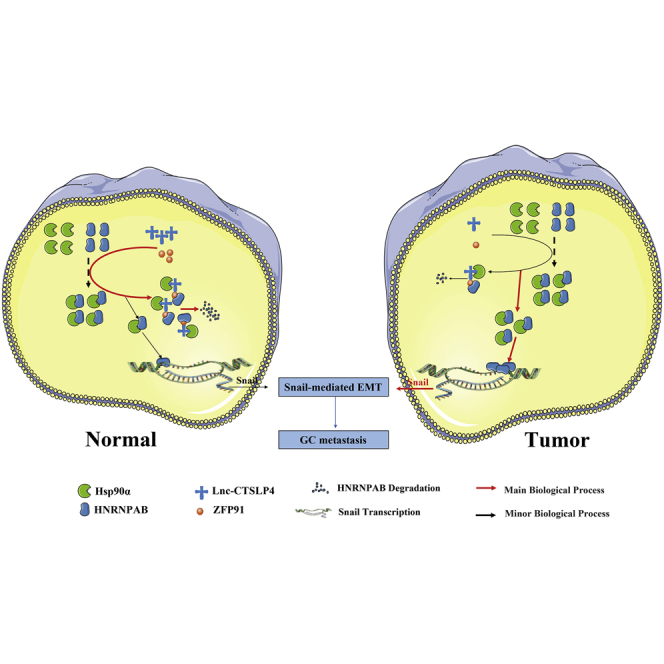
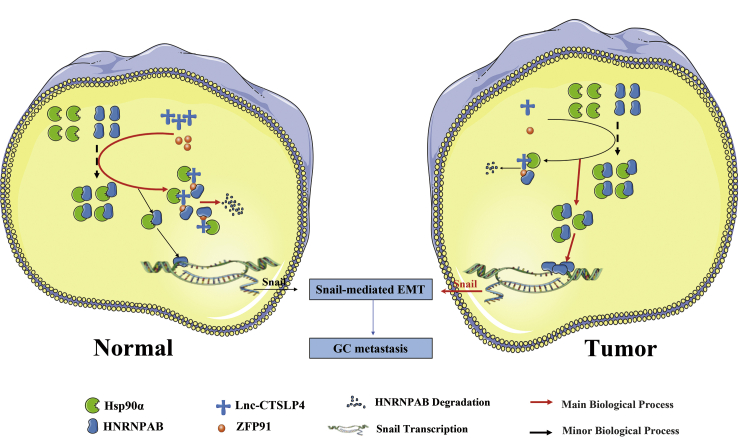
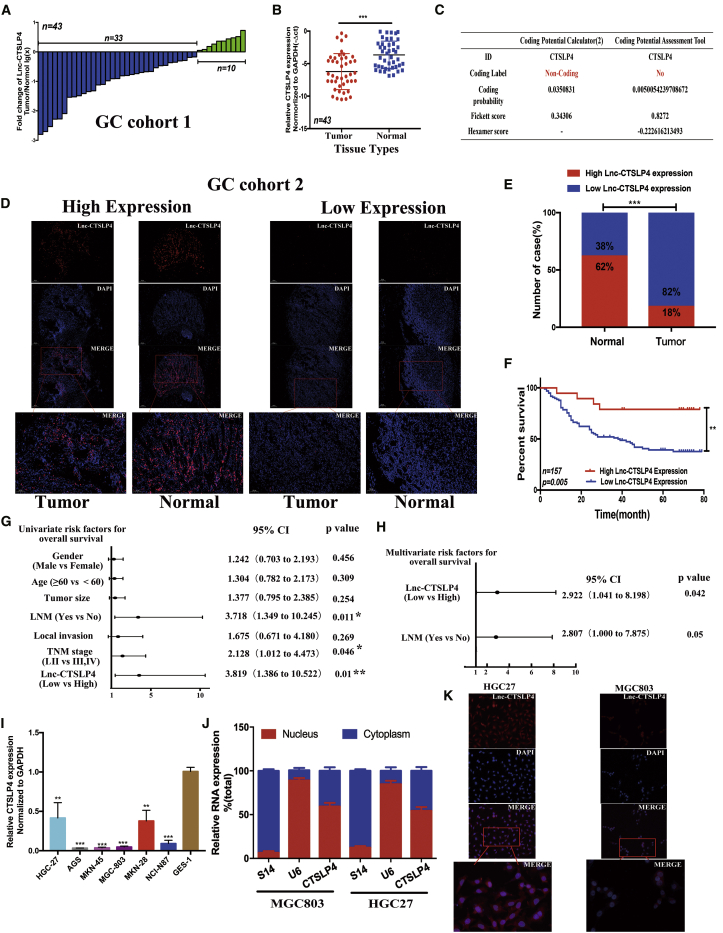
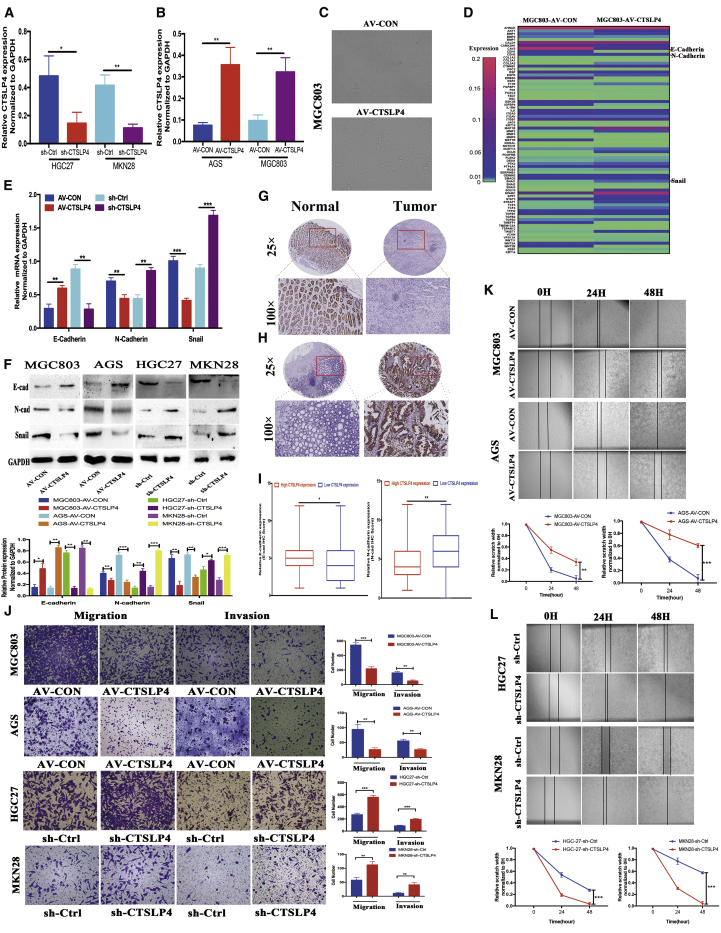
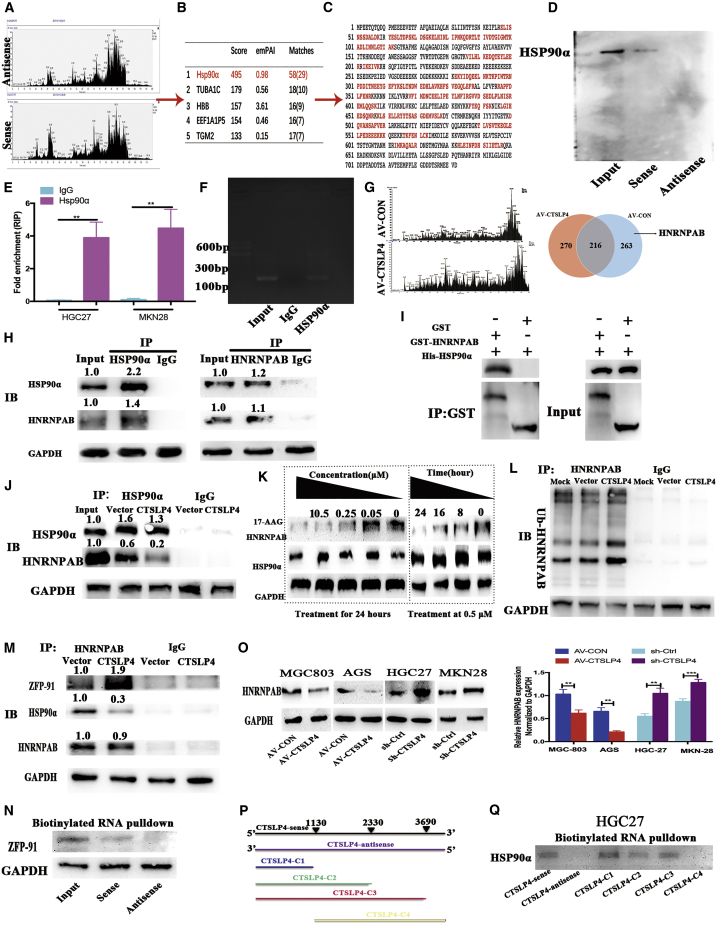
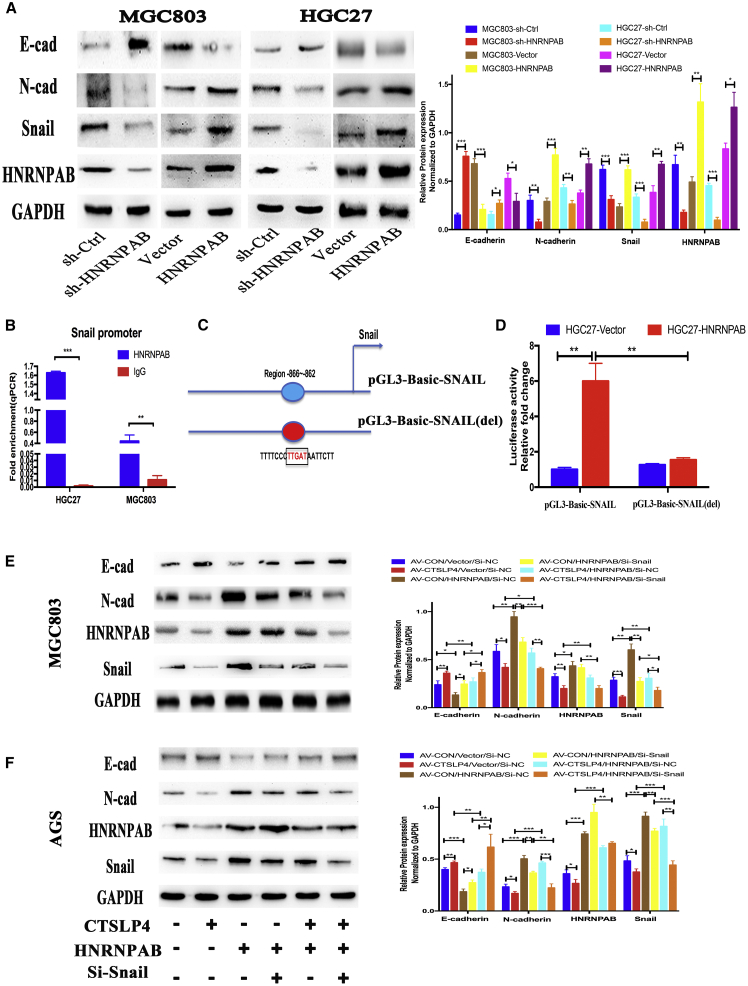
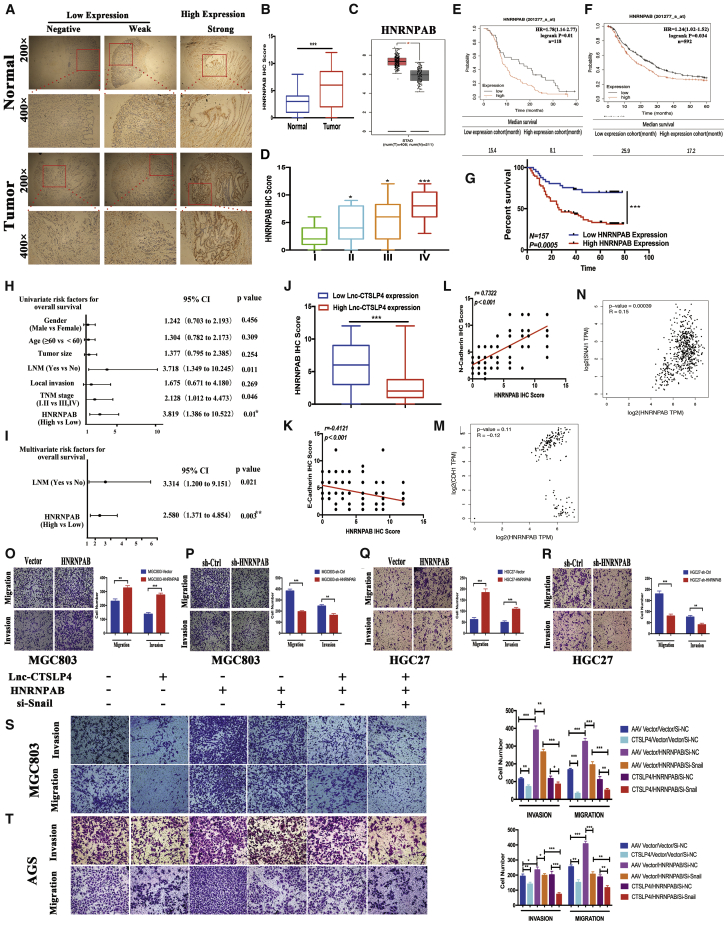
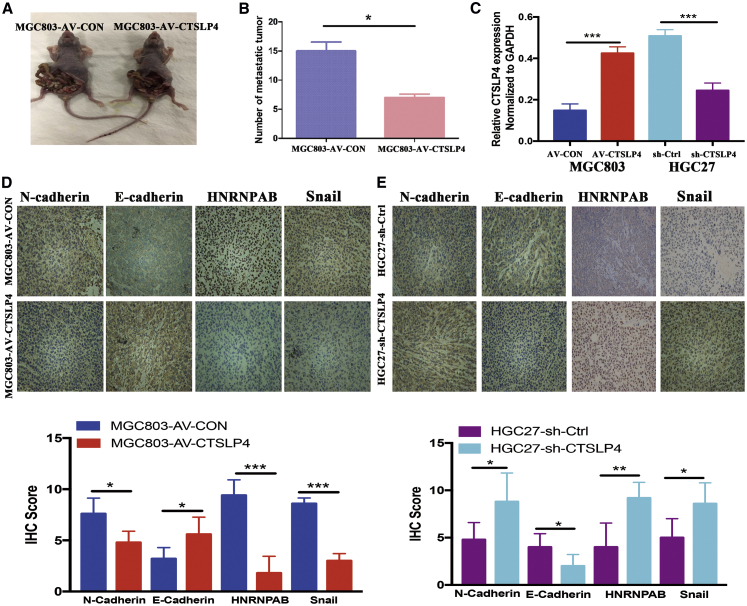
Tumor metastasis is a crucial impediment to the treatment of gastric cancer (GC), and the epithelial-to-mesenchymal transition (EMT) program plays a critical role for the initiation of GC metastasis. Thus, the aim of this study is to investigate the regulation of lnc-CTSLP4 in the EMT process during GC progression. We found that lnc-CTSLP4 was significantly downregulated in GC tumor tissues compared with adjacent non-tumor tissues, and its levels in GC tumor tissues were closely correlated with tumor local invasion, TNM stage, lymph node metastasis, and prognosis of GC patients. Loss- and gain-of-function assays indicated that lnc-CTSLP4 inhibited GC cell migration, invasion, and EMT , as well as peritoneal dissemination . Mechanistic analysis demonstrated that lnc-CTSLP4 could bind with Hsp90α/heterogeneous nuclear ribonucleoprotein AB (HNRNPAB) complex and recruit E3-ubiquitin ligase ZFP91 to induce the degradation of HNRNPAB, thus suppressing the transcriptional activation of Snail and ultimately reversing EMT of GC cells. Taken together, our results suggest that lnc-CTSLP4 is significantly downregulated in GC tumor tissues and inhibits metastatic potential of GC cells by attenuating HNRNPAB-dependent Snail transcription via interacting with Hsp90α and recruiting E3 ubiquitin ligase ZFP91, which shows that lnc-CTSLP4 could serve as a prognostic biomarker and therapeutic target for metastatic GC.
肿瘤转移是胃癌(GC)治疗的关键障碍,上皮-间质转化(EMT)程序在GC转移起始中起关键作用。因此,本研究旨在探讨lnc-CTSLP4在GC进展过程中EMT过程中的调控作用。我们发现,与相邻的非肿瘤组织相比,lnc-CTSLP4在GC肿瘤组织中显著下调,其在GC肿瘤组织中的水平与肿瘤局部浸润、TNM分期、淋巴结转移及GC患者的预后密切相关。功能缺失和功能获得实验表明,lnc-CTSLP4抑制GC细胞迁移、侵袭和EMT以及腹膜播散。机制分析表明,lnc-CTSLP4可与Hsp90α/异质核糖核蛋白AB(HNRNPAB)复合物结合,并招募E3泛素连接酶ZFP91诱导HNRNPAB降解,从而抑制Snail的转录激活,最终逆转GC细胞的EMT。综上所述,我们的结果表明,lnc-CTSLP4在GC肿瘤组织中显著下调,并通过与Hsp90α相互作用并招募E3泛素连接酶ZFP91减弱HNRNPAB依赖的Snail转录,从而抑制GC细胞的转移潜能,这表明lnc-CTSLP4可作为转移性GC的预后生物标志物和治疗靶点。