East N, Bishop E, Breheny D, Gaca M, Thorne D
British American Tobacco, R&D, Southampton, Hampshire, SO15 8TL, UK.
Toxicol Rep. 2021 Feb 25;8:481-488. doi: 10.1016/j.toxrep.2021.02.014. eCollection 2021.
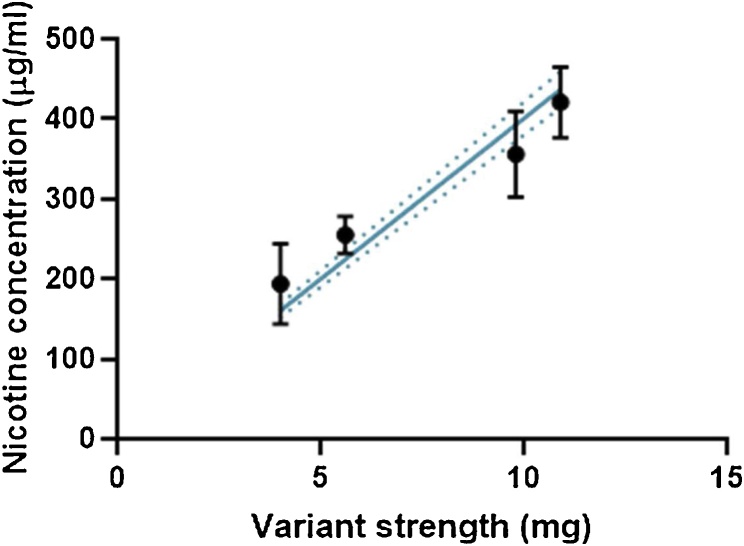
In many regulated industries there is an increasing pressure to provide timely and robust risk assessment data to support product launches. Real-time cell analysis (RTCA) is a tool that allows for the fast and relatively labour-free cytotoxic assessment of test compounds, compared to traditional methods. Here, we propose an application for the RTCA platform to provide a screening approach, to evaluate the cytotoxic potential of tobacco-free nicotine pouches, also termed modern oral product (MOP), to determine the contribution of differing nicotine strengths (4-11 mg) and a range of available flavour types from multiple markets, on overall product toxicity. Aqueous extracts were prepared for all products using 1 pouch in 20 mL cell culture media and applied to the cell system for 24 h. Test extract nicotine concentrations reflected the increases in product nicotine strength; however, these changes were not present in the same magnitude in the cytotoxicity data obtained from both primary human gingival fibroblasts (HGF) and an NCI-H292 human bronchial epithelial continuous cell line. Furthermore, across the range of flavours and product nicotine strengths tested, H292 cells whilst not the target organ for oral product use, accurately predicted the results seen in HGFs and could be considered a useful surrogate for fast screening studies. H292 cells are more easily cultured and for longer periods, offering a more compatible test system. In conclusion, the data demonstrate the utility of the RTCA platform for the quick assessment of a large range of product variants. Furthermore, for a cytotoxicity measure with this test product, the simple H292 cell line can predict outcomes in the more complex HGF and provide useful pre-clinical cytotoxicity screening data to inform the risk assessment of MOPs and the relative contribution of flavourings, nicotine and other components.
在许多受监管的行业中,提供及时且可靠的风险评估数据以支持产品上市的压力越来越大。与传统方法相比,实时细胞分析(RTCA)是一种能够快速且相对无需大量人力的测试化合物细胞毒性评估工具。在此,我们提出将RTCA平台应用于提供一种筛选方法,以评估无烟尼古丁袋(也称为现代口服产品,MOP)的细胞毒性潜力,确定不同尼古丁强度(4 - 11毫克)以及来自多个市场的一系列可用口味类型对整体产品毒性的贡献。使用1个袋子在20毫升细胞培养基中为所有产品制备水提取物,并将其应用于细胞系统24小时。测试提取物中的尼古丁浓度反映了产品尼古丁强度的增加;然而,从原代人牙龈成纤维细胞(HGF)和NCI - H292人支气管上皮连续细胞系获得的细胞毒性数据中,这些变化的幅度并不相同。此外,在所测试的各种口味和产品尼古丁强度范围内,H292细胞虽然不是口服产品使用的靶器官,但准确预测了在HGF中观察到的结果,可被视为快速筛选研究的有用替代物。H292细胞更易于培养且培养时间更长,提供了更合适的测试系统。总之,数据证明了RTCA平台在快速评估大量产品变体方面的实用性。此外,对于该测试产品的细胞毒性测量,简单的H292细胞系可以预测更复杂的HGF中的结果,并提供有用的临床前细胞毒性筛选数据,以告知MOP的风险评估以及调味剂、尼古丁和其他成分的相对贡献。