Department of Odontology, Umeå University, Umeå, Sweden.
Department of Medical Biosciences, Pathology, Umeå University, Umeå, Sweden.
Front Cell Infect Microbiol. 2021 Feb 24;10:620801. doi: 10.3389/fcimb.2020.620801. eCollection 2020.
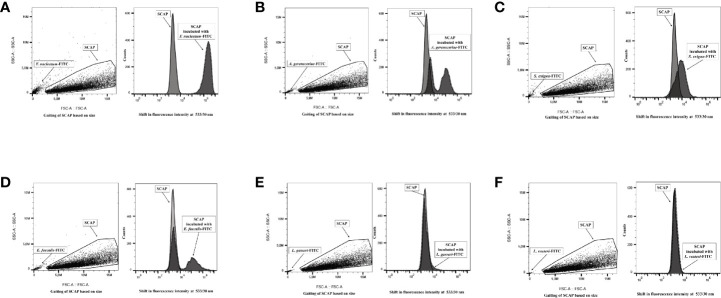
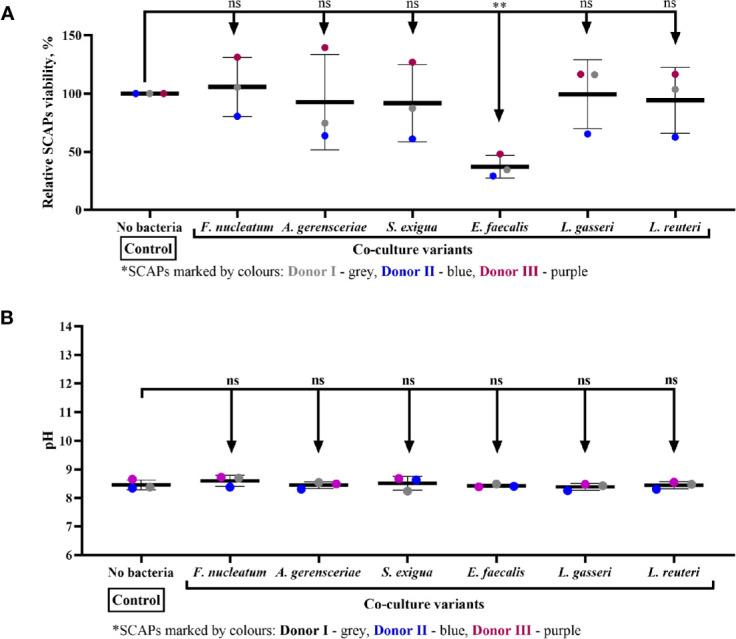
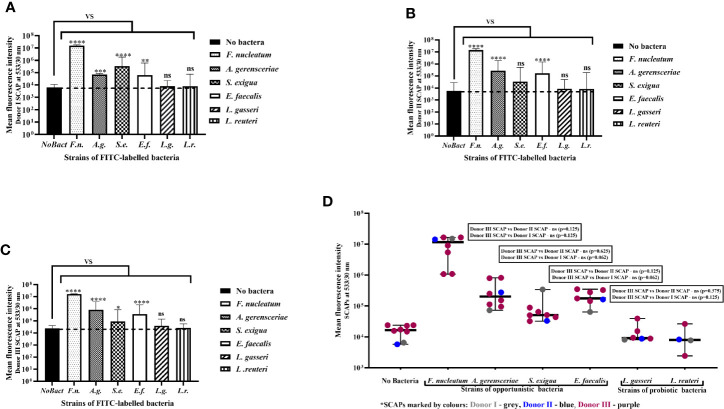
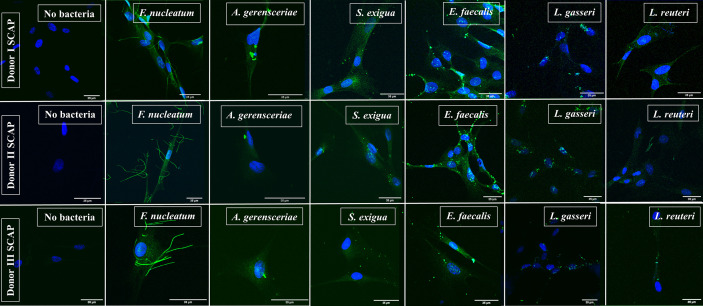
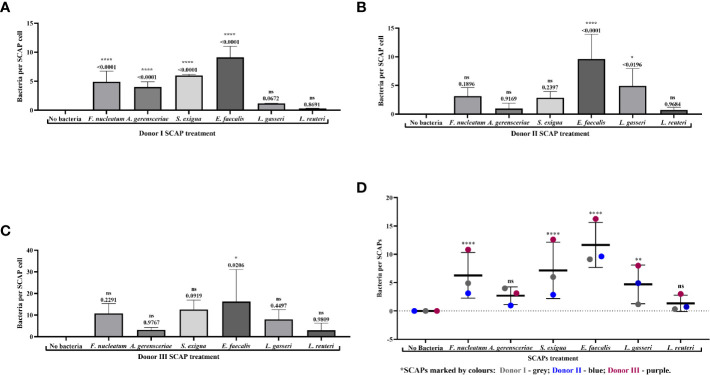
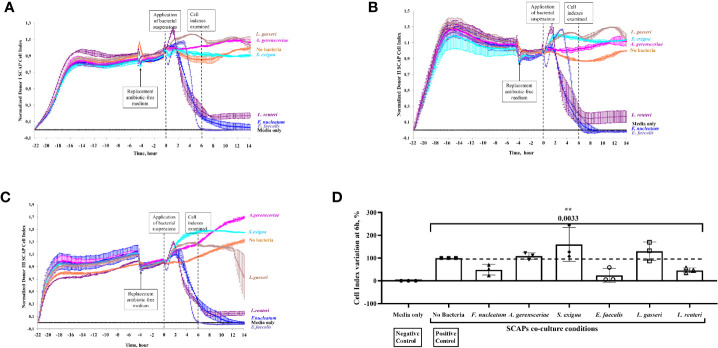
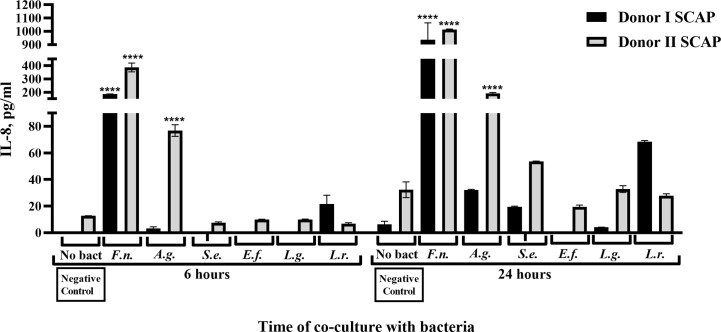
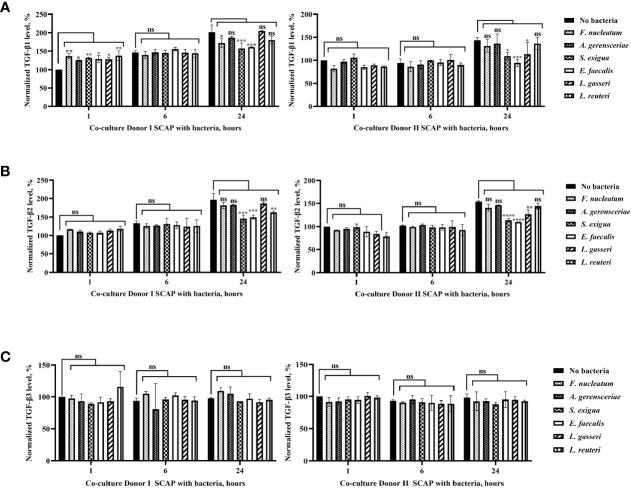
The use of stem cells from the apical papilla (SCAPs) has been proposed as a means of promoting root maturation in permanent immature teeth, and plays a significant role in regenerative dental procedures. However, the role of SCAPs may be compromised by microenvironmental factors, such as hypoxic conditions and the presence of bacteria from infected dental root canals. We aim to investigate oral bacterial modulation of SCAP in terms of binding capacity using flow cytometry and imaging, real-time cell proliferation monitoring, and cytokine secretion (IL-6, IL-8, and TGF-β isoforms) under anaerobic conditions. SCAPs were exposed to key species in dental root canal infection, namely , , , and , as well as two probiotic strains, strain B6 and (DSM 17938). We found that , , , and , but not the probiotic strains bind to SCAPs on anaerobic conditions. and exhibited the strongest binding capacity, resulting in significantly reduced SCAP proliferation. Notably, , but not , induce production of the proinflammatory chemokine IL-8 and IL-10 from SCAPs. Production of TGF-β1 and TGF-β2 by SCAPs was dependent on species, cell line, and time, but secretion of TGF-β3 did not vary significantly over time. In conclusion, SCAP response is compromised when exposed to bacterial stimuli from infected dental root canals in anaerobic conditions. Thus, stem cell-mediated endodontic regenerative studies need to include microenvironmental conditions, such as the presence of microorganisms to promote further advantage in the field.
根尖乳头干细胞(SCAPs)的使用被提议作为促进恒牙未成熟根成熟的一种手段,并且在再生牙科手术中发挥着重要作用。然而,SCAP 的作用可能会受到微环境因素的影响,例如缺氧条件和感染性根管细菌的存在。我们旨在通过流式细胞术和成像、实时细胞增殖监测以及在厌氧条件下细胞因子(IL-6、IL-8 和 TGF-β 同工型)分泌来研究口腔细菌对 SCAP 的调节作用。SCAP 暴露于牙根管感染的关键物种,即 、 、 、 和 ,以及两种益生菌株 株 B6 和 (DSM 17938)。我们发现 、 、 、 和 ,但不是益生菌株在厌氧条件下与 SCAP 结合。 和 表现出最强的结合能力,导致 SCAP 增殖显著减少。值得注意的是, 但不是 ,可诱导 SCAP 产生促炎趋化因子 IL-8 和 IL-10。SCAP 产生 TGF-β1 和 TGF-β2 取决于物种、细胞系和时间,但 TGF-β3 的分泌随时间变化不大。总之,当 SCAP 在厌氧条件下暴露于感染性牙根管的细菌刺激物时,其反应会受到损害。因此,干细胞介导的牙髓再生研究需要包括微生物存在等微环境条件,以在该领域进一步发挥优势。