Volpe Alessia, Pillarsetty Naga Vara Kishore, Lewis Jason S, Ponomarev Vladimir
Department of Radiology, Memorial Sloan Kettering Cancer Center, New York, NY, USA.
Weill Cornell Medical College, New York, NY, USA.
Mol Ther Oncolytics. 2021 Feb 4;20:447-458. doi: 10.1016/j.omto.2021.01.017. eCollection 2021 Mar 26.
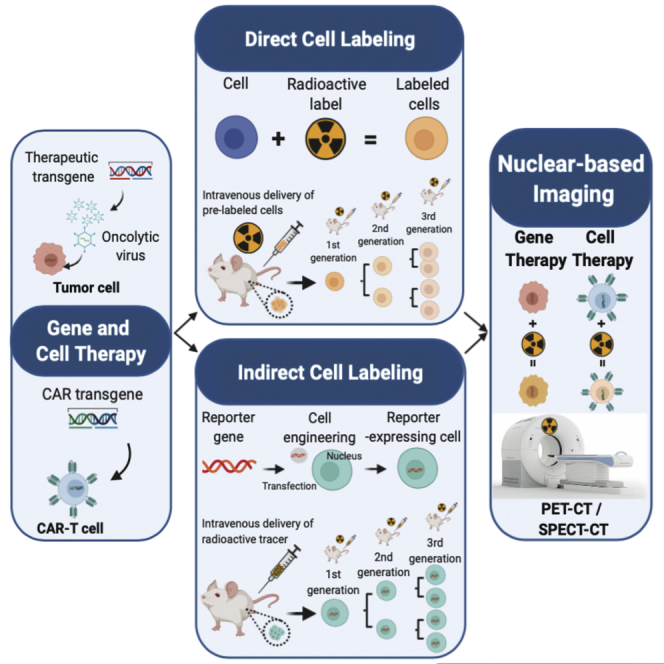
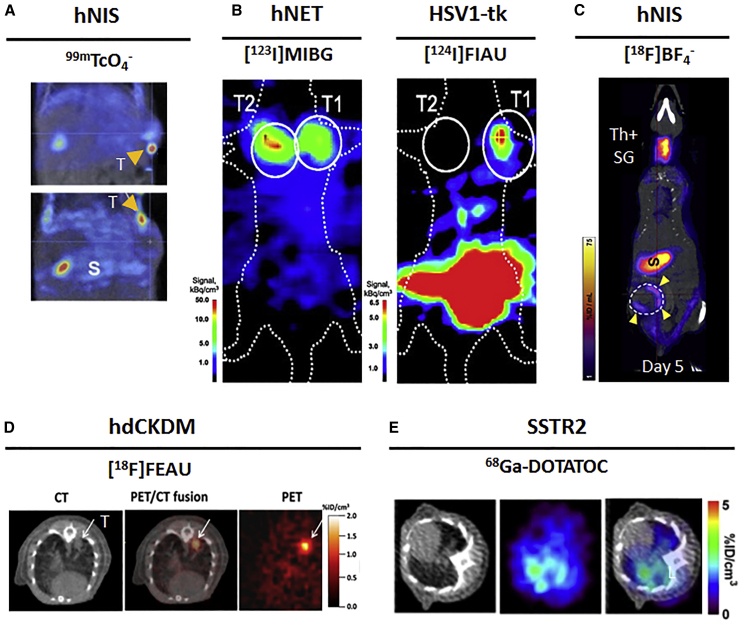
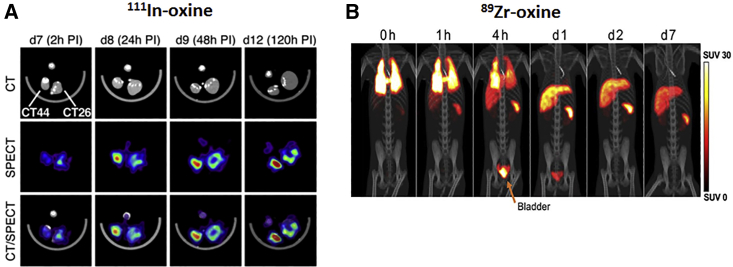
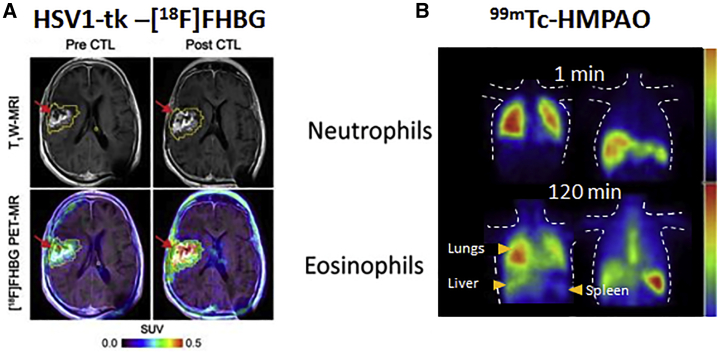
Several types of gene- and cell-based therapeutics are now emerging in the cancer immunotherapy, transplantation, and regenerative medicine landscapes. Radionuclear-based imaging can be used as a molecular imaging tool for repetitive and non-invasive visualization as well as monitoring of therapy success. In this review, we discuss the principles of nuclear-based imaging and provide a comprehensive overview of its application in gene and cell therapy. This review aims to inform investigators in the biomedical field as well as clinicians on the state of the art of nuclear imaging, from probe design to available radiopharmaceuticals and advances of direct (probe-based) and indirect (transgene-based) strategies in both preclinical and clinical settings. Notably, as the nuclear-based imaging toolbox is continuously expanding, it will be increasingly incorporated into the clinical setting where the distribution, targeting, and persistence of a new generation of therapeutics can be imaged and ultimately guide therapeutic decisions.
目前,几种基于基因和细胞的疗法正在癌症免疫治疗、移植和再生医学领域崭露头角。基于放射性核素的成像可作为一种分子成像工具,用于重复、非侵入性可视化以及监测治疗效果。在本综述中,我们讨论了基于核素成像的原理,并全面概述了其在基因和细胞治疗中的应用。本综述旨在让生物医学领域的研究人员以及临床医生了解核成像的最新技术,从探针设计到可用的放射性药物,以及在临床前和临床环境中直接(基于探针)和间接(基于转基因)策略的进展。值得注意的是,随着基于核素的成像工具箱不断扩展,它将越来越多地融入临床环境,在那里可以对新一代治疗药物的分布、靶向性和持久性进行成像,并最终指导治疗决策。