Fanelli Francesca, Caputo Leonardo, Quintieri Laura
Institute of Sciences of Food Production, National Research Council of Italy, V. G. Amendola 122/O, 70126, Bari, Italy.
Curr Res Food Sci. 2021 Feb 16;4:74-82. doi: 10.1016/j.crfs.2021.02.001. eCollection 2021.
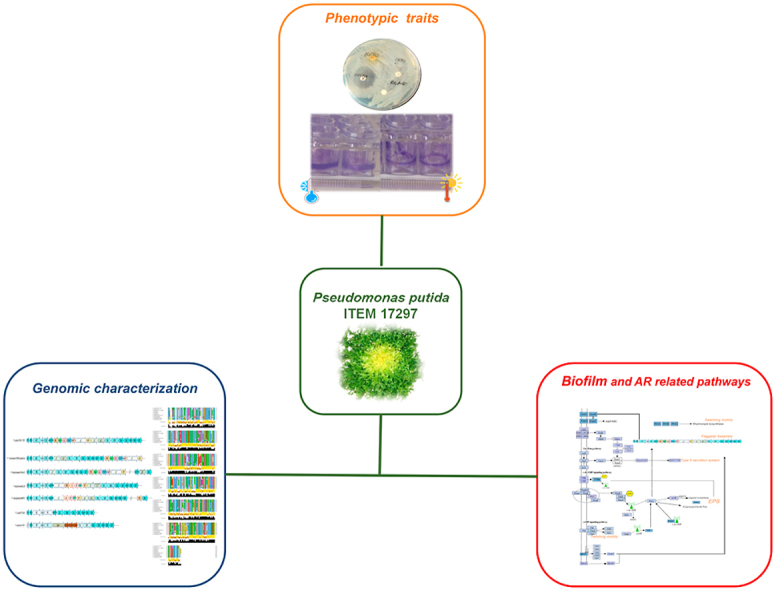
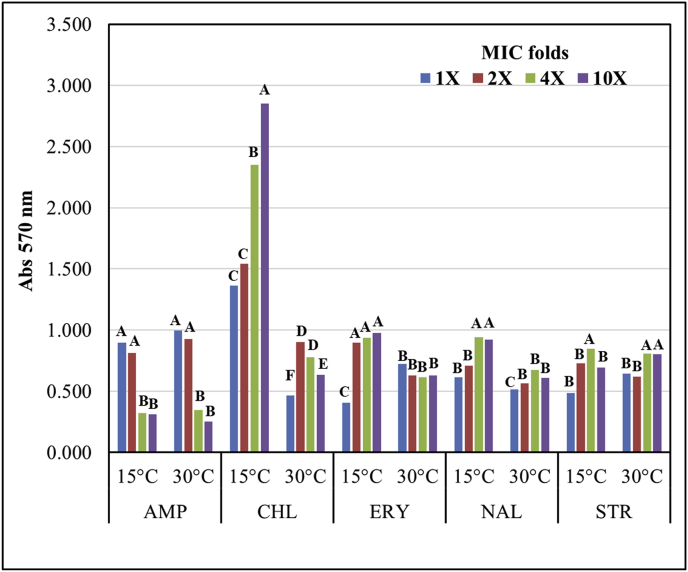
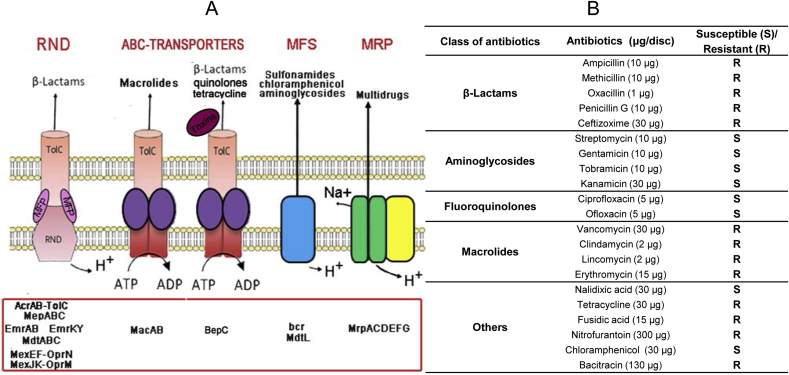
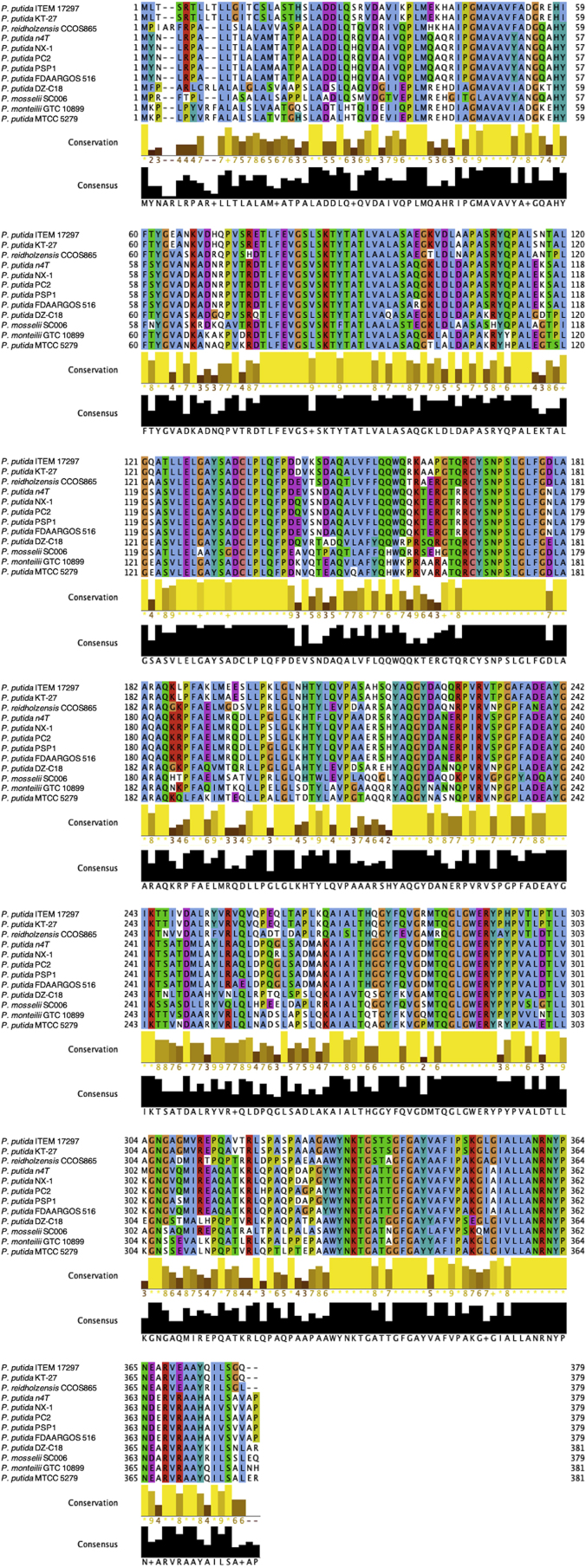
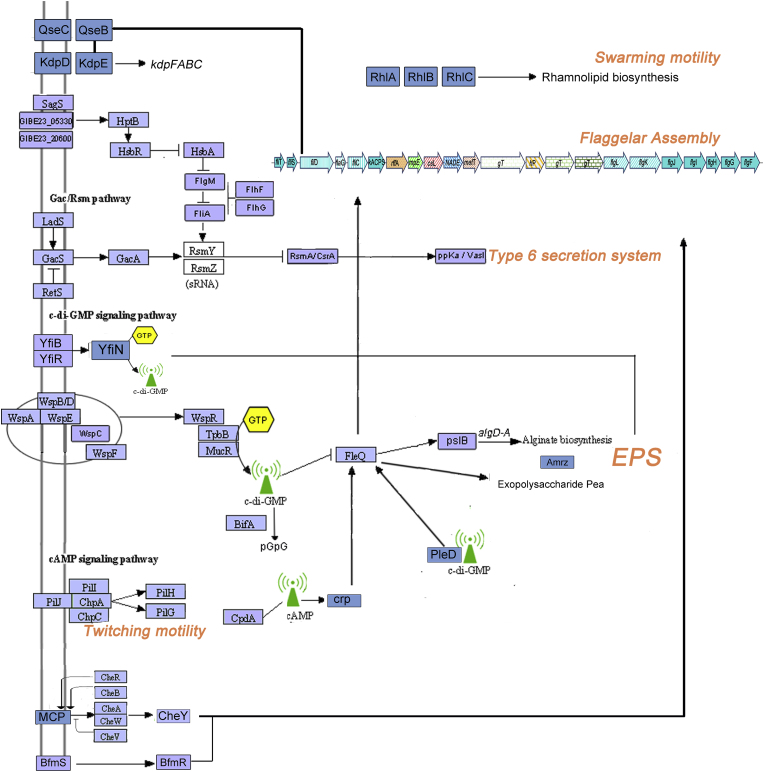
is widely recognized as a spoiler of fresh foods under cold storage, and recently associated also with infections in clinical settings. The presence of antibiotic resistance genes (ARGs) could be acquired and transmitted by horizontal genetic transfer and further increase the risk associated with its persistence in food and the need to be deeper investigated. Thus, in this work we presented a genomic and phenotypic analysis of the psychrotrophic ITEM 17297 to provide new insight into AR mechanisms by this species until now widely studied only for its spoilage traits. ITEM 17297 displayed resistance to several classes of antibiotics and it also formed huge amounts of biofilm; this latter registered increases at 15 °C in comparison to the optimum growth condition (30 °C). After ITEM 17297 biofilms exposure to antibiotic concentrations higher than 10-fold their MIC values no eradication occurred; interestingly, biomasses of biofilm cultivated at 15 °C increased their amount in a dose-dependent manner. Genomic analyses revealed determinants (RND-systems, ABC-transporters, and MFS-efflux pumps) for multi-drugs resistance (β-lactams, macrolides, nalidixic acid, tetracycline, fusidic acid and bacitracin) and a novel C allele. Biofilm and motility related pathways were depicted underlying their contribution to AR. Based on these results, underestimated psychrotrophic pseudomonas, such as the herein studied ITEM 17297 strain, might assume relevance in relation to the risk associated with the transfer of antimicrobial resistance genes to humans through cold stored contaminated foods. biofilm and AR related molecular targets herein identified will provide a basis to clarify the interaction between AR and biofilm formation and to develop novel strategies to counteract the persistence of multidrug resistant in the food chain.
在冷藏条件下,它被广泛认为是新鲜食品的破坏者,最近还与临床环境中的感染有关。抗生素抗性基因(ARGs)的存在可以通过水平基因转移获得并传播,进一步增加了其在食品中持续存在的风险,需要进行更深入的研究。因此,在这项工作中,我们对嗜冷菌ITEM 17297进行了基因组和表型分析,以深入了解该物种的抗药机制,此前该物种仅因其腐败特性而被广泛研究。ITEM 17297对几类抗生素具有抗性,并且还形成了大量生物膜;与最佳生长条件(30℃)相比,后者在15℃时有所增加。将ITEM 17297生物膜暴露于高于其最低抑菌浓度10倍的抗生素浓度后,并未出现根除现象;有趣的是,在15℃培养的生物膜生物量以剂量依赖的方式增加。基因组分析揭示了多药抗性(β-内酰胺类、大环内酯类、萘啶酸、四环素、夫西地酸和杆菌肽)的决定因素(RND系统、ABC转运蛋白和MFS外排泵)以及一个新的C等位基因。描述了生物膜和运动相关途径及其对耐药性的贡献。基于这些结果,像本文研究的ITEM 17297菌株这样被低估的嗜冷假单胞菌,可能与通过冷藏受污染食品将抗菌抗性基因转移给人类的风险相关。本文确定的生物膜和耐药性相关分子靶点将为阐明耐药性与生物膜形成之间的相互作用以及制定应对食物链中多重耐药性持续存在的新策略提供基础。